





 Sunday, 04-10-26








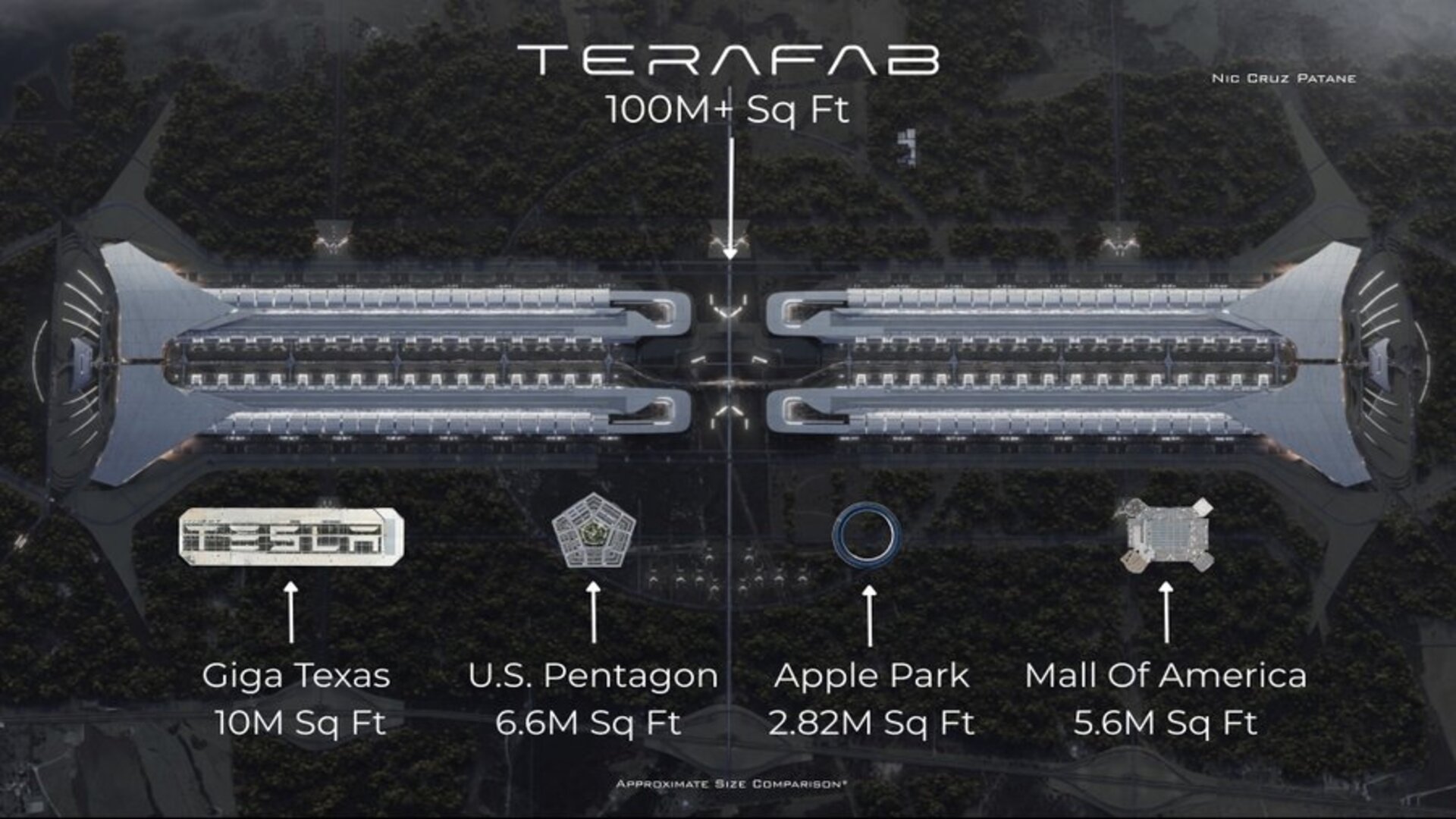
SpaceX on August 6 unveiled dramatic renderings of Terafab, its planned 100-million-square-foot semiconductor plant in rural Texas. Elon Musk has billed Terafab as “the largest and most valuable building on Earth”. In the announcement, SpaceX explained that the fab will produce next-generation AI chips for use in its space-based data centers and Tesla’s self-driving robotaxis. The first phase is expected to cost about $16.8 billion and create over 3,000 jobs.
Mega-Scale AI Chip Plant
Terafab is envisioned as a vertically integrated chip factory. According to Musk, it will “combine logic, memory, and advanced packaging all under one roof” to build compute at “unprecedented scale and speed”. In other words, SpaceX and Tesla will design, make, and package chips in one giant campus. SpaceX says Terafab will churn out over a terawatt of processing power per year. Those chips are intended for everything from Tesla’s Optimus humanoid robots and automated taxis to powering SpaceX’s orbital data centers.
This project dwarfs typical fabs. At 100 million square feet – about five times larger than today’s biggest building – Terafab would be a sprawling campus of cleanrooms and labs. SpaceX has set an aggressive timeline (first chips by late 2027) and warns the factory must run 24/7. The company calls the project “epic” in mission and scale. In effect, Musk is betting that controlling this chip supply is as strategically vital as rockets or electric cars.
Unconventional Power Strategy: Gas and Batteries
Crucially, SpaceX confirmed the Terafab chip factory will “bring our own power” from on-site sources. Representatives said they plan to build dedicated natural gas power plants adjacent to the fab, plus very large battery arrays for backup. The site is on the footprint of an old coal-fired plant, and SpaceX will replace it with new gas turbines and storage. In short, Terafab will run on fossil-fuel generation (with battery backup) – not the local electric grid.
There are engineering reasons for this choice. Semiconductor equipment demands ultra-clean, steady electricity – even a millisecond blip can ruin a batch of wafers. Gas turbines produce synchronized AC power directly at line frequency, avoiding the distortions that solar inverters can introduce. Gas plants also can be built and fired up much faster: SpaceX aims to meet its 2027 deadline, and turbines can be online in months, whereas a multi-hundred-megawatt solar project typically takes years.
Indeed, SpaceX’s filings show it plans to spend roughly $2.8 billion on gas turbines for its data centers over the next three years. Musk has moved heavily into the gas-turbine business – in May 2026 he bought APR Energy for about $1 billion – so powering Terafab with gas also plays to that investment.
Bypassing Tesla Solar: Musk’s Energy Playbook
It’s striking that none of this power comes from Tesla’s products. SpaceX will not use a watt of Tesla solar to power the Terafab chip factory. This has raised eyebrows because Tesla sells the very solutions (solar panels, batteries) used by data centers. Indeed, Tesla and partner Sunrun launched a 16-gigawatt “virtual power plant” project specifically pitched to data centers, and xAI (now part of SpaceX) bought $269 million of Tesla Megapacks earlier in 2026. Yet SpaceX’s Terafab plan ignores all of these.
The economics help explain it. Musk owns roughly 20% of Tesla, but he owns 100% of APR Energy. Gas turbines he fully controls will yield bigger returns than selling solar panels in which he is a minority shareholder. As industry pundits note, “the vision is solar, but the buildout is gas”. In other words, Musk appears to be opting for the fastest, cheapest path to power – on-site gas and batteries – over meeting the clean-energy narrative his companies promote.
Jobs, Taxes, and Local Reaction
The Terafab chip factory promises thousands of jobs and huge local economic impact, and Texas has been eager to lure it. SpaceX has applied for sprawling tax incentives, warning that without them the project’s returns would lag competing sites. Texas eventually approved $30 million from its Enterprise Fund and agreed to cover the gap on hundreds of millions in school taxes. In Grimes County, officials granted a 100% property tax abatement (in exchange for $20 million per year from SpaceX).
However, many locals are demanding accountability. In August 2026 roughly 900 residents signed a petition calling for independent legal counsel, environmental safeguards, water protections, and clawback provisions if SpaceX fails to meet its commitments. Officials say these steps are premature but note the deal is meant to outbid offers from other states (such as Arizona). Still, critics worry that the massive giveaways could leave local schools underfunded if Musk’s companies don’t deliver the full investment promised.
Environmental advocates have also voiced concern. The AI data-center buildout is driving a surge in new power projects: analysis shows more than 70 GW of new gas generation in the U.S. is proposed for data centers and fabs. Some of Musk’s existing data centers have faced scrutiny – for example, SpaceX’s xAI facility in Mississippi ran dozens of gas turbines and is now the target of a federal Clean Air Act lawsuit. Terafab’s plan to generate power on-site makes these air-quality issues very real for local communities.
Industry Context: AI Power Demands
Terafab’s story echoes a broader trend. Tech firms like Google, Meta and Microsoft are building their own power plants to feed AI data centers, and the rush has driven the cost of building gas plants up over 60%. Texas even paused some new data-center projects to audit grid impacts. In this environment, owning one’s power (even if fossil fuel) can be seen as a competitive edge.
Terafab also addresses a national priority: boosting chipmaking in the U.S. SpaceX’s venture is tied to Intel’s foundry services (using Intel’s latest 2 nm process), helping reduce dependence on Asian suppliers. If built, Terafab could help anchor America’s supply chain for advanced AI chips. If not, it could leave the state with a partially built factory and large tax breaks.
In sum, SpaceX’s Terafab project is a monumental gamble. It would be an engineering marvel and a boon for U.S. tech, but it also highlights a tension in Musk’s empire. By powering the world’s largest chip factory with natural gas and batteries instead of solar, Musk is prioritizing speed and self-reliance over the green-energy narrative. The outcome will be closely watched by investors, policymakers, and clean-energy advocates alike. The fate of Terafab may well shape how governments and industry balance technology ambitions with sustainability goals.
Read More