





 Friday, 02-10-26








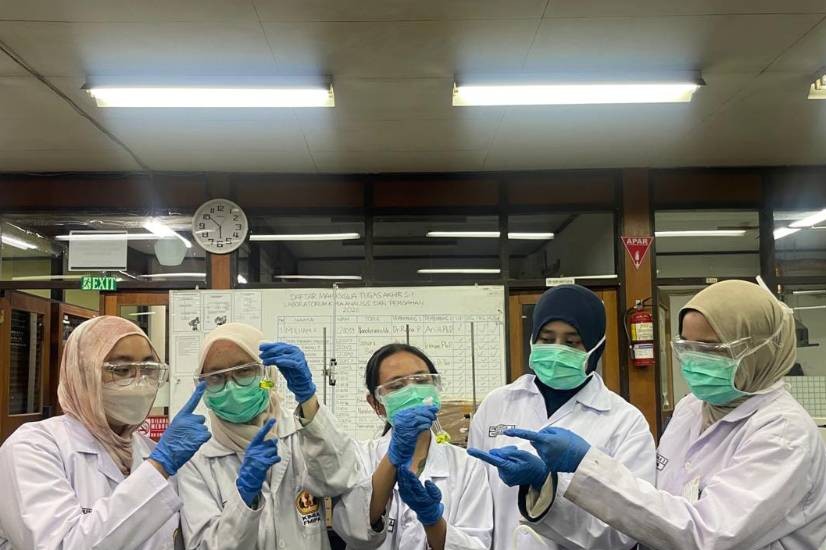
A research team from Universitas Padjadjaran (Unpad) is developing a Moringa-based nanotheranostic system using magnetic Fe₃O₄ nanoparticles to support more targeted delivery of bioactive compounds to cervical cancer cells. (30/09)
The research, conducted through the Student Creativity Program for Exact Research (PKM-RE), uses Moringa oleifera through a green synthesis approach. The system combines Fe₃O₄ magnetic nanoparticles with APTMS, PEG and folic acid as part of the functionalization process.
Unpad Develops Fe₃O₄ Nanoparticle System
The system is designed to integrate three main aspects: the use of biological materials through green synthesis, folic-acid-based targeting, and the delivery of a combination of curcumin and piperine in a single nanotheranostic platform.
“The concept we developed integrates three main aspects, namely the use of biological materials through a green synthesis approach, folic acid-based targeting, and the delivery of a combination of curcumin and piperine in a single nanotheranostic platform,” the PKM-RE Unpad team explained.
Moringa extract was used during the synthesis of the Fe₃O₄ nanoparticles. According to the research team, this approach is part of an effort to integrate local biological resources into nanomaterial development while exploring more sustainable synthesis methods.
After synthesis, the nanoparticles were modified using APTMS and PEG to support the surface characteristics and stability of the system.
Folic Acid Used for Targeting
Folic acid was used as a targeting ligand because folate receptors are known to be expressed in several types of cancer cells, including cervical cancer.
The nanoparticles were also loaded with curcumin and piperine as the bioactive compounds carried by the system.
The researchers evaluated the developed system through several characterization methods, including UV-Vis, Fourier-Transform Infrared Spectroscopy (FTIR), Particle Size Analyzer (PSA), and zeta potential.
Nanoparticles Show 245.6-Nanometer Hydrodynamic Size
The characterization results showed a hydrodynamic particle size of approximately 245.6 nanometers, with a zeta potential of -48.3 mV after functionalization and loading with curcumin and piperine.
Biological testing was also conducted to obtain initial information about the characteristics of the system. In testing on normal cells, the formulation showed good biocompatibility under the tested conditions.
Release testing showed a gradual release pattern for curcumin. The result provided initial information about the characteristics of the nanoparticles as a carrier system for bioactive compounds.
Research Enters Early Stage of Nanotheranostic Development
The integration of green synthesis, Fe₃O₄ magnetic nanoparticles, folic-acid-based targeting, and the combination of curcumin and piperine represents an early stage in the development of a nanotheranostic platform based on local biological materials for cervical cancer research.
“We hope this research can continue to be developed through more in-depth testing of the effectiveness and mechanism of action of the nanotheranostic system. The use of local biological materials also opens opportunities to explore the development of innovative and sustainable nanomedicine,” the PKM-RE Unpad team said.
PHOTO: UNPAD
This article was created with AI assistance.
We make every effort to ensure the accuracy of our content, some information may be incorrect or outdated. Please let us know of any corrections at [email protected].
Read More