


 Tuesday, 17-11-26


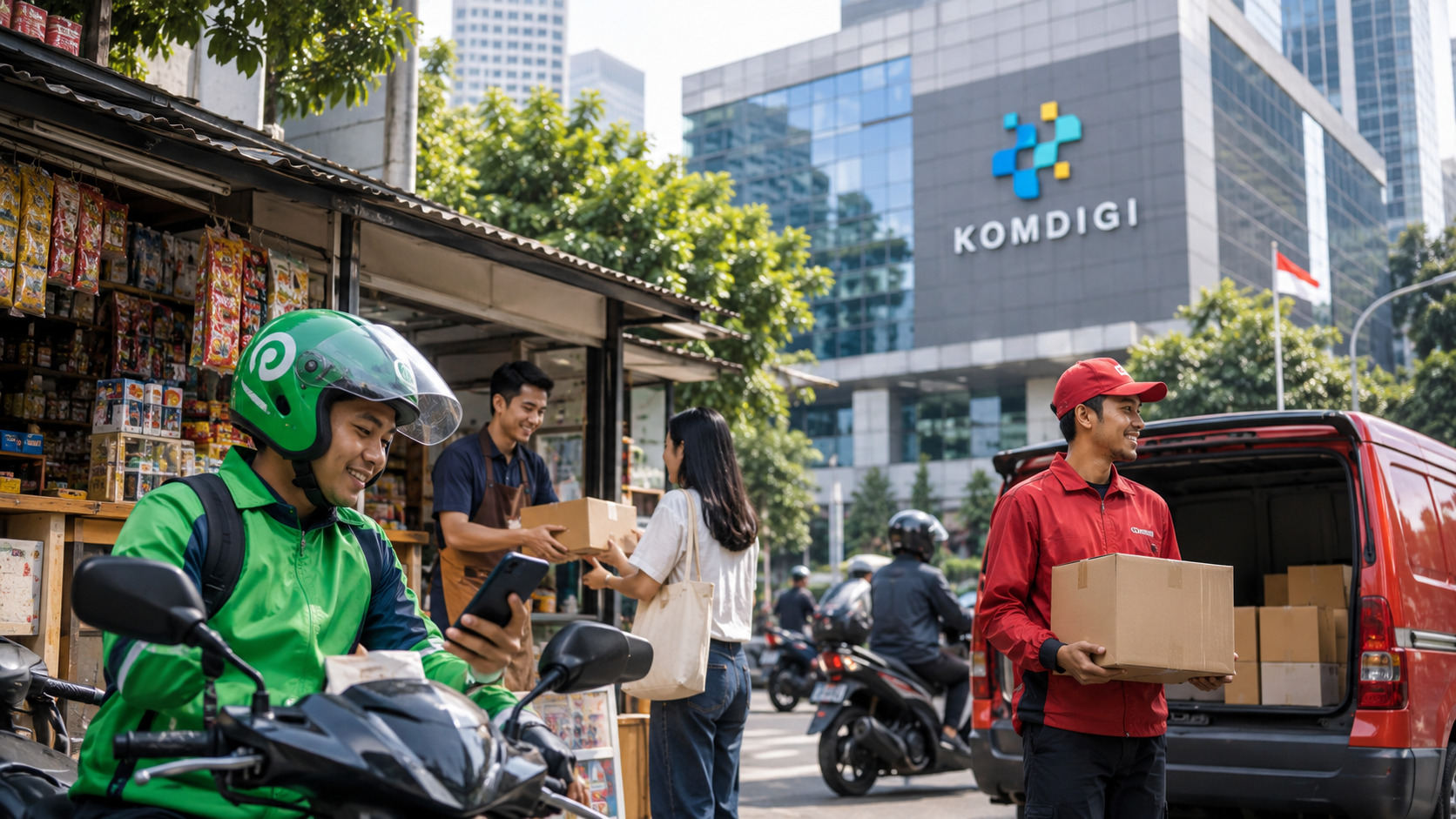
Indonesia's rapid embrace of app-based courier and ride-hailing services has done far more than streamline urban commuting and meal orders. According to the Ministry of Communication and Digital (Komdigi), the expansion of online parcel delivery and motorcycle taxi networks has fundamentally altered how companies compete across Southeast Asia's largest digital market. Speaking at the Digital Economy and Competition Policy forum hosted at the National Economic Council office in Central Jakarta in mid-November 2026, Komdigi's Director General of Digital Ecosystem Edwin Hidayat Abdullah warned that traditional antitrust assumptions no longer capture how digital logistics markets operate.
As super-apps consolidate parcel shipping, food delivery, and passenger transport under unified algorithms, online delivery business competition has shifted away from simple price wars between independent couriers. Instead, supply and demand are increasingly governed by platform-controlled incentives, commission structures, and data ecosystems. For policymakers, merchants, and millions of gig workers, understanding this structural shift is now central to safeguarding fair economic opportunity across Indonesia.
From Sharing Economy To A Platform-Dependent Market
During the early expansion of ride-hailing apps a decade ago, technology companies and economists routinely described the sector as a sharing economy or gig economy. In that early model, digital applications functioned primarily as neutral matching tools connecting vehicle owners with nearby passengers or local food stalls with hungry customers. Market prices reflected relatively straightforward balances between local rider availability and consumer demand.
Edwin Hidayat Abdullah explained that Indonesia has moved well beyond that initial phase into what regulators classify as a platform-dependent economy. In this mature stage, major digital platforms do not merely facilitate transactions; they actively engineer market supply and demand through targeted subsidies, algorithmic dispatch priorities, and tiered merchant promotions. When a dominant app adjusts delivery fee discounts or alters driver bonus thresholds, order volumes across entire neighborhoods can swing within hours.
This dynamic carries profound consequences for online delivery business competition. Small independent courier firms and local eateries cannot easily match the cross-subsidized pricing power of multi-service digital ecosystems. At the same time, when dominant platforms transition from investor-backed growth strategies toward strict profitability targets, higher merchant commissions and tighter driver payouts quickly ripple through the broader retail and logistics economy.
Multi-Sided Market Dynamics And Economic Scale
Regulating digital courier networks requires recognizing that app-based delivery operates as an interconnected multi-sided market. A single policy adjustment aimed at one group inevitably alters outcomes for three other constituencies: everyday consumers, micro and small enterprises, delivery drivers, and conventional freight operators.
Recent macroeconomic data underscores just how deeply this ecosystem is woven into Indonesia's labor and retail fabric. According to a joint June 2026 study by Paramadina University and the Institute for Development of Economics and Finance (INDEF), Indonesia's online motorcycle taxi and delivery sector directly employs 2.91 million workers and supports an additional 2.62 million indirect jobs, anchoring 5.53 million livelihoods nationwide. Overall, the sector contributes approximately IDR 564.79 trillion to Indonesia's gross domestic product, while Ministry of Transportation registrations count at least 7 million drivers across the archipelago.

Regional commerce figures reinforce that momentum. The e-Conomy SEA 2026 report published by Google, Temasek, and Bain & Company projects Southeast Asia's overall digital economy to reach $368 billion in gross merchandise value in 2026, with mobility and food delivery climbing 15 percent year over year to $40 billion. Within that regional surge, Indonesia's digital economy is advancing toward $119 billion, making online delivery business competition a decisive battleground for domestic retail growth.
How Platform Profitability Shifts Affect Merchants And Couriers
One of the sharpest tensions highlighted by Komdigi involves what happens when technology companies pivot from aggressive user acquisition to sustainable profit margins. After years of relying on venture capital and public market fundraising to subsidize cheap deliveries, platform operators face intense pressure to generate positive cash flow.
To achieve profitability, platforms frequently raise service fees charged to consumers, increase commission deductions imposed on culinary and retail merchants, or trim performance incentives paid to couriers. While reducing transaction costs remains the core economic justification for digital platforms, Edwin noted that uncompetitive fee structures can eventually push consumers and small businesses back toward offline alternatives or direct ordering channels.
For micro, small, and medium enterprises (MSMEs), delivery visibility has become essential to survival. Yet rising commission rates and paid in-app advertising placements mean smaller merchants often struggle to preserve profit margins while competing against larger chains that can afford prime algorithmic placement. Ensuring healthy online delivery business competition therefore requires examining whether fee structures allow small producers to grow alongside the platforms hosting them.
Vertical Integration Risks And Digital Sovereignty
Beyond delivery commissions, Komdigi raised strategic concerns regarding excessive vertical integration inside digital ecosystems. Vertical integration occurs when a dominant technology provider controls multiple layers of the value chain, ranging from device operating systems and pre-installed applications to payment gateways, cloud infrastructure, and last-mile fulfillment networks.
Edwin pointed to closed mobile device ecosystems, where smartphones arrive pre-loaded with proprietary operating systems and default browsers that restrict rival services from competing on equal footing, as a clear example of how technical architecture can foreclose market access. When applied to commerce and logistics, tight vertical integration can concentrate valuable transaction data inside a handful of corporate entities, slow down technology diffusion to domestic enterprises, and limit Indonesia's ability to capture long-term economic value from its own consumer base.
Protecting national digital sovereignty in this context does not mean shutting out global innovation. Rather, it means keeping digital infrastructure open enough so local logistics startups, independent payment providers, and regional merchants can plug into the ecosystem without facing exclusionary gatekeeping.
Presidential Regulation 27 Of 2026 And New Pricing Rules
Indonesia's regulatory response to these structural shifts accelerated following the enactment of Presidential Regulation (Perpres) No. 27 of 2026 on the Protection of Digital Platform-Based Transportation Ecosystems, which took effect in July 2026. While the regulation established an 8 percent commission cap for passenger ride-hailing services, lawmakers recognized that goods and food delivery involve far more complex operational variables.
Under Article 11 paragraph 4 of Perpres No. 27 of 2026, Komdigi was granted explicit authority to formulate pricing transparency rules and service fee guidelines for digital parcel and food delivery. Throughout late 2026, Deputy Minister of Communication and Digital Nezar Patria and ministerial working groups have been finalizing a ministerial regulation targeted for completion before December 31, 2026.
Unlike passenger trips, goods and food delivery must account for package handling, order size, merchant preparation delays, weather risks, and courier insurance. Komdigi's upcoming framework aims to require clear disclosure of how platform algorithms calculate delivery fees and service charges, ensuring couriers earn fair compensation and receive accident protection without inflating end-consumer prices to levels that depress merchant order volumes.
Three Guiding Principles For Indonesia's Digital Policy
Crucially, Komdigi emphasized that Indonesia should avoid copying regulatory templates directly from Australia or the European Union. Because Indonesia's market structure, informal labor dynamics, and archipelagic logistics costs differ markedly from Western economies, overly rigid rules could unintentionally stifle innovation or reduce courier earning opportunities.
To balance market dynamism with public protection, Komdigi anchored its oversight of online delivery business competition around three core principles:
- Opening Opportunities For All Participants: Regulations must lower barriers to entry so emerging logistics providers, local cooperatives, and small merchants can participate in digital commerce without facing exclusionary contracts.
- Guaranteeing Fair Competition: Oversight should prevent predatory pricing, discriminatory algorithmic ranking, and abusive vertical bundling that distort online delivery business competition across interconnected markets.
- Avoiding Unpredictable Regulation: Policymakers must maintain transparent, consultative rulemaking so technology firms, investors, and driver associations can plan long-term investments with regulatory certainty.
Navigating The Future Of Indonesian Digital Logistics
As Indonesia enters 2027, the governance of app-based courier networks will serve as a bellwether for broader digital economic policy. By recognizing that ride-hailing and parcel delivery have evolved into essential public-facing infrastructure, regulators are moving toward targeted interventions that address genuine market failures without micromanaging healthy commercial rivalry.
For platform operators, merchants, and millions of couriers on the road every day, the message from Komdigi is clear. Long-term growth in online delivery business competition depends on transparent pricing, open ecosystems, and an equitable division of economic value that rewards every participant keeping Indonesia's digital marketplace moving.
Read More