


 Tuesday, 17-11-26


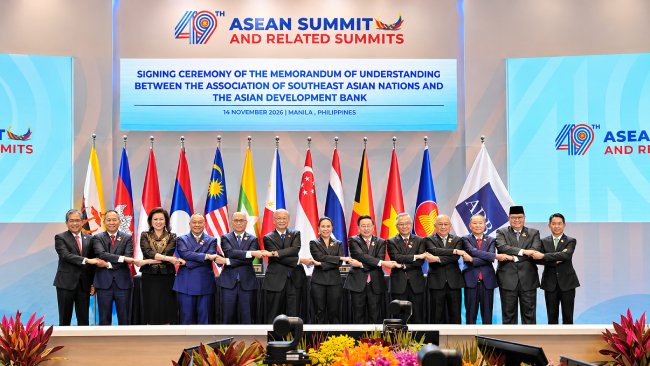
Southeast Asia took a decisive step toward becoming a unified digital trading bloc on November 14, 2026, when member states formally signed the ASEAN Digital Economy Framework Agreement in Manila. Representing Indonesia at the ceremony, Coordinating Minister for Economic Affairs Airlangga Hartarto joined regional counterparts to finalize a treaty first launched during Jakarta's chairmanship of the bloc in 2023. As the world's first regionwide legally binding digital economy pact, the agreement establishes harmonized rules across cross-border e-commerce, electronic payments, data governance, and cybersecurity. With a combined population of 693 million people as of 2025, policymakers estimate that full implementation of the treaty will double the value of the ASEAN digital economy to $2 trillion by 2030.
From Jakarta Negotiations To A Historic Signing In Manila
For more than a decade, Southeast Asia's internet sector expanded rapidly despite a patchwork of conflicting national regulations. A fintech startup in Jakarta or a software vendor in Kuala Lumpur often faced entirely different licensing rules, data localization mandates, and customs procedures when attempting to serve customers across neighboring borders. Recognizing that regulatory fragmentation was capping regional productivity, ASEAN leaders agreed to initiate negotiations on a comprehensive digital framework when Indonesia held the rotating chairmanship in 2023.
Three years of intensive technical talks culminated in Manila on Saturday, November 14, 2026. Speaking on behalf of the Indonesian government, the Coordinating Ministry for Economic Affairs emphasized that Jakarta played a central role in shaping a framework that prioritizes integration, inclusivity, and global competitiveness. Rather than allowing Southeast Asia to remain a collection of isolated national markets, the new treaty links regulatory standards across member states so goods, services, and digital capital can move with far lower friction. Officials noted that this coordinated architecture positions the ASEAN digital economy to serve as a primary engine of global growth over the coming decade.
Breaking Down The Data Behind Southeast Asia's Digital Surge
The macroeconomic case for formalizing regional digital integration rests on demographic scale and rapid internet adoption. Home to 693 million residents as of 2025, Southeast Asia boasts one of the youngest, most mobile-first consumer populations in the world. Industry studies conducted by regional economic advisers and the ASEAN Secretariat show that without coordinated policy reforms, the bloc's digital gross merchandise value would grow along a baseline trajectory to reach roughly $1 trillion by 2030.
By eliminating redundant compliance barriers and standardizing digital trade infrastructure, the newly signed agreement unlocks an additional $1 trillion in projected economic output over the same timeframe. Doubling the ASEAN digital economy from $1 trillion to $2 trillion by 2030 represents one of the largest regional value creation opportunities in modern trade policy. Within this expansion, Indonesia stands as the single largest national contributor, accounting for roughly 40 percent of Southeast Asia's total digital transaction volume and supporting more than 220 million domestic internet users.

Core Pillars Of The ASEAN Digital Economy Framework Agreement
Unlike traditional free trade agreements focused primarily on physical tariffs and factory supply chains, the Manila accord governs the intangible infrastructure of modern commerce. The agreement spans seven core operational areas highlighted by Indonesian officials alongside nine technical negotiating pillars established at the outset of talks.
First, the pact modernizes cross-border digital trade through paperless customs clearance, electronic authentication, and standardized digital invoicing. Physical parcels and digital software subscriptions alike can clear borders faster when customs agencies recognize shared electronic documentation. Second, the agreement institutionalizes interoperable electronic payments. Southeast Asia has already demonstrated global leadership through bilateral QR payment linkages connecting Indonesia's QRIS network with systems in Singapore, Malaysia, Thailand, and the Philippines. Under the new treaty, multilateral payment connectivity becomes a regional standard, allowing consumers and merchants to settle cross-border transactions instantly in local currencies at transparent exchange rates.
Third, the framework addresses emerging technologies, including artificial intelligence governance, cloud computing standards, and digital talent development. Member states committed to expanding workforce mobility and technical training programs so engineers, data scientists, and digital marketers can collaborate across borders. Fourth, the treaty establishes baseline commitments for personal data protection and cybersecurity, ensuring that cross-border data flows are backed by strong consumer privacy safeguards and coordinated incident response mechanisms.
Why Indonesia Views DEFA As A Catalyst For Eight Percent Growth
For Jakarta, signing the agreement in Manila carries immediate domestic urgency. While international institutions such as the International Monetary Fund projected Indonesia's economy to grow at a resilient 5.1 percent in 2026, President Prabowo Subianto's administration has set an ambitious national target of lifting annual gross domestic product growth to 8 percent by 2028 and 2029. Achieving that acceleration requires moving beyond raw commodity exports toward higher-value manufacturing, financial services, and technology-driven commerce.
According to statements from the Coordinating Ministry for Economic Affairs, Indonesia intends to leverage the agreement as a direct structural driver toward its 8 percent growth benchmark. Because Indonesian e-commerce marketplaces, digital banks, and logistics platforms already operate at massive domestic scale, harmonized regional rules give homegrown champions an immediate runway to expand across neighboring ASEAN markets. Instead of spending millions of dollars navigating separate regulatory approvals in each jurisdiction, Indonesian technology firms can rely on mutual recognition principles embedded in the ASEAN digital economy treaty to export digital services across Southeast Asia.
Empowering Small Businesses And Strengthening Digital Trust
Large technology conglomerates are not the primary beneficiaries envisioned by the agreement's architects. Micro, small, and medium enterprises form the true backbone of Southeast Asian livelihoods, representing more than 97 percent of all registered businesses across the bloc and employing roughly 85 percent of the regional workforce. Despite their numerical dominance, small enterprises historically captured only a modest fraction of cross-border export revenue because international shipping paperwork, foreign currency settlement fees, and unfamiliar legal rules proved too costly to navigate.
By embedding small enterprise empowerment directly into the treaty text, policymakers aim to democratize regional trade. A specialty coffee roaster in West Java, a textile cooperative in Central Sulawesi, or a handicraft studio in Yogyakarta can now list products on regional marketplaces, accept instant cross-border QR payments, and clear customs digitally without hiring specialized trade lawyers. At the same time, unified consumer protection and cybersecurity baselines give international buyers greater confidence when purchasing from unfamiliar small merchants across borders, strengthening commercial trust throughout the ASEAN digital economy.
Implementation Hurdles And What Comes Next For Regional Markets
While the November 14 signing in Manila marks a diplomatic milestone, translating treaty commitments into everyday commercial reality will require disciplined execution over the next four years. Each signatory government must complete domestic ratification procedures and align national statutes with the framework's technical annexes. Bridging infrastructure gaps also remains critical, as high-speed fiber connectivity and digital payment adoption in major urban centers like Jakarta, Singapore, and Bangkok far outpace rural provinces across the archipelago and mainland Southeast Asia.
Policymakers will also need to maintain regulatory agility as artificial intelligence and automated cross-border finance evolve faster than traditional legislative cycles. Joint working committees established under the treaty will oversee capacity building, technical assistance for developing member economies, and periodic reviews of emerging digital risks. If national legislatures ratify the agreement promptly and private sector banks, telecom operators, and logistics providers integrate their platforms around its standards, the ASEAN digital economy is well positioned to turn its $2 trillion 2030 projection into measurable prosperity for hundreds of millions of citizens.
Read More