


 Monday, 16-11-26


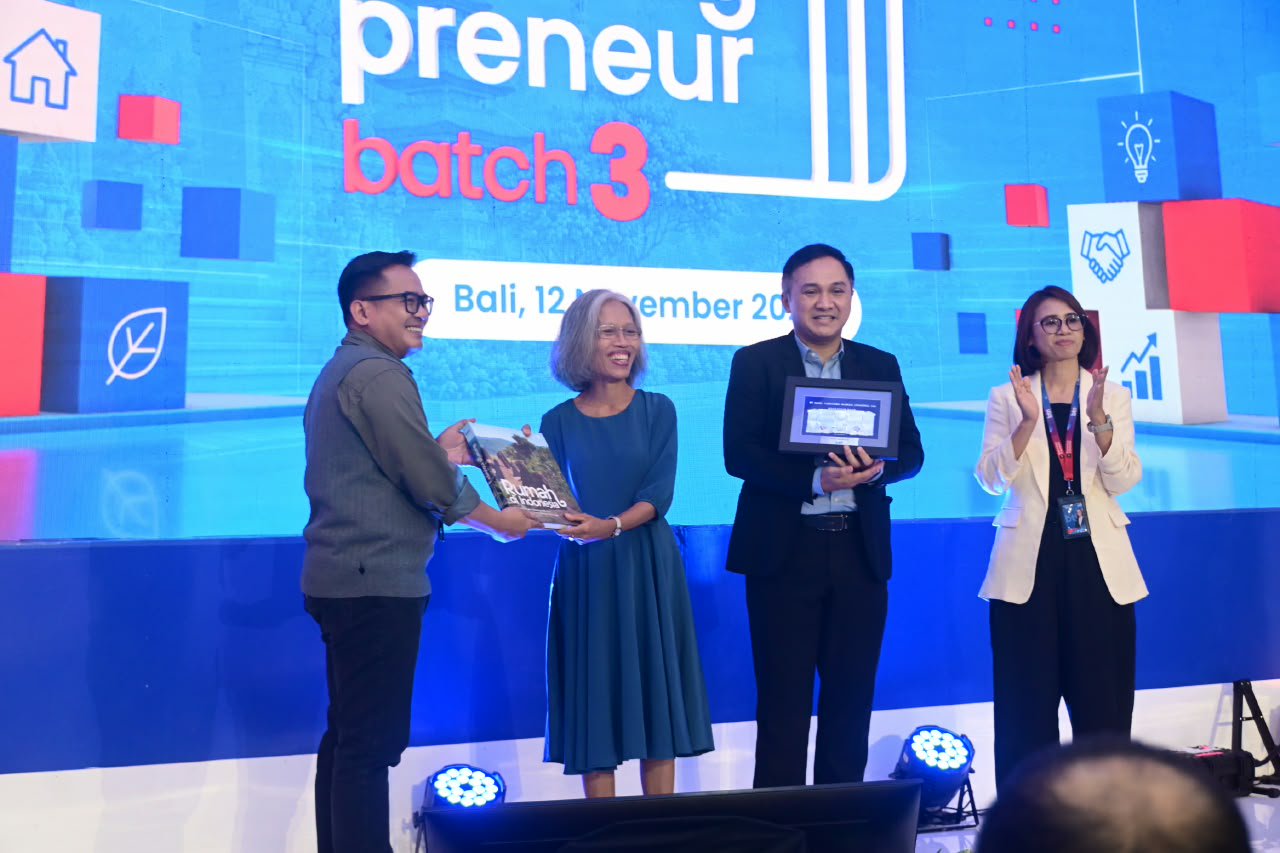
BTN Housingpreneur Batch 3 brought together housing innovation, modern architectural concepts, and local cultural values to explore the future of residential development in Bali on November 12 (12/11).
The event highlighted micro-living and growable house concepts, sustainable materials, and the importance of adapting homes to residents' changing needs without losing their local identity.
The initiative also provided a platform for collaboration between universities and the housing industry, with students and participants from different backgrounds encouraged to develop innovative ideas for the sector.
BTN Housingpreneur Promotes Modern Housing Design in Bali
One of the housing concepts presented at the event was Rumah Kampung Kota, designed by Jakarta-based architect Engelberth Yakobus Grenti S. Combining micro-living and growable house concepts, the design earned him second place in the general category of the Rumah Nusantara Business Ideation competition at BTN Housingpreneur 2025.
Engelberth, Founder and Principal Architect of E Design Studio, developed the concept to address limited land availability while allowing homes to adapt to residents' changing needs.
He explained that the main challenge in housing design today is making the most of limited land without sacrificing functionality and comfort. His approach focuses on spatial sufficiency, meaning that an ideal home does not necessarily need to be large, as long as every area is used effectively.
The Rumah Kampung Kota design combines different functions within the same space. For example, the kitchen can be integrated with the dining area, while a workspace can connect with a communal area.
"Multifunctional and modular furniture also allows one area to serve more than one purpose," Engelberth said during the BTN Housingpreneur Batch 3 roadshow at Udayana University (UNUD), Bali, on Thursday (12/11).
The design also considers natural lighting and air circulation through internal courtyards, voids, and large windows. These features are intended to make compact homes feel more spacious and healthy.
Micro-Living and Growable Homes Address Limited Land
Flexibility is another important feature of the growable house concept. Instead of assigning permanent functions to every room from the beginning, the design allows residents to change how spaces are used as their needs evolve.
For example, a carport can serve not only as a parking area but also as a business space or an extension of residents' productive activities.
Similarly, a room initially designed as a bedroom can be converted into a workspace, grocery shop, or coffee and laundry business.
"This means a house is not only a place to live. It can also support a family's economic activities without always requiring an increase in building size," Engelberth explained.
Modern Housing Must Preserve Bali's Cultural Identity
Beyond limited land and space efficiency, housing development in Bali also faces the challenge of maintaining cultural identity as people's lifestyles change.
Professor Gusti Ayu Made Suartika, a professor of Regional and Urban Planning at Udayana University, said that a house reflects the people who live in it. Changes in behavior and lifestyles therefore influence the design and functions of residential buildings.
"Traditions in housing actually come from ourselves. A house reflects who we are. So, when our behavior and way of life change, our homes will also change," said Suartika, who is widely known as Prof. GAM.
She explained that discussions about housing changes often focus on broader perspectives, while individual residents' needs can receive less attention. However, individuals play an important role in determining how their homes are designed and developed.
Suartika cited the example of the Bayung Gede community, which has a traditional housing system with designated zones based on local customs. However, as economic activities developed, some residents began working in Denpasar and needed private vehicles to support their daily mobility.
She said the view that traditional houses must never be changed should be considered more openly. Housing traditions should take residents' decisions and needs into account rather than simply following rules imposed by others.
"A house is a space for a person's entire life. It does not only represent someone as part of a society or community, but also as an individual with their own needs and characteristics," she explained.
Suartika emphasized that culture is not static but continues to develop alongside changes in people's lives. Therefore, preserving cultural identity does not necessarily mean maintaining every physical feature of a building exactly as it was before.
"The real challenge is how to preserve the values considered important while building a new identity that remains connected to local culture. Even the development of artificial intelligence (AI) technology is expected to change the housing needs of the future," she said.
However, she also stressed that communities choosing to maintain traditional houses without modifications should have their decisions respected. Such choices represent communal action to protect the values considered important by the community.
BTN Expands Its Housing Ecosystem Through Innovation
Joyce Ivone Mandagi, Deputy Regional Business of BTN Regional Office for East Java, Bali, and Nusa Tenggara, said BTN Housingpreneur is an initiative to explore innovation and creativity in the housing sector.
The program has entered its third year. Denpasar became the fourth and final city in this year's BTN Housingpreneur Batch 3 roadshow.
According to Ivone, university students are an important group in the program because they have the potential to produce fresh and innovative ideas. The competition also offers a general category, allowing participants from different backgrounds to take part.
She explained that BTN has provided homeownership loans, known as Kredit Pemilikan Rumah (KPR), since 1976. Over nearly five decades, millions of people have received support in purchasing homes through the financing facility, ranging from low-income households to middle- and upper-income groups.
BTN's business development now extends beyond homeownership financing. The company is also focusing on the broader housing ecosystem, including facilities and infrastructure, interior needs, and home design.
Sustainability is another area of attention, particularly through the development of environmentally friendly materials and the use of recycled products.
"These include recycled plastic for paving materials and other recycled materials for roof tiles," Ivone said.
BTN is also promoting waste management through its Bayar Angsuran-Mu Pakai Sampah-Mu program. Waste collected and managed by customers can be administratively recorded, allowing its value to potentially be used to reduce their KPR installments.
"Going forward, we hope to see more innovation and creativity, particularly from university students," she said.
Universities Support Future Housing Development
Udayana University Vice Rector for Resources, Professor Agoes Ganesha Rahyuda, welcomed the university's involvement in BTN Housingpreneur Batch 3. He said the initiative creates opportunities for collaboration between higher education institutions and the industrial sector.
Universities have a responsibility to develop knowledge, encourage critical thinking, and produce human resources capable of responding to change. Meanwhile, businesses have direct experience with community needs and industry developments.
"The meeting of these two environments gives students an opportunity to understand real-world challenges, rather than relying only on theories learned during lectures," Agoes said.
He added that future housing development in Bali should consider three aspects: maintaining local identity, adapting to development, and remaining relevant to community needs.
According to Agoes, houses are not merely places to live but also social spaces that reflect community values. Therefore, housing development must consider more than design, construction technology, and economic value.
"The character of the region, environmental balance, and the needs of the people living there must also be taken into consideration," he stressed.
PHOTO: BTN
This article was created with AI assistance.
We make every effort to ensure the accuracy of our content, some information may be incorrect or outdated. Please let us know of any corrections at [email protected].
Read More