





 Thursday, 01-10-26








The Exponential Growth Of Digital Infrastructure
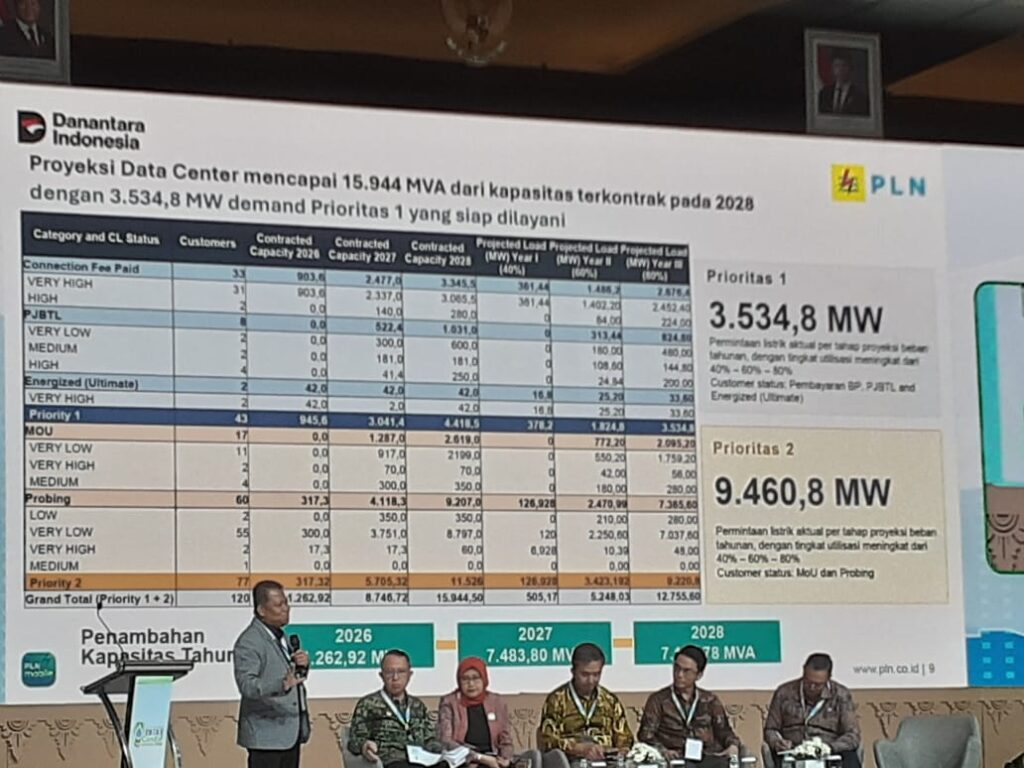
The rapid expansion of the digital economy has brought about significant transformations across various technological sectors. As more businesses migrate their daily operations to the cloud, the sheer volume of digital information being processed every single second is reaching unprecedented levels. Consequently, experts and government officials are closely monitoring the exponential rise in data center power demand throughout the region. Facilities that house thousands of computing servers require an enormous amount of electricity to operate flawlessly around the clock. The national utility provider has recently projected that by the year twenty thirty four, the nationwide capacity requirement for these technological hubs could reach an astonishing twenty five thousand two hundred and ninety seven megawatts. This massive projection highlights a fundamental shift in how electricity must be generated and distributed. In the past, traditional residential and commercial zones dictated grid expansions. Today, the relentless surge in data center power demand is completely rewriting the blueprint for national infrastructure development and strategic planning.
Why The Electricity Requirements Are Skyrocketing Today
To truly grasp the magnitude of this situation, one must look at the current trajectory of digital infrastructure investments. Indonesia is currently experiencing a massive technological renaissance, driven by widespread internet adoption and a booming electronic commerce ecosystem. Every single online transaction, streaming video, and virtual corporate meeting relies heavily on physical servers located in massive industrial warehouses. These complex servers consume vast amounts of electricity not just for computing data, but also for essential cooling systems that prevent catastrophic hardware meltdowns. As the growing population becomes increasingly reliant on seamless digital services, the underlying physical infrastructure must expand concurrently. The state utility company anticipates that the information technology capacity alone will jump to roughly three point five gigawatts by the end of the decade. This incredible growth trajectory clearly illustrates why addressing data center power demand has become a top priority for government planners and private investors who want to capitalize on the digital boom.
Navigating The Concentration Of Facilities In Java
A major logistical challenge currently facing the national electricity grid is the extreme geographical concentration of existing digital facilities. According to recent utility reports, approximately ninety nine percent of the connected megavolt ampere capacity is heavily centralized within the Java Madura Bali electricity system. More specifically, the Greater Jakarta area, West Java, and Banten regions are housing the vast majority of these energy intensive hubs. While this concentration makes perfect sense from a historical business perspective due to established connectivity and commercial proximity, it places an extraordinary burden on localized power grids. Pushing so much electricity into a single geographical zone requires constant, highly expensive upgrades to existing substations and distribution networks. If the digital industry continues to build exclusively in these saturated areas, the localized data center power demand could eventually outpace the physical capabilities of the regional grid. Therefore, stakeholders are actively seeking strategic ways to distribute this electrical load more evenly across the archipelago.
Expanding The Network To Sumatra And Beyond
Recognizing the strict limitations of heavy centralization, industry leaders and utility providers are now looking far beyond the traditional borders of Java. There is a rapidly growing movement to develop new technological clusters in expansive regions such as Sumatra, Kalimantan, and Sulawesi. Expanding into these vast territories offers a unique opportunity to tap into new regional energy sources and relieve the intense pressure on the central grid. However, building world class facilities in these emerging markets requires meticulous planning and massive capital investments from both the public and private sectors. The national utility company must absolutely guarantee that the power generation plants, transmission lines, and regional substations are fully prepared to handle the continuous and heavy electricity loads required by modern servers. As technological development spreads outward, effectively managing the regional data center power demand will be crucial for ensuring uninterrupted services nationwide. This geographical diversification is an absolute necessity for the long term sustainability of the national digital economy.
The Critical Role Of Artificial Intelligence Innovations
The ongoing conversation about future electricity requirements would be entirely incomplete without addressing the explosive rise of artificial intelligence. Machine learning algorithms and generative artificial intelligence models require significantly more computing power than traditional software applications. Training a single complex intelligence model can easily consume as much electricity as a small suburban town uses in an entire month. As modern businesses across all sectors rush to integrate artificial intelligence into their daily operations, the resulting strain on physical servers is magnifying rapidly. This specific technological leap is a primary driver behind the skyrocketing projections for future energy consumption. Utility executives have explicitly noted that because of artificial intelligence and advanced digital platforms, these facilities can no longer be treated as standard commercial electricity customers. The continuous and highly dense energy requirements of artificial intelligence processing mean that data center power demand will only continue to accelerate, forcing utility providers to completely rethink their long term generation strategies.
How Utility Providers Are Adapting To New Challenges
In direct response to this looming infrastructure challenge, the state utility company is fundamentally shifting its corporate philosophy and operational approach. Historically, the primary role of a utility provider was simply to generate and sell electricity to waiting residential and commercial customers. Today, the overall mission has evolved dramatically. Utility executives now view their organization as a vital enabler of digital infrastructure growth and technological advancement. This major paradigm shift means the company must successfully anticipate future connectivity needs rather than just reacting to present energy shortages. They are investing heavily in upgrading massive transmission lines, building highly resilient substations, and deploying smart grid technologies that can safely route electricity much more efficiently. By taking a highly proactive approach, the utility aims to prevent potential electrical bottlenecks that could ultimately stifle national economic progress. Adapting to the incredibly unique characteristics of modern server farms is essential for maintaining grid stability.
The Push For Renewable Energy And Green Solutions
Another critical dimension of this massive infrastructure expansion is the rapidly rising global mandate for environmental sustainability. Major multinational technology companies and local facility operators are under immense pressure from international investors and environmentally conscious consumers to drastically reduce their carbon footprints. Consequently, they are actively seeking facility locations that offer direct access to sustainable, renewable energy sources. This strict requirement adds another deep layer of complexity to the national grid expansion efforts. The state utility must not only provide massive volumes of raw electricity but also physically ensure that a significant portion of it comes from green sources such as solar panels, wind turbines, geothermal plants, and hydroelectric dams. Meeting this specific green energy requirement is absolutely essential for attracting top tier international technology firms to the country. By developing tailored green energy solutions, the country can firmly position itself as a premier destination for sustainable digital investments.
Ensuring Commercial Certainty For Facility Operators
For huge multinational corporations looking to invest billions of dollars into brand new technological hubs, commercial certainty is just as important as the physical wires and transformers. Facility operators need absolute, unwavering assurance that their power supply will be reliable, continuous, and priced highly competitively over the span of several decades. Any unexpected blackout, voltage drop, or sudden surge in electricity rates can cause catastrophic financial losses and severely damage a global company reputation. Therefore, the national utility must provide highly transparent pricing models and rock solid service level agreements to all prospective clients. They must explicitly demonstrate that the underlying physical infrastructure is robust enough to easily handle sudden spikes in computing activity without failing or stuttering. Providing this exceptionally high level of commercial certainty is the only proven way to convince cautious global investors that the country is fully prepared to host the next generation of massive server farms.
Early Alignment And Strategic Planning For The Future
To successfully synchronize these massive development efforts, the national utility is heavily promoting an innovative early alignment strategy. In the past, eager facility developers would often build a massive structural warehouse and then simply request a standard power connection after the fact. Given the sheer scale of modern electricity requirements, this highly reactive approach is no longer practically feasible. Early coordination directly involves bringing utility planners, government regulators, and private developers to the exact same table during the very initial planning stages of a project. By openly discussing precise electricity requirements and expected development timelines well in advance, all involved parties can ensure that grid expansions perfectly match the construction of new server facilities. This deeply collaborative approach allows for much faster, highly accurate, and incredibly efficient supply planning. It ultimately ensures that when a new facility is finally ready to turn on its servers, the regional power grid is completely prepared.
Conclusion On The National Digital Infrastructure Outlook
The complex journey toward fully realizing a robust national digital economy is paved with immense infrastructural challenges and incredible economic opportunities. The projected surge in energy requirements over the next ten years serves as a massive wake up call for both the public sector and private enterprise. Upgrading the national grid to continuously support thousands of megawatts of computing power is a truly monumental task that requires unprecedented collaboration and foresight. From rapidly expanding high voltage transmission lines into new regional territories to aggressively integrating sustainable renewable energy sources, every single step must be carefully calculated and flawlessly executed. By prioritizing early alignment and fully recognizing the unique needs of modern server facilities, the nation can successfully build a highly resilient technological backbone. Ultimately, successfully managing this incredible growth will not only attract massive foreign capital investments but also securely cement the country position as a leading digital powerhouse in the global economy for many decades to come.
Read More