





 Thursday, 01-10-26








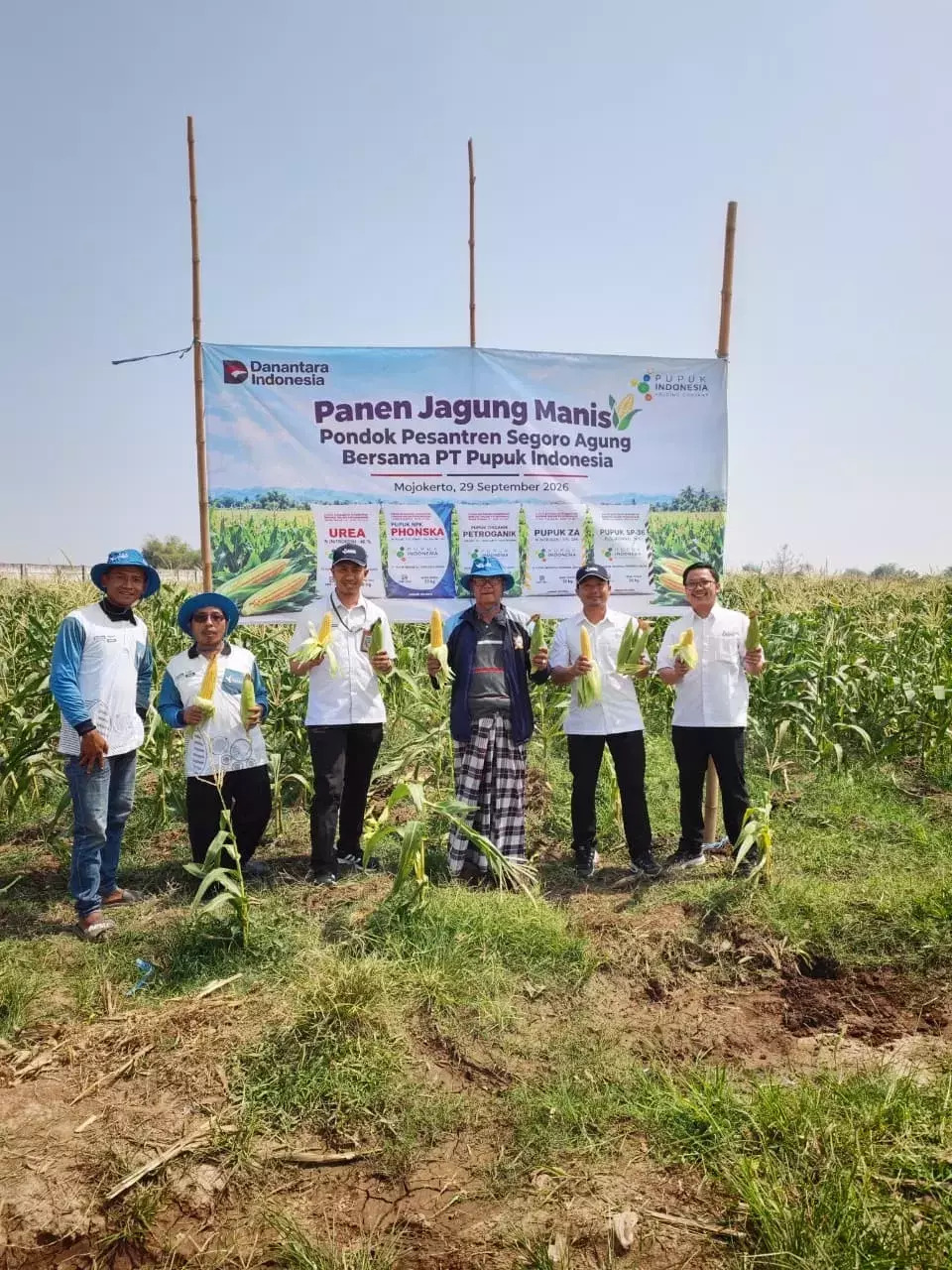
In an effort to strengthen national food security and foster agricultural enthusiasm among younger generations, state owned enterprise PT Pupuk Indonesia Persero has spearheaded a meaningful initiative in East Java. The enterprise recently completed a successful sweet corn harvest at Segoro Agung Islamic Boarding School located in Mojokerto Regency. Beyond harvesting crops, this endeavor represents a larger vision where educational institutions become active catalysts for regional economic growth. Through the Pupuk Indonesia agricultural education program, students gain hands on knowledge that merges traditional learning with modern agronomic practices, ensuring that school land generates long term economic value.
Islamic boarding schools, known locally as pesantren, have long been vital institutions for moral, religious, and academic development in Indonesia. However, many of these centers possess substantial land resources that remain underutilized. Recognizing this latent opportunity, Pupuk Indonesia stepped in to help turn available school property into productive agricultural fields. According to Wawan Arjuna, Senior Manager for Region 3A at Pupuk Indonesia, boarding schools hold enormous potential beyond their primary educational roles. By applying effective agricultural strategies, schools can produce high quality crops that benefit both internal campus needs and surrounding local communities.
Transforming Educational Institutions into Agribusiness Hubs
The primary goal of integrating farming into school environments is to establish self-sustaining economic hubs. When educational centers actively produce food, they reduce operational reliance on external vendors while teaching students practical business skills. The successful cultivation of sweet corn at Segoro Agung demonstrates how underutilized land can quickly turn into a reliable source of revenue and community nourishment. By managing the full production cycle, from seed planting to crop harvesting, students experience every phase of agribusiness firsthand.
Bimo Agus Sunarno, the head of Segoro Agung Islamic Boarding School, highlighted the immense benefit of this corporate partnership. He emphasized that direct guidance from agricultural experts allows students to master proper cultivation techniques that are rarely taught in standard classroom curricula. With ongoing collaboration, the school aims to expand its farming efforts into additional high value commodities, such as horticultural crops and vegetables. Over time, Segoro Agung envisions evolving into a comprehensive regional learning center where academic study, technical skills development, and commercial farming operate side by side.
Comprehensive Agronomic Training for Modern Farmers
A cornerstone of the Pupuk Indonesia agricultural education program is its structured curriculum on modern farming practices. Achieving high crop yields requires far more than basic planting; it demands a thorough understanding of soil science, crop nutrition, and environmental stewardship. During the field activities at Segoro Agung, agricultural specialists conducted interactive sessions covering fundamental factors necessary for farming success.
First, students received practical guidance on proper soil preparation and land cultivation. Preparing the soil correctly ensures adequate aeration, nutrient distribution, and root development. Second, experts guided participants through seed selection, emphasizing how certified high quality seeds resist environmental stress and yield healthier crops. Third, the training covered optimal crop maintenance and water management, which are critical for preserving soil moisture during changing weather conditions. Finally, students learned comprehensive techniques for pest and disease control, ensuring crops remain protected without overusing harmful chemicals.
Optimizing Crop Health Through Balanced Fertilization
Proper soil nutrition is essential for achieving maximum agricultural output. To support student learning, Pupuk Indonesia introduced various fertilizer options tailored to different soil conditions and crop needs. Students learned about essential primary nutrients like nitrogen, phosphorus, and potassium, as well as organic soil enrichers.
The educational sessions introduced core fertilizer products, including subsidized options like Urea and NPK Phonska, which supply fundamental macronutrients for healthy plant growth. Additionally, trainers highlighted Petroganik organic fertilizer, which improves soil structure, enhances moisture retention, and restores organic matter in depleted fields. Students were also introduced to non-subsidized formula options such as Phonska Plus, designed to optimize crop yields and quality. Through the Pupuk Indonesia agricultural education program, students developed a nuanced understanding of how balanced fertilization boosts crop productivity while keeping soil healthy for future planting cycles.
Bridging Youth Demographics and Modern Agriculture
Indonesia faces a significant demographic challenge in its agricultural sector, as the average age of farmers continues to rise while younger generations migrate toward urban corporate careers. Reversing this trend requires changing how young people view agricultural work. Initiatives like the Pupuk Indonesia agricultural education program show students that modern agriculture is a technologically advanced, economically viable, and rewarding field.
Experiential learning plays a central role in this transformation. When students prepare land, monitor crop growth, and harvest sweet corn themselves, farming changes from an abstract concept into an engaging career path. This hands on training helps bridge the gap between classroom theory and practical business operations. Students learn not only how crops grow, but also how to calculate production costs, manage field operations, and navigate local market dynamics. By instilling these skills early, the program prepares a new generation of agricultural entrepreneurs who can drive modern farming in their hometowns.
Strengthening Food Security Through Strategic Partnerships
The activities in Mojokerto reflect a broader effort by Pupuk Indonesia to enhance agricultural productivity and subsidized fertilizer distribution across the nation. Through complementary initiatives like the Pilar Tani program and Agrosolution platforms, the state owned company works closely with local distributors, farmers, and community organizations to ensure agricultural supplies reach fields on schedule.
Collaborating with educational institutions creates a resilient ecosystem where corporate social responsibility aligns with national development priorities. By combining industrial expertise with local community resources, the Pupuk Indonesia agricultural education program strengthens community self-reliance and contributes to nationwide food independence. As schools across Indonesia adopt similar integrated farming models, the synergy between education and sustainable agriculture will serve as a cornerstone for rural economic vitality.
Looking Ahead to Sustainable Agribusiness Models
The sweet corn harvest at Segoro Agung Islamic Boarding School marks the beginning of a promising journey toward broader agricultural empowerment. As educational institutions continue to embrace farming initiatives, the potential for positive economic impact grows exponentially. Expanding into varied crop varieties, adopting smart farming technologies, and creating direct market channels will enable schools to operate sustainable agribusinesses that fund their educational mission.
Through continued partnership and technical support, the Pupuk Indonesia agricultural education program serves as an effective blueprint for rural development across the archipelago. By equipping young minds with practical skills, scientific knowledge, and commercial insight, Indonesia can build a sustainable agricultural future grounded in innovation, self-reliance, and community strength.
Read More