


 Saturday, 21-11-26


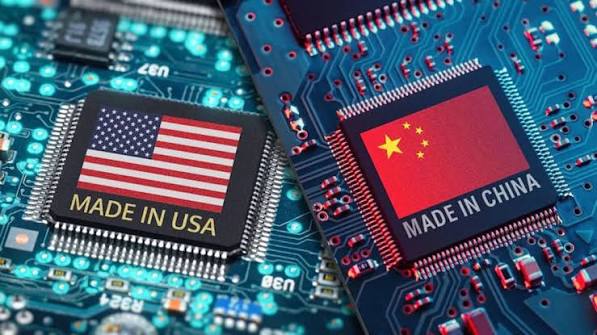
Global technology markets experienced a sharp wave of volatility in mid November 2026 after the United States government moved aggressively to close one of the most significant loopholes in its semiconductor export control regime. Shares of major Chinese AI companies tumbled across Hong Kong and mainland exchanges following an announcement from the Department of Commerce that severely restricts remote access to advanced American computing hardware housed in overseas data centers. The interim final rule, published by the Bureau of Industry and Security, targets the exact infrastructure pathways that cloud providers and model developers in China have increasingly relied upon to train frontier artificial intelligence systems. As investors digested the immediate financial implications of higher computing costs and restricted hardware supply, a clear divergence emerged across Asian equity markets, punishing cloud giants while fueling a dramatic rally in domestic Chinese semiconductor manufacturers.
Market Fallout Across Major Chinese Technology Stocks
The immediate reaction on Asian trading floors underscored the severe vulnerability of China's artificial intelligence ecosystem to American regulatory pressure. On Tuesday, November 17, 2026, heavy selling pressure swept through technology equities as institutional investors reassessed revenue projections and capital expenditure risks. E-commerce and cloud computing giant Alibaba Group Holding saw its shares drop as much as 5.6 percent in Hong Kong trading, while search and artificial intelligence pioneer Baidu fell 6.6 percent. These steep declines dragged the broader Hang Seng Tech Index down by 2.3 percent, reflecting widespread anxiety over the near-term growth trajectory of China's digital infrastructure sector.
Smaller, pure-play artificial intelligence developers and robotics firms suffered even sharper losses. Shares of foundational model developers Minimax Group and Z.AI, widely known as Zhipu, each plunged by more than 6 percent. Meanwhile, robotics manufacturer Yushu Technology plummeted by as much as 11 percent in Shanghai. Market strategists noted that the selloff was amplified by broader investor nervousness surrounding high artificial intelligence valuations, uncertain returns on massive infrastructure investments, and upcoming quarterly earnings reports from industry bellwethers including Nvidia, Alibaba, and Tencent Holdings. For Chinese AI companies competing directly against well-funded American rivals, losing seamless access to high-performance computing clusters represents an existential threat to their product development timelines.
Closing The Overseas Data Center Loophole
Until this latest regulatory intervention, Washington's export controls primarily focused on blocking the direct physical shipment of high-end processors, such as Nvidia's H100 and H200 series, into mainland China. To navigate around these barriers, Chinese AI companies increasingly turned to remote cloud leasing arrangements, renting massive computing power from third-party data centers located across Southeast Asia and other emerging hubs. Research conducted by the Washington-based Institute for Progress estimated that at least 30 percent of China's advanced artificial intelligence computing capacity would originate from overseas data center rentals and illicit smuggling networks by 2027.
The new 132-page federal rule directly dismantles this workaround. Under the updated framework, any data center operator globally that rents out substantial artificial intelligence computing clusters to entities headquartered in China or other arms-embargoed nations must obtain an explicit federal license from Washington. Specifically, the licensing threshold applies to facilities or networks operating with more than 12 million in total processing performance, an amount roughly equivalent to 750 Nvidia H100 chips. Furthermore, the regulation adds Singapore, Malaysia, Thailand, Indonesia, and Brazil to a heightened scrutiny list, requiring facility operators in those five nations to secure American government approval before purchasing advanced artificial intelligence chips from domestic suppliers. Existing data centers currently providing covered remote services to restricted clients have been granted a strict 90-day transition window to apply for federal authorization.
Corporate Scandals And Diplomatic Timing
While national security officials in Washington had debated tightening remote cloud access for months, particularly after Chinese startups demonstrated benchmark scores rivaling models from OpenAI and Anthropic, a high-profile corporate espionage scandal accelerated the policy rollout. Just days before the Commerce Department published its interim rule, longtime Nvidia chief executive Jensen Huang abruptly resigned following revelations of a personal relationship with Alice Huang, a former executive at Singapore-based cloud firm Megaspeed International. American authorities have been actively investigating Megaspeed over allegations that it utilized shell companies to illegally divert restricted semiconductors to Chinese clients.
The geopolitical timing of the announcement further heightened market tension. President Donald Trump unveiled the stricter export controls just as he departed Washington for a high-stakes diplomatic tour across Asia, scheduled to meet with Southeast Asian leaders in Manila before holding a bilateral summit with Chinese President Xi Jinping in Shenzhen. Trade policy analysts observed that closing the overseas compute loophole immediately prior to summit negotiations handed the American delegation substantial leverage while creating acute operational uncertainty for multinational cloud operators. Notably, the new framework formally rescinds the January 2025 AI Diffusion Rule, opting instead for targeted enforcement against remote compute leasing and opaque middleman networks, while leaving commercial recommendation algorithms used in standard e-commerce and social media exempt from the licensing mandate.
Cloud Revenue Headwinds And Model Training Delays
Industry analysts warn that the operational consequences for Chinese hyperscalers and model developers will be profound. In a research note to clients, Nomura Holdings analysts Jialong Shi and Rachel Guo highlighted that cutting off access to overseas computing resources will inevitably slow down the training of next-generation artificial intelligence models and dampen cloud revenue growth across mainland China. Without the ability to easily scale compute capacity in neighboring jurisdictions like Johor in Malaysia or Singapore, engineering teams face severe bottlenecks when running massive training workloads.
Corporate leadership within China has already begun acknowledging these constraints. Following the regulatory announcement, Tencent's president publicly warned that the new American restrictions on overseas data centers could delay the rollout of the company's upcoming artificial intelligence models, adding that the rules will force domestic technology firms to pivot even more aggressively toward homegrown hardware alternatives. While analysts note that cash-rich giants like Alibaba and ByteDance possess substantial existing stockpiles of graphics processing units that offer a temporary buffer, smaller startups lacking deep capital reserves or pre-existing hardware inventories face an immediate squeeze on both compute availability and operating margins.
Ripple Effects Across Asian Hardware And Utility Markets
The market shockwaves triggered by Washington's latest export controls extended far beyond mainland China, battering technology hardware suppliers and infrastructure developers across the broader Asia-Pacific region. In South Korea, shares of memory chip giant Samsung Electronics fell by up to 3.3 percent, while Japanese semiconductor testing equipment maker Advantest dropped 6.3 percent. Strategy heads at Nomura Asset Management pointed out that tighter export restrictions fuel persistent investor concerns over slowing hardware sales growth and near-term profit margin compression across the entire Asian semiconductor supply chain. Additionally, portfolio managers noted that some institutional investors were actively liquidating Asian technology holdings to free up capital ahead of an anticipated initial public offering by American artificial intelligence developer Anthropic.
Southeast Asian companies heavily exposed to the regional data center construction boom also suffered sharp reversals. In Malaysia, shares of YTL Power International, which had previously surged on expectations of massive electricity demand from newly built server campuses, plunged nearly 10 percent. Because regional data center operators must now verify the ultimate beneficial ownership of their tenants and comply with stringent monthly reporting rules if they wish to maintain exemptions for American hyperscale clients, investors quickly priced in higher compliance overhead and potential contract cancellations across Southeast Asia.
Domestic Chinese Chipmakers Surge On Self-Reliance Bets
Amid the widespread downturn across technology equities, domestic Chinese semiconductor manufacturers emerged as the sole bright spot, rallying sharply as investors bet that stricter American sanctions will accelerate Beijing's push for technological self-sufficiency. Shares of Semiconductor Manufacturing International Corporation, China's largest contract chipmaker, jumped as much as 6.4 percent in Hong Kong. Meanwhile, rival foundry Hua Hong Semiconductor surged an impressive 12 percent as capital rotated rapidly out of software and cloud platforms into domestic hardware fabrication.
This market divergence illustrates a structural reality reshaping the global technology landscape. Every escalation in American export controls reinforces the strategic imperative for Chinese AI companies to decouple from Western hardware architectures and optimize their software frameworks for domestically produced processors. Although local chipmakers still face significant technological hurdles in matching the raw performance and manufacturing yields of cutting-edge American silicon, guaranteed domestic demand and massive state-backed capital support ensure that China's homegrown semiconductor ecosystem will continue expanding rapidly. As global supply chains fracture along geopolitical lines, the resilience of Chinese AI companies will ultimately depend on how quickly domestic foundries can bridge the hardware performance gap.
Read More