


 Saturday, 21-11-26


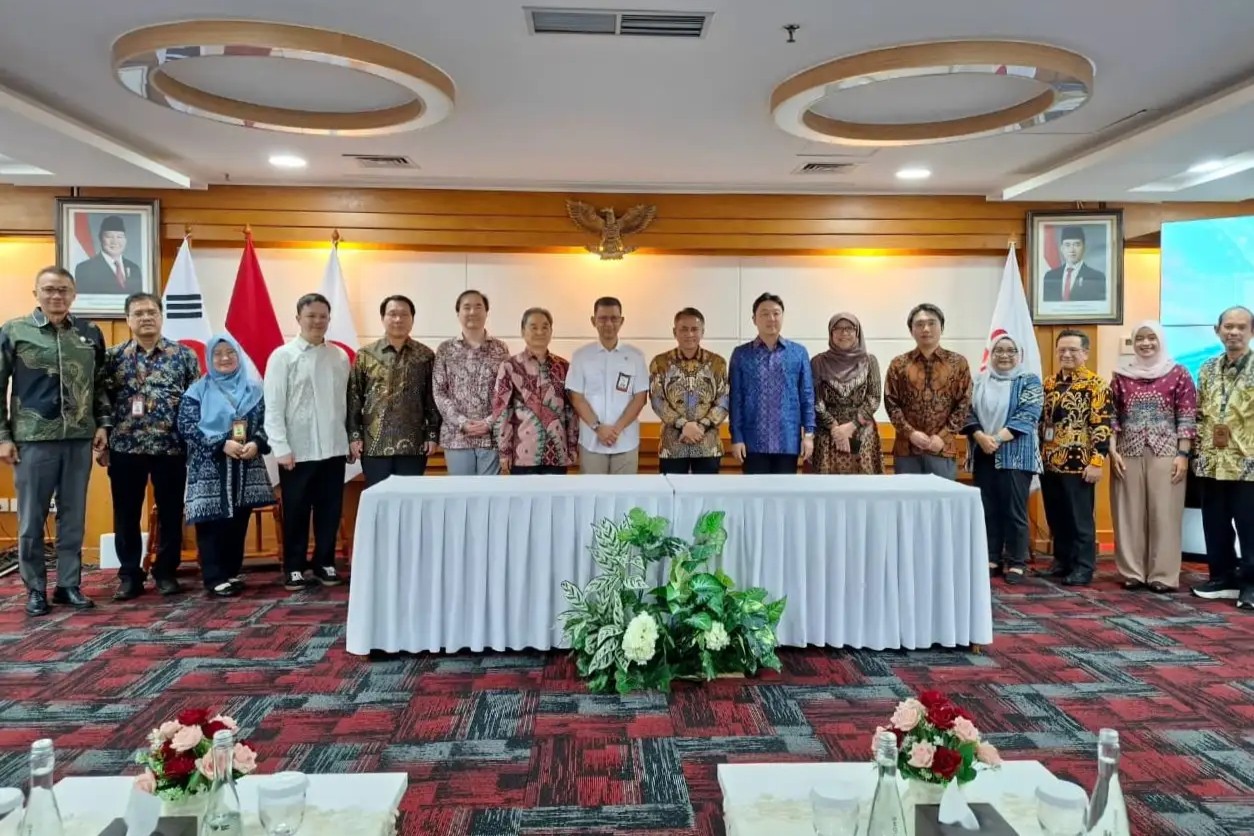
Indonesia's National Research and Innovation Agency (BRIN) has signed memorandums of understanding (MoUs) with research institutions and companies from South Korea and Japan to strengthen research infrastructure, accelerate research commercialisation, and develop traditional medicines that meet global standards (18/11).
The agreements were signed through BRIN's Deputy for Research and Innovation Infrastructure (DIRI) as part of efforts to strengthen public-private partnerships in research and innovation. The collaboration also aims to expand access to laboratory facilities and support the development of Indonesia's traditional medicine industry.
BRIN Signs MoUs with South Korean and Japanese Institutions
BRIN Deputy Head Amarulla Octavian said the agreements support President Prabowo Subianto's mandate to encourage strategic industrial cooperation and strengthen economic resilience through partnerships with other countries.
Speaking at the B.J. Habibie Building in Jakarta, Amarulla described the MoU signing as the beginning of meaningful cooperation that should lead to concrete research activities, knowledge sharing, and innovation.
“We believe that the signing of these MoUs marks the beginning of meaningful collaboration. The most important thing is how we turn these commitments into concrete research activities, knowledge sharing, and innovations that bring real benefits to society,” Amarulla said.
He also emphasised that public-private partnerships are essential to maximising the use of Indonesia's research infrastructure.
Indonesia Promotes Jamu Through International Research Collaboration
Traditional medicine is one of the main areas targeted by the partnership. Amarulla pointed to South Korea and Japan, whose traditional medicine practices have been recognised as UNESCO Intangible Cultural Heritage since 2023.
He said Indonesia also has jamu, a traditional herbal medicine that holds important cultural significance.
“Let us look at South Korea and Japan, which are widely recognised for their traditional medicine practices and received UNESCO Intangible Cultural Heritage recognition in 2023. Indonesia also has jamu, which holds equally important status as traditional medicine. To support this, BRIN now has Good Manufacturing Practice (GMP)-standard facilities for traditional medicine,” he explained.
The partnership is intended to support the development of Indonesian traditional medicine through research facilities, scientific activities, and cooperation with international partners.
BRIN Strengthens Traditional Medicine Research Through GMP Facilities
BRIN Deputy for Research and Innovation Infrastructure Dadan Moh. Nurjaman said private-sector partnerships are important for optimising the agency's research facilities.
These facilities cover various areas, including botanical gardens, earth stations, and genomic laboratories.
Dadan identified traditional medicine as one of the areas with significant potential for cooperation. He said Indonesian traditional knowledge, particularly jamu, requires scientific validation and technological development.
“Traditional medicine is one of the most promising areas. Indonesia's ancestral heritage, such as jamu, needs to be supported by scientific validation and technological development. Through GMP-standard manufacturing facilities and synergy with BRIN's Health Research Organisation, we aim to advance research and partnerships to bring this local wisdom into today's healthcare system,” Dadan said.
BRIN's GMP-standard manufacturing facilities and its cooperation with the Health Research Organisation are part of the agency's efforts to support research and partnerships in traditional medicine.
Nine-Month Process Leads to Trilateral Research Partnership
The process of developing the trilateral MoUs took approximately nine months. BRIN said this period was necessary to ensure that the cooperation arrangements would provide mutual benefits for the participating parties.
The South Korean institutions and companies directly involved in the signing were RS Group, Yonsei University, Spark Biolabs, and Dr B Lab. Japan's Data Labs also supported the collaboration.
The partnership coincides with the 53rd anniversary of Indonesia-South Korea bilateral relations, which have reached the status of a Special Comprehensive Strategic Partnership.
It also comes ahead of the 70th anniversary of Indonesia-Japan bilateral relations in 2028.
PHOTO: BRIN
This article was created with AI assistance.
We make every effort to ensure the accuracy of our content, some information may be incorrect or outdated. Please let us know of any corrections at [email protected].
Read More