


 Saturday, 21-11-26


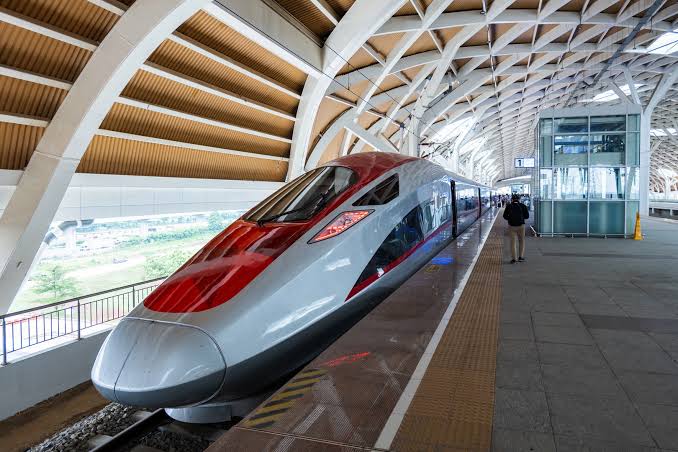
Regional infrastructure diplomacy took center stage in Manila on November 16, 2026, when Chinese Premier Li Qiang explicitly highlighted Beijing's flagship railway investment in Indonesia during the annual Association of Southeast Asian Nations summit. Addressing regional leaders, Li touted the 7.3 billion dollar Jakarta-Bandung railway, widely known as the Whoosh high-speed rail, as a cornerstone achievement of China's commitment to advancing Southeast Asian connectivity and economic integration. Sitting directly across the table from Li was Indonesian President Prabowo Subianto, whose administration is currently navigating delicate domestic financial reviews to restructure the massive debt load associated with the very same project. The diplomatic exchange underscores the dual nature of major cross-border infrastructure ventures, which serve simultaneously as powerful symbols of geopolitical cooperation and complex fiscal responsibilities for host nations.
Diplomatic Messaging At The Manila Summit
During his remarks at the ASEAN-China Summit in Manila, Premier Li Qiang strategically framed the Whoosh high-speed rail as tangible proof of mutual prosperity resulting from Belt and Road cooperation. Notably, his speech avoided contentious geopolitical flashpoints, making no mention of the long-stalled South China Sea code of conduct despite heightened maritime tensions between Beijing and summit host Manila. Instead, Li focused squarely on commercial milestones, noting that cumulative two-way investment between China and ASEAN member states has surpassed 500 billion dollars, representing an increase of more than 50 percent compared to five years ago.
By holding up the Indonesian bullet train as a premier regional success story, Beijing sought to reinforce its image as an indispensable infrastructure partner ahead of an upgraded ASEAN-China free trade agreement. Following the plenary session, discussions continued behind closed doors before President Prabowo Subianto prepared to travel to Shenzhen later in the week for formal bilateral talks with Chinese President Xi Jinping. While Jakarta has not officially confirmed whether railway financing is on the Shenzhen summit agenda, the juxtaposition of China's public praise and Indonesia's domestic fiscal maneuvering highlights the delicate balance required in modern infrastructure diplomacy.
Navigating The 7.3 Billion Dollar Debt Restructuring
While Beijing celebrates the operational visibility of the Whoosh high-speed rail, officials in Jakarta are working intensively behind the scenes to resolve its long-term financial pressures. Originally budgeted at roughly 6 billion dollars when construction began, the 142.3-kilometer railway line experienced significant cost overruns driven by land acquisition delays and pandemic-era supply chain disruptions, pushing the final price tag to 7.3 billion dollars. The project is managed by PT Kereta Cepat Indonesia-China, a joint venture in which an Indonesian state-owned consortium holds a 60 percent controlling stake and five Chinese companies hold the remaining 40 percent. State railway operator PT Kereta Api Indonesia serves as the largest domestic shareholder with a 58.53 percent interest.
To alleviate the heavy debt servicing burden weighing on state-owned enterprises, President Prabowo Subianto instructed the government to reorganize the financial architecture of the railway. Under the proposed restructuring plan, Indonesia's Ministry of Finance is slated to take over the domestic consortium's infrastructure liabilities, separating asset ownership from daily train operations. Meanwhile, Indonesia's sovereign investment agency Danantara, which oversees state railway operator PT Kereta Api Indonesia, will focus strictly on operational management. However, reports from Jakarta indicate that the Finance Ministry's formal takeover has experienced temporary procedural delays as officials complete comprehensive financial reviews and evaluate the use of off-budget special mission vehicles to settle obligations with the China Development Bank.
Operational Milestones And Ridership Growth
Despite ongoing balance sheet adjustments, the physical performance and public adoption of the Whoosh high-speed rail have demonstrated steady upward momentum since commercial operations commenced in October 2023. Operating at speeds of up to 350 kilometers per hour, the electric bullet train has slashed travel time between Jakarta's Halim Station and Bandung's Tegalluar Station from roughly four hours by car to just 45 minutes. By October 2026, marking three full years of commercial service, the line had successfully transported more than 18 million cumulative passengers.
Recent operational data illustrates strong seasonal surges and growing international appeal. During the mid-2026 school holiday period alone, the service carried 573,780 passengers, reflecting robust domestic demand along the bustling West Java economic corridor. Furthermore, the railway has increasingly evolved into a regional tourism magnet, with data showing that Malaysian travelers purchase an average of 1,150 tickets per day to experience Southeast Asia's first high-speed train. The opening of Karawang Station in late 2024 further integrated industrial estates along the route, steadily expanding daily commuter and business ridership closer to long-term feasibility projections.
Broader Indonesia-China Economic Interdependence
The diplomatic focus on the railway occurs against a backdrop of deepening bilateral economic ties between Southeast Asia's largest economy and Beijing. According to official Indonesian investment data, mainland China and Hong Kong channeled 17.8 billion dollars in direct investments into Indonesia during the first nine months of 2026 alone, solidifying their position as top sources of foreign capital. Over the same nine-month period, bilateral trade between Indonesia and China reached 132 billion dollars, driven heavily by mineral processing, electric vehicle supply chains, and industrial manufacturing.
Because China remains both Indonesia's largest trading partner and a critical financier of national industrial down-streaming initiatives, Jakarta approaches the railway debt negotiations with careful diplomatic pragmatism. Earlier in 2026, Indonesian officials held regular video consultations with Chinese counterparts to align repayment schedules and interest rate terms on cost-overrun loans, with Beijing characterizing the talks as being on the right track. Preserving investor confidence is paramount as Indonesia seeks continued foreign participation in large-scale infrastructure, energy transition projects, and industrial estate consolidation.
Future Expansion And Regional Connectivity Lessons
The ongoing financial and diplomatic evolution of the Whoosh high-speed rail carries profound implications for future infrastructure planning across the archipelago and neighboring ASEAN nations. For years, policymakers in Jakarta and Beijing have discussed extending the high-speed network eastward from Bandung to Surabaya, East Java's bustling capital, spanning roughly 700 kilometers across Java. However, Indonesian economic planners have emphasized that any future extension must incorporate strict upfront funding safeguards and transparent risk-sharing mechanisms to prevent the balance sheet vulnerabilities encountered during the first phase.
Across Southeast Asia, governments are closely observing Indonesia's experience as they weigh major cross-border rail proposals, from Laos and Thailand to Malaysia and Vietnam. The Jakarta-Bandung line proves that Chinese engineering and financing can rapidly deliver transformative, world-class transit infrastructure that stimulates regional mobility and urban development. At the same time, it demonstrates that host nations must pair ambitious construction timelines with disciplined fiscal oversight and realistic revenue modeling. As President Prabowo Subianto and Chinese leaders continue their high-level engagements, the path forward for the Whoosh high-speed rail will serve as an enduring benchmark for sustainable, mutually beneficial infrastructure partnerships across the region.
Read More