





 Sunday, 04-10-26








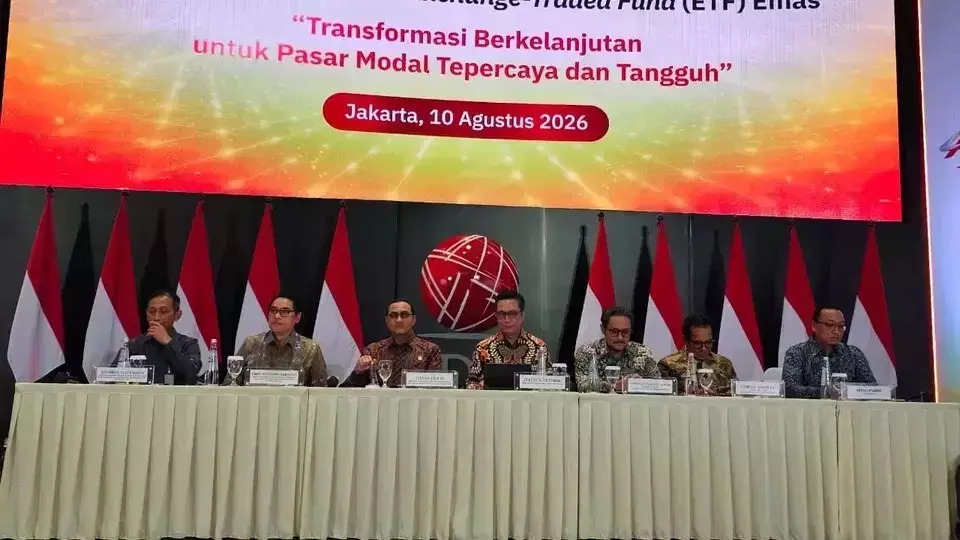
Indonesia has officially launched its first Gold ETF on the Jakarta Stock Exchange, opening a new avenue for investors to access gold without holding physical bullion. The groundbreaking fund, trading under the ticker XTRA, was introduced by the Financial Services Authority (OJK) on August 10, 2026. OJK chair Friderica Widyasari Dewi noted that gold ETFs have been a long-term goal, studied for over a decade, and recent regulatory changes have made this innovative product possible. By bridging Indonesia’s vast gold reserves with its growing capital markets, the Gold ETF aims to deepen financial markets and expand the country’s bullion ecosystem. Supported by the approval of multiple regulators and Sharia compliance endorsement, this first gold ETF offers a convenient, liquid way for both retail and institutional investors to gain exposure to gold prices.
What Is a Gold ETF?
A gold exchange-traded fund (ETF) is a collective investment vehicle that tracks the price of gold while trading on a stock exchange much like a regular share. Unlike buying physical gold bars or coins, investors in a gold ETF own units of a fund that is backed by real bullion. This means they can benefit from gold’s price movements without the need to store or secure the metal themselves. Gold ETFs provide liquid and transparent exposure to the precious metal: units can be bought or sold through any stock brokerage account during trading hours. Globally, gold ETFs have become popular among investors seeking a safe-haven asset or portfolio diversifier. For example, total assets held in gold ETFs worldwide were reported at around US$559 billion in 2025, reflecting the significant role these funds play in modern investment portfolios. In short, a gold ETF functions as a stock-market proxy for gold, giving the public a modern and efficient way to invest in this traditional safe-haven commodity.
Indonesia’s First Gold ETF Launch
On August 10, 2026, Indonesia took a major step by listing its inaugural Gold ETF on the Indonesia Stock Exchange (IDX). OJK officially approved the debut of this ETF, allowing investors to trade gold exposure under the new ticker XTRA. At the launch ceremony in Jakarta, OJK Chairman Friderica Widyasari Dewi emphasized that the gold ETF launch fulfills a long-held aspiration dating back 10–15 years. She noted that only recently have changes in the law and financial market infrastructure made this launch possible. The new ETF provides an alternative for Indonesians who traditionally bought physical gold or used digital gold savings; now they can buy and sell units of the fund on the stock exchange like any other listed security. Importantly, the ETF is fully backed by real gold held in secure vaults, ensuring that each fund unit corresponds to a defined amount of physical gold.
Multiple asset management firms are participating from day one. Five leading investment managers – Indopremier, Mandiri Manajemen Investasi, BRI Manajemen Investasi, Trimegah Asset Management, and Shinhan Asset Management Indonesia – have launched gold ETF products simultaneously, creating an ecosystem of bull market investment offerings. Investors in Indonesia can now trade these new ETF units on the IDX secondary market just as they would trade stocks. Trimegah Asset Management’s president director, Antony Dirga, expects the gold ETFs to gather several hundred billion rupiah in assets by year-end, reflecting strong initial demand. In fact, Indonesia’s expanding investor base – 28 million account holders by mid-2026 – provides a ready market for the new gold ETF and other innovative capital market products.
Regulatory Framework and Ecosystem Support
The successful launch of Indonesia’s Gold ETF required careful regulatory groundwork and a supporting ecosystem. In early 2026, the Financial Services Authority issued POJK No. 2 of 2026, a regulation specifically allowing exchange-traded mutual funds backed by gold. This legal framework established standards for gold purity and fund management that align with global norms. Under this rule, the underlying gold must meet high-purity standards (at least 99.5% under the London Bullion Market Association standard or 99.9% under Indonesian standards) and each ETF unit must be fully backed by physical gold. In addition, the IDX revised its listing and trading rules to welcome gold ETFs, demonstrating cross-agency commitment to the new product.
Crucially, the gold ETF launch ties into Indonesia’s wider bullion banking ecosystem. State-owned PT Pegadaian – Indonesia’s national pawnshop and precious metals depository – plays a central role by storing the physical bullion and issuing Electronic Gold Receipts (EGRs). These receipts represent ownership of the physical gold and are registered in the central securities depository (KSEI). Meanwhile, custodial banks (such as HSBC Indonesia) safeguard the vaulted gold, and designated authorized participants and dealers (e.g. Trimegah Sekuritas and Mirae Asset Sekuritas) ensure liquidity by facilitating large trades. This multi-tier structure – gold miners, Pegadaian vaults, certification and custody, and the stock exchange platform – creates a seamless bridge between Indonesia’s physical gold resources and its capital markets. By using EGRs and IDX infrastructure, the ETF makes gold ownership as simple as trading a share.
Another key aspect is Sharia compliance. Indonesia’s Gold ETF has received formal endorsement from the National Sharia Council of the Indonesian Ulema Council (DSN-MUI). This means that the ETF meets Islamic finance principles – it is free of riba (interest), gharar (excessive uncertainty), and is fully backed by tangible gold. The MUI’s fatwa on Sharia Gold ETFs encourages participation from Indonesia’s large population of Muslim investors who seek Shariah-compliant investment options. In effect, the fund appeals to a broader segment of the market, making gold investment more inclusive.
Investor Benefits and Market Opportunities
For investors, the new Gold ETF offers several compelling advantages:
- Liquidity and Accessibility: Since the Gold ETF trades on the IDX, individuals can buy or sell fund units instantly through their existing brokerage accounts. This contrasts with traditional gold ownership, which involves finding a reputable dealer and arranging secure storage. The ETF’s ticker XTRA ensures that gold exposure is now as liquid as trading any blue-chip stock.
- Safe-Haven and Diversification: Gold is renowned as a safe-haven asset that can protect wealth during market volatility. In fact, OJK highlights that gold helps safeguard portfolios during economic uncertainty. By adding a Gold ETF to a portfolio, investors gain price exposure to gold without the complexities of physical storage.
- Cost Efficiency: Purchasing gold ETFs can be more cost-effective than buying small bars or coins, since it eliminates premiums and fees associated with minting, transporting, and insuring gold. The new Indonesian Gold ETF follows industry standards, holding LBMA-grade bullion, and charges transparent fund management fees.
- Portfolio Transparency: As a regulated fund, the Gold ETF is required to report holdings and comply with securities laws. This transparency builds trust in comparison to informal gold markets. According to market officials, strict oversight and the use of reputable bullion banks are intended to maintain investor confidence.
- Sharia Compliance: The fund’s approval by Indonesia’s Ulema Council means that Muslim investors can participate while adhering to Islamic finance principles. This expands the investor base beyond those satisfied with conventional financial products.
By packaging gold as a tradable market instrument, the ETF also opens opportunities for institutional investors like pension funds and insurance companies who may have previously been restricted from holding physical gold. In effect, Indonesia’s Gold ETF broadens access to gold investing, complementing existing options like digital gold savings, bullion banking accounts, and physical gold products offered by companies like Pegadaian and Islamic banks.
Impact on Indonesia’s Economy and Financial Markets
Analysts and officials view the Gold ETF as more than just a novel investment product; it is a strategic move to strengthen Indonesia’s financial markets and economic resilience. Indonesia is one of the world’s largest gold producers (about the 10th largest globally), yet much of its mined gold wealth remains outside the formal financial system. By channeling gold ownership into regulated ETFs, Indonesia can “monetize” more of its domestic gold, reducing reliance on imports of investment gold and supporting local bullion supply chains.
The launch comes at a time when Indonesia’s capital markets are booming. In H1 2026, capital raising on the IDX topped Rp125 trillion (US$7.8 billion) while retail participation grew to 28 million investors. The gold ETF adds a new asset class to the mix, potentially attracting savings that might otherwise stay in cash or overseas assets. It may also slow capital outflows by providing an onshore hedging tool; for example, in periods of a weakening rupiah, local gold demand traditionally spikes. With the Gold ETF, investors have a rupiah-based instrument to hedge against currency risk with an asset denominated in USD (gold).
Globally, central banks and investors increased their appetite for gold in recent years – Q1 2026 saw the value of global gold demand surge to a record $193 billion, even as physical ETF flows moderated. Southeast Asia’s rising gold demand has been noted in various reports. In Indonesia, traders expect retail demand to be strong; indeed, five gold-focused exchange products launched simultaneously suggest robust interest. The OJK and IDX projections (a target of several hundred billion rupiah in assets by year-end) indicate confidence that the Gold ETF will capture a significant share of the growing gold investment market.
Broader Context and Future Outlook
The Indonesian Gold ETF is part of a wider trend of financial innovation in emerging markets. Comparatively, other countries have explored bullion funds: for example, Malaysia and Singapore offer gold investment schemes, though a locally-backed ETF is new for Indonesia. Domestic policymakers see the ETF as the culmination of years of groundwork, including launching national bullion banking services and digital gold platforms.
Looking ahead, market officials anticipate more gold ETF listings. By July 2026, seven asset managers had applied to list their gold ETFs on the IDX. The intention is to roll out additional products around Indonesia’s Capital Market Day (Aug 10) and beyond. To maximize impact, regulators are even discussing tax incentives: exemptions on capital gains for gold ETFs similar to those for physical bullion, for instance, would encourage more participation.
As the new Gold ETF ecosystem takes root, investors and analysts will be watching its performance. Potential risks remain (gold price volatility, tracking errors), but many in Indonesia’s financial industry see this as a step toward a more inclusive and robust financial system. By effectively linking a traditional asset like gold to modern markets, Indonesia aims to diversify investment options and enhance market depth. The gold ETF’s success in its debut year could serve as a benchmark for further innovation in the country’s capital markets.
