


 Wednesday, 28-10-26


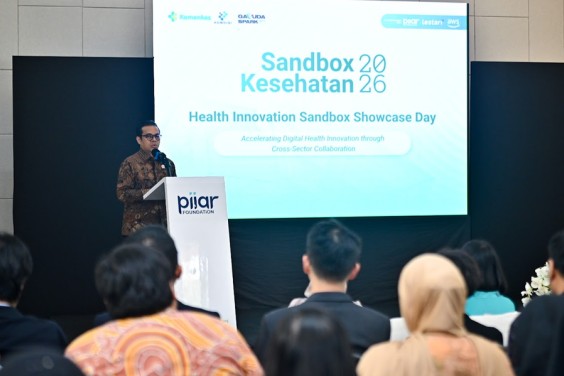
Indonesia is strengthening digital health innovation by connecting technology startups with hospitals and investors through the Garuda Spark Innovation Hub, with opportunities to develop artificial intelligence (AI) solutions for healthcare needs, including early tuberculosis detection and shortages of medical specialists (27/10).
Deputy Minister of Communication and Digital Affairs Nezar Patria outlined the initiative at the Health Innovation Showcase 2026 at Jakarta Future Community Space in Kuningan, South Jakarta, on Tuesday. He also welcomed 11 innovators who had passed the Ministry of Health’s regulatory sandbox testing.
Digital Health Innovation Targets Medical Service Gaps
Nezar said a strong ecosystem is essential for healthcare technology innovation to grow and benefit more people. He identified four areas that must be supported: infrastructure, technological readiness, innovator capacity and a supportive environment.
“Great innovations will not grow without a strong ecosystem. At Komdigi, there are four things we must safeguard together: infrastructure, technological readiness, innovator capacity and a supportive environment,” Nezar said.
He said digital innovation and AI could help improve healthcare services, particularly by addressing shortages of medical personnel and supporting early disease detection.
One example is AI-assisted tuberculosis detection through the analysis of chest X-ray images. According to Nezar, the technology could help address gaps in healthcare services where the number of specialists is insufficient to meet public needs.
“For example, adopting AI technology for TB can help fill the gap left by a shortage of specialists. This would enable initial diagnoses so that patients can be treated more quickly and more lives can be saved,” he said.
Hospitals and Startups Develop AI Healthcare Solutions
Nezar emphasized that collaboration between hospitals and technology providers is important to expand the use of digital health innovation. Hospitals have various service needs that innovators can use as a basis for developing technology-based solutions, including applications using AI.
“Hospitals have many use cases that our innovators can use as a basis for providing technology solutions based on new technologies such as artificial intelligence,” Nezar said.
He highlighted the potential for hospitals to provide opportunities for innovators to develop solutions based on real healthcare needs. Such collaboration must also consider patient safety and the role of medical professionals.
Garuda Spark Targets Rp1 Trillion in Investment
Komdigi is also supporting innovators by facilitating access to investment and strategic partnerships through the Garuda Spark Innovation Hub. The initiative connects investors with startups through business-matching activities.
“We are trying to help innovators through business matching between investors and startups that are developing innovations. So far, Garuda Spark has attracted more than Rp429 billion in investment, and we will continue pushing until the end of 2026 to reach Rp1 trillion,” Nezar said.
The investment figure and target form part of the initiative to support startups developing technological innovations. Garuda Spark serves as a channel for connecting innovators with investors to help strengthen the innovation ecosystem.
AI Governance and Patient Safety Remain Essential
Nezar stressed that the use of AI and the management of health data must be accompanied by strong governance and risk mitigation. He noted that health data requires protection and that healthcare technology can directly affect human lives.
“In the healthcare sector, the risk concerns human lives. That is why I believe everything will be tested in the sandbox,” he said.
Nezar expressed hope that collaboration among the government, innovators, hospitals, investors and industry partners would strengthen Indonesia’s digital health innovation ecosystem. These efforts are part of the push for technology that is sovereign, empowering and inclusive as Indonesia moves toward 2045.
“These 11 innovators are not the end point, but the starting point of a long journey ahead,” Nezar said.
PHOTO: MINISTRY OF COMMUNICATION AND DIGITAL AFFAIRS
This article was created with AI assistance.
We make every effort to ensure the accuracy of our content, some information may be incorrect or outdated. Please let us know of any corrections at [email protected].
Read More