


 Wednesday, 28-10-26


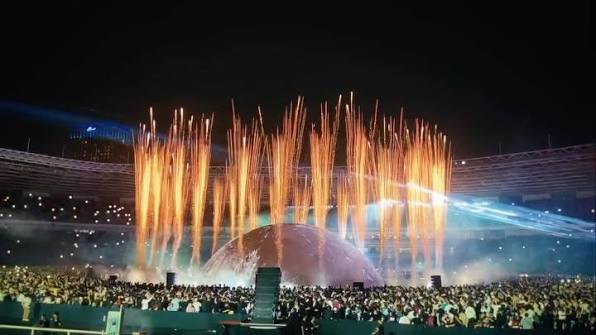
Jakarta's latest international entertainment and sporting events have generated an estimated Rp625 billion in economic impact, underscoring the potential of large-scale events to stimulate tourism, retail spending, hospitality, and local business activity. The estimate combines the economic contributions of Ye Live in Jakarta 2026, a concert by American rapper Ye, formerly known as Kanye West, and the Jakarta Running Festival (JRF) 2026.
Jakarta Governor Pramono Anung announced the figures on October 26, following the events held over the October 24-25 weekend. The concert at Gelora Bung Karno (GBK) Main Stadium was estimated to have generated Rp450 billion, while the running festival contributed approximately Rp175 billion. Ticket sales alone for Ye's concert reached Rp328 billion, according to the governor.
Beyond the headline figures, the Jakarta event economic impact highlights a broader opportunity for the capital: positioning international concerts and sporting competitions as economic catalysts that attract visitors, support local enterprises, and encourage spending across multiple industries.
The two events also demonstrate how different event formats can contribute to an urban economy. A major concert can draw fans who spend on tickets, accommodation, dining, transportation, and retail. A running festival can attract domestic and international participants while creating commercial opportunities for sports brands, merchandise vendors, and small businesses.
However, translating high-profile events into sustained economic growth requires more than attracting large audiences. The distribution of spending, the participation of local businesses, the quality of transport and event infrastructure, and the reliability of economic impact measurements all matter in determining the lasting value for Jakarta.
Jakarta Event Economic Impact Reaches Rp625 Billion
The combined figure of Rp625 billion reflects the estimated economic contribution of two major events held during the same weekend.
According to Pramono, the Jakarta Running Festival generated approximately Rp175 billion, while Ye's concert contributed Rp450 billion. The governor also said the total could be higher because not all economic activity associated with the events could be captured in the calculation.
The reported figures break down as follows:

The figures were announced by the Jakarta governor and reported by Indonesian media. They should be understood as government estimates rather than a comprehensive, independently audited assessment of every transaction associated with the events.
The distinction is important because economic impact can encompass different types of activity. Ticket purchases represent a relatively direct source of spending, while accommodation, food and beverages, shopping, and transportation generate additional business activity around an event.
Pramono specifically identified hotels and shopping malls as examples of sectors benefiting from the influx of visitors. He also noted that some attendees remained in Jakarta after the concert, extending economic activity beyond the performance itself.
This illustrates why the economic impact of an event cannot be measured solely by the revenue generated by its organizer. Spending by visitors can circulate through businesses that are not directly involved in producing the event.
For Jakarta, the reported Rp625 billion provides an indication of the commercial potential of coordinated entertainment and sports programming. Nevertheless, a fuller assessment would require greater transparency on the measurement period, spending categories, methodology, and whether the estimate accounts for spending that would otherwise have occurred in the city.
Those details would help businesses, investors, and policymakers distinguish between headline economic turnover and the additional economic value created by hosting the events.
Ye Concert Drives the Larger Share of Spending
Ye Live in Jakarta 2026 accounted for an estimated Rp450 billion in economic impact, making it the larger contributor to the combined weekend figure. Held on October 24 at GBK Main Stadium, the concert attracted an estimated 50,000 fans, according to the Jakarta Globe report. Ticket sales alone reached Rp328 billion, while the broader economic impact was estimated at Rp450 billion.
The difference between ticket revenue and the reported total suggests that the economic assessment considered activity beyond ticket purchases. However, the precise composition of the additional amount was not publicly itemized in the reporting, so it should not be treated as a verified breakdown of spending by individual sectors.
The commercial significance of a major international concert extends across an interconnected network of businesses.
Hotels may experience increased demand from visitors who arrive before the show or stay overnight afterward. Restaurants and entertainment venues can benefit from higher foot traffic, while transportation providers may see additional demand around the stadium and other visitor destinations.
Retail spending can also rise as concertgoers combine their attendance with shopping and other leisure activities. Event production itself supports a separate network of service providers, including technical crews, equipment suppliers, logistics companies, security personnel, and food vendors.
The concert's appeal to international audiences is particularly relevant to Jakarta's tourism ambitions. Visitors arriving specifically for a performance may combine the event with other activities in the city, increasing the duration and breadth of their spending. In September, the Jakarta provincial government described the concert as an opportunity to strengthen Jakarta's position as an international music tourism destination. The government also committed support involving transportation, the creative economy, and public order to facilitate the event.
This approach reflects an economic strategy in which the attraction itself serves as an entry point for broader commercial activity. A successful concert may generate immediate ticket revenue, but its wider value depends on whether visitors use local accommodation, dining, retail, and transport services.
At the same time, the costs of hosting large events should be considered alongside their benefits. Venue operations, public services, traffic management, crowd control, and additional transportation arrangements may require resources from both organizers and public authorities.
A complete evaluation of the concert's net economic contribution would therefore compare spending generated by the event with relevant costs, while accounting for how much of that spending remained within Jakarta's economy.
Jakarta Running Festival Connects Sports Tourism With Local Businesses
The Jakarta Running Festival contributed an estimated Rp175 billion to the combined economic impact, adding a sports tourism dimension to the weekend's commercial activity.
The 2026 edition attracted more than 37,000 runners from 48 countries, including approximately 1,000 international participants, according to reports from the Jakarta provincial government and ANTARA. The event featured 5-kilometer and 10-kilometer races, a half marathon, and a full marathon during its October 24-25 race days.
The scale of participation places the event within a growing market for running-related travel, where participants often travel with family members, friends, and fellow community members.
Unlike a concert, which generally concentrates its audience around a particular performance time, a running festival can distribute activity across several days. Participants may need to collect race materials, attend pre-race activities, prepare for their events, and spend time in the host city before returning home.
The festival also featured a race expo involving 49 micro, small, and medium enterprises (MSMEs) and 130 brands, including domestic and international businesses. This created a direct channel for commercial participation beyond the race itself.
For local enterprises, the expo can provide access to customers who are already interested in sports, fitness, nutrition, apparel, and lifestyle products. Depending on the products and services offered, participating businesses may also gain opportunities to build customer relationships and increase brand exposure.
The benefits are not limited to vendors inside the expo. Restaurants, coffee shops, hotels, transportation providers, and retail businesses can also receive additional demand from participants and accompanying visitors. The festival's international reach is another important consideration. More than 1,000 overseas runners can contribute to inbound tourism spending, although their actual economic contribution depends on accommodation choices, length of stay, spending patterns, and whether they travel with companions.
The event's value also extends to the city's reputation. Jakarta's efforts to attract international sports competitions can strengthen its profile among running communities and organizers considering future events. The half marathon category received World Athletics Gold Label status in 2026, while the full marathon held a World Athletics Label, according to the Jakarta provincial government. These distinctions support the event's positioning within the international running calendar.
The Jakarta event economic impact demonstrates the value of combining different event formats. A concert and a running festival attract different audiences, but both can direct spending toward the same urban ecosystem. The key question for the city is how effectively this interest can be converted into repeat visits, stronger local business participation, and sustainable opportunities for tourism-related enterprises.
Event Economics Depend on Spending Beyond Ticket Sales
The Rp625 billion estimate points to an important distinction in event economics: ticket revenue is only one component of the spending associated with a major gathering. For a concert, ticket purchases may provide the largest immediately measurable transaction. However, the total commercial activity around the event can include accommodation, food, transport, shopping, production services, and other spending by visitors.
The same principle applies to running festivals. Registration fees are only one part of the commercial ecosystem, which may also include race merchandise, sports equipment, food and beverages, lodging, and expo transactions. For Jakarta, the potential multiplier effect emerges when these activities connect local businesses to the additional demand generated by visitors.
Consider a runner who travels from another city for the Jakarta Running Festival. The initial expense may be a race registration fee, but the visitor could also pay for a hotel, meals, transportation, and purchases at the race expo.
Each transaction creates revenue for a different business. The scale of the overall economic contribution depends on how many visitors spend locally, how long they stay, and how much of the resulting revenue flows to workers, suppliers, and business owners in the city.
International concerts operate in a similar way, especially when visitors plan trips around specific performances. However, not all spending associated with an event necessarily represents new economic activity. Residents who attend a concert may divert money from other entertainment or retail activities they would have undertaken anyway. Businesses may also experience higher demand during the event but weaker activity afterward.
Economists therefore distinguish between gross spending associated with an event and its net additional economic impact. A rigorous assessment typically considers visitor spending, the proportion of expenditure that stays within the local economy, displacement of other spending, and relevant public and private costs.
The reporting on the October events does not provide sufficient methodological detail to determine how fully these factors were incorporated into Jakarta's Rp625 billion estimate. This does not make the estimate irrelevant. Rather, it identifies an opportunity for better measurement. Publishing the methodology and sector-level breakdown would help clarify the contribution of tourism, retail, transport, accommodation, and direct event operations.
Better data could also help policymakers determine which event formats deliver the strongest local benefits and how public resources should be allocated to support future events. For businesses, this information can inform decisions about staffing, inventory, promotions, accommodation capacity, and partnerships with event organizers. It may also help local enterprises prepare for periods of high visitor demand.
Can Jakarta Turn One Weekend Into a Repeatable Growth Strategy?
The combined contribution of Ye's concert and the Jakarta Running Festival suggests that large-scale events can form part of a broader urban economic strategy. The challenge is to make their benefits repeatable rather than dependent on a small number of exceptional weekends.
Indonesia's national tourism strategy has also emphasized the commercial role of events. The Ministry of Tourism reported that 105 events received support through its Event by Indonesia program between January and July 2026. These activities included national and international events, the Karisma Event Nusantara program, meetings, incentives, conventions and exhibitions, and other regional events.
According to the ministry's impact assessment, those events involved more than 6.47 million visitors, 11,000 MSMEs, and over 184,000 artists and community workers, with estimated economic turnover of Rp1.09 trillion.
The figures illustrate how event-related activity can extend beyond a single city or a single category of entertainment. Concerts, sports competitions, festivals, and business gatherings can create commercial opportunities across different industries. For Jakarta, a repeatable strategy would require coordination across several areas.
First, event scheduling needs to support complementary demand. Coordinating sporting, cultural, and entertainment events can help attract different visitor segments, although organizers and authorities must consider competition for venues, transport capacity, accommodation, and public services.
Second, local business participation must be built into event planning. The involvement of 49 MSMEs at the running festival's expo illustrates one way to connect event audiences with local enterprises. Similar opportunities can be developed through vendor programs, food and beverage partnerships, merchandise production, and visitor promotions.
Third, transport and visitor management need to remain reliable. Large events can place considerable pressure on roads, public transportation, and venue access. Efficient mobility arrangements are important not only for visitor satisfaction but also for allowing local businesses to operate during busy event periods.
Fourth, economic impact should be measured consistently. Tracking visitor origins, average length of stay, accommodation spending, local procurement, MSME sales, and public expenditure would provide a stronger basis for evaluating outcomes. Such data could help distinguish between temporary spending surges and sustained economic gains.
Finally, Jakarta needs to maintain the quality and reliability of its event infrastructure. International organizers and audiences consider multiple factors when selecting destinations, including venue capabilities, safety, transport accessibility, accommodation options, and the overall visitor experience.
The Rp625 billion estimate gives the city a useful starting point for assessing the commercial potential of major events. The next step is to determine how that activity translates into value for local businesses, employment, tourism demand, and the city's wider economic ecosystem.
For policymakers and business owners, the opportunity lies in treating events not as isolated spectacles but as platforms that connect visitors, enterprises, and the urban economy.
Read More