


 Wednesday, 28-10-26


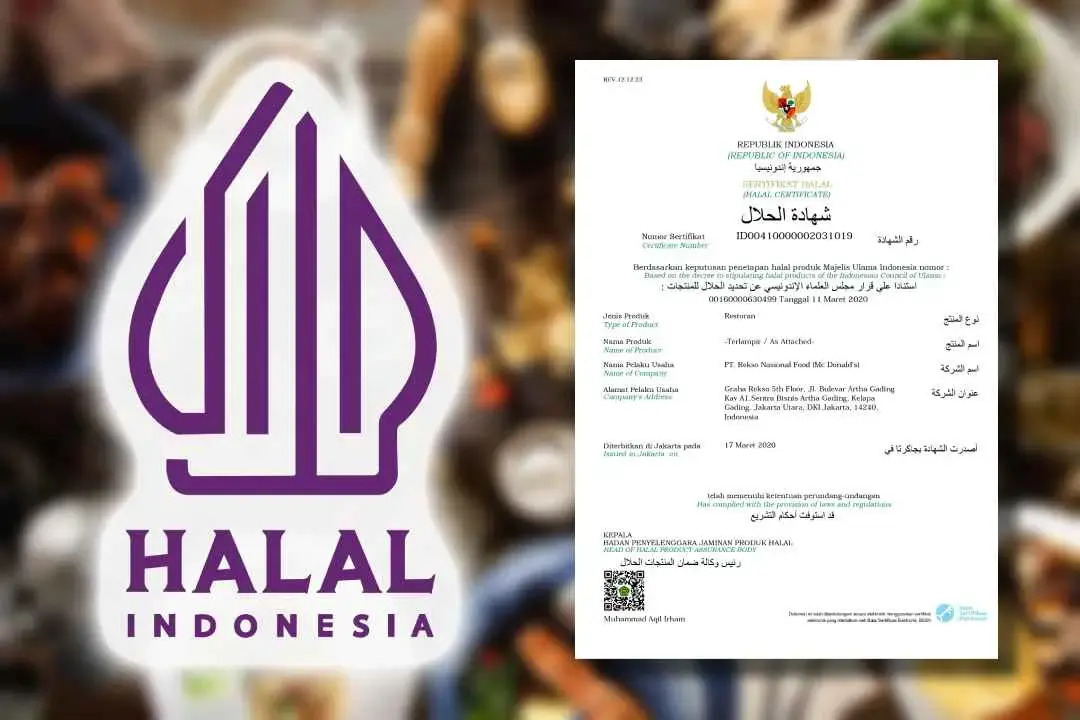
Indonesia has extended the transition period for mandatory halal certification for micro and small enterprises, giving affected businesses an additional two years to prepare for compliance. Under Government Regulation No. 40 of 2026, the revised deadline for covered products from micro and small enterprises is October 17, 2028, replacing the previous transition period that was scheduled to end in October 2026.
The decision responds to concerns over administrative requirements, business readiness, and the capacity of small enterprises to complete the certification process. MSME Minister Maman Abdurrahman said President Prabowo Subianto had ordered the postponement after the government acknowledged that its certification target had not been achieved and that many business owners were struggling to prepare the required documents.
However, the extension does not eliminate the obligation to obtain halal certification. Instead, it provides additional time for affected businesses to comply while the government continues refining its implementation mechanisms.
For Indonesia's extensive network of micro and small enterprises, the revised halal certification deadline for MSMEs has significant implications for business planning, consumer confidence, market access, and the development of the country's halal economy.
Indonesia Revises the Halal Certification Deadline for MSMEs
The extension follows the government's assessment of the readiness of businesses and the broader halal certification ecosystem.
The original transition period for mandatory halal certification for food, beverages, slaughtered products, and slaughtering services from micro and small enterprises was due to end on October 17, 2026, with the new implementation phase beginning on October 18.
On October 16, the government announced adjustments through Government Regulation No. 40 of 2026, which amends Government Regulation No. 42 of 2024 on the Implementation of Halal Product Assurance. The revised regulation provides additional time for businesses in designated categories to meet the requirements.
Maman said many business owners had raised concerns about the timing of the original deadline and the administrative work involved in verifying requirements and preparing documents. The government intends to use the additional period to develop a more practical implementation mechanism that takes into account the financial and operational capabilities of smaller enterprises.
The issue is particularly relevant for businesses operating with limited administrative resources. Small food producers, traditional food vendors, home-based businesses, and other microenterprises may lack dedicated compliance personnel to manage licensing and certification requirements alongside daily operations.
The government must therefore balance two objectives: maintaining the legal obligation to certify eligible products and ensuring that the compliance process remains accessible to the businesses expected to meet it.
The revised halal certification deadline for MSMEs reflects this balancing act. Rather than abandoning the requirement, the government has extended the transition period to give businesses and relevant institutions more time to prepare.
The distinction matters. Business owners should interpret the extension as additional compliance time, not as a permanent exemption from certification.
Which Businesses and Products Are Covered by the Extension?
Although the policy is widely described as an extension for MSMEs, the revised regulation applies to specific product categories and business classifications. Not every business receives the same deadline.
Under the amended regulation, food, beverage, slaughtered products, and slaughtering services produced or provided by micro and small enterprises have a transition period extending through October 17, 2028. This means the new implementation phase begins on October 18, 2028.
The regulation also adjusts the transition periods for several other categories:
- Certain food-related services: Services related to food, beverages, and slaughtered products, excluding slaughtering services, provided by medium and large enterprises have a transition period through October 17, 2028.
- Imported food products: The mandatory certification phase for imported food, beverages, slaughtered products, and slaughtering services begins on October 18, 2028, taking into account the completion of mutual recognition arrangements for halal certificates.
- Selected health and consumer products: Traditional medicines, quasi-drugs, health supplements, cosmetics, chemical products, genetically engineered products, and certain consumer goods have transition periods extending through October 17, 2028. These goods include specified clothing and accessories, household health supplies, household equipment, religious accessories, stationery, office supplies, and Class A medical devices. [2]
Other categories retain different compliance schedules. The transition period for over-the-counter and limited over-the-counter medicines, as well as Class B medical devices, runs through October 17, 2029. Prescription medicines, excluding psychotropic medicines, and Class C medical devices have a transition period through October 17, 2034, subject to the applicable provisions.
Businesses must therefore identify the classification of their products and services before determining which deadline applies.
For example, a small enterprise producing packaged snacks should assess its obligations under the provisions governing food products from micro and small businesses. A cosmetics producer, meanwhile, must examine the provisions applicable to cosmetics rather than automatically applying the deadline for food products.
Medium and large enterprises also need to pay attention to the distinctions. The amendment does not reverse the existing October 18, 2024, implementation date for food, beverages, slaughtered products, and slaughtering services from medium and large enterprises. However, the regulation separately extends the transition period for specified food-related services provided by those businesses. Understanding these distinctions will be essential to avoiding compliance errors as the new implementation dates approach.
Why the Government Has Given Small Businesses More Time
The extension highlights the practical challenges of implementing a nationwide certification framework across businesses with different levels of financial capacity, documentation, and operational maturity. Indonesia's micro and small enterprises operate across a broad range of industries, from home-based food production to retail, personal care products, and small-scale manufacturing. Their ability to meet regulatory requirements varies considerably.
For some businesses, preparing a halal certification application involves more than submitting a form. They may need to document ingredients, verify suppliers, explain production processes, organize supporting records, and establish procedures to maintain the halal status of their products.
These tasks can become more complicated when businesses rely on multiple ingredient suppliers or lack formal systems for recording production activities. Maman's comments indicate that the administrative burden was a central consideration in postponing the deadline. The government has acknowledged that the original target was not fully achieved and is reviewing how the requirement can be implemented without imposing excessive pressure on small enterprises.
However, the challenge also involves the readiness of the institutions supporting certification. Businesses need access to clear guidance, verification services, trained assistance, and practical information about application requirements. The Halal Product Assurance Organizing Agency, known as BPJPH, plays a central role in this system. Its responsibilities include administering certification services and working with relevant stakeholders to improve access for eligible businesses.
According to Indonesia's Coordinating Ministry for Economic Affairs, approximately 4.4 million halal certificates had been issued, covering 3.47 million business operators and 14.68 million certified products, as reported in its October 2026 update. The government has also established mutual recognition arrangements for halal certification with 39 countries.
These figures illustrate the scale of the country's certification infrastructure, but they do not establish the proportion of all eligible businesses that have completed their obligations. A business may have multiple certified products, and the number of certificates cannot be directly equated with the number of compliant enterprises. The revised halal certification deadline for MSMEs gives authorities more time to address these gaps. Its effectiveness will depend on whether the additional period translates into simpler procedures, stronger support systems, and greater participation among eligible businesses.
What MSMEs Should Do Before the 2028 Deadline
The extension gives businesses more time, but postponing preparations until 2028 could leave them facing the same administrative pressures that contributed to the original delay. Affected businesses should begin by identifying their obligations under Government Regulation No. 40 of 2026 and confirming that their products fall within the extended transition period.
The following steps can help businesses prepare.
1. Verify Business Registration and Product Eligibility
Businesses should check whether their business registration and product classifications are consistent with the applicable certification requirements. For eligible micro and small enterprises, having a Business Identification Number, or NIB, is among the requirements for accessing the government's free certification program.
2. Review Ingredients and Suppliers
Food producers should document the ingredients used in their products and establish whether the relevant materials meet halal requirements. Supplier records and supporting documentation can help businesses demonstrate the suitability of their ingredients during the certification process.
3. Document Production Procedures
Businesses should maintain clear records of how products are manufactured, handled, stored, and prepared. Appropriate separation between halal and non-halal production processes is also important where relevant to the requirements.
4. Assess the Applicable Certification Route
Not every business qualifies for the same certification mechanism. Certain eligible micro and small enterprises can apply through a self-declaration pathway, subject to the applicable criteria and verification process.
BPJPH's 2026 criteria for the SEHATI free certification program include the use of verified halal ingredients, relatively simple production processes, eligible product categories, and supporting documentation. Applicants must also meet the program's business and operational requirements.
5. Prepare Documentation Early
Applicants should organize the required records, including business information, ingredient lists, production process descriptions, and other supporting documents relevant to their applications.
Applications under the self-declaration pathway are submitted through the SIHALAL system, subject to the applicable requirements. Businesses that are uncertain about their eligibility should seek clarification through BPJPH or the relevant halal certification assistance providers.
Indonesia has also allocated 1.35 million free halal certificates for eligible micro and small enterprises through the 2026 SEHATI program. Because this allocation may be subject to quota availability, businesses should verify the current registration status rather than assume that subsidized certification remains available.
Starting early will help business owners identify gaps while there is still time to address them. It can also reduce the risk of application delays as the next deadline approaches.
Business Implications: More Time, but No Permanent Exemption
For smaller businesses, the extension provides immediate operational relief. Enterprises that had not completed their applications by the original October 2026 deadline now have more time to prepare without facing the same transition timetable.
The extra period may be especially helpful for businesses that need to organize supplier documentation, formalize production procedures, or obtain assistance with applications.
Nevertheless, the benefits will depend on how businesses use the additional time.
Halal certification can play a role in strengthening consumer confidence, particularly in a market where consumers pay attention to product ingredients, handling, and manufacturing processes. A valid certification can also help businesses demonstrate that their products meet the applicable requirements.
For small enterprises seeking to expand distribution, improve relationships with retailers, or develop more formal supply chains, certification may support their broader market-readiness efforts.
The potential benefits extend beyond the domestic market. Indonesia's halal economy is connected to international trade, and credible certification systems can help businesses navigate markets where halal compliance is an important commercial consideration. However, recognition of Indonesian certificates and the requirements for entering individual markets vary by jurisdiction.
The extension also has implications for competition. Businesses that complete certification early may be better positioned to respond to customer inquiries and procurement requirements, while those that delay preparations could face a rush of applications as the deadline approaches.
For the government, the challenge is to ensure that the extension produces measurable progress. Clear technical guidance, accessible certification services, effective assistance programs, and consistent enforcement will be important in helping eligible enterprises complete the process.
The revised halal certification deadline for MSMEs should therefore be viewed as a period for improving compliance readiness, rather than merely postponing a regulatory obligation.
Indonesia's Halal Economy Faces an Implementation Test
Indonesia has a significant opportunity to strengthen its position in the global halal economy, but the effectiveness of its certification framework will depend on how well it accommodates businesses of different sizes.
The government has already developed a legal framework under Law No. 33 of 2014 on Halal Product Assurance, as amended by subsequent legislation, with Government Regulation No. 42 of 2024 establishing the implementing framework. Government Regulation No. 40 of 2026 modifies the transition periods for designated product categories while retaining the underlying obligation.
This approach reflects the broader difficulty of implementing national standards across a large and diverse business population. Policies must provide legal certainty while accounting for differences in resources, technical capacity, and access to administrative support.
For Indonesia's smaller enterprises, the next two years will be important. Businesses will need to use the additional time to strengthen documentation, verify inputs, and complete the certification process applicable to their products.
For policymakers, the priority will be to translate the revised timetable into an implementation framework that is practical for businesses and credible to consumers.
Ultimately, the success of the extension will not be measured solely by whether the government meets the 2028 deadline. It will also depend on whether more eligible businesses can comply without facing disproportionate administrative barriers, while consumers continue to receive clear and reliable information about the products they purchase.
The new halal certification deadline for MSMEs provides an opportunity to close the gap between regulatory requirements and business readiness. Whether that opportunity delivers lasting results will depend on the quality of implementation over the coming two years.
Read More