


 Wednesday, 28-10-26


Indonesia's decision to reduce natural gas exports to Singapore has put commercial supply agreements and regional energy security under renewed scrutiny, highlighting the competing priorities of domestic electricity demand and cross-border energy trade.
The reduction, which took effect on October 24, 2026, involves 31 million standard cubic feet of natural gas per day redirected from pipeline deliveries to Singapore toward domestic consumption. Indonesia's upstream oil and gas regulator, SKK Migas, said the move was intended to safeguard gas supplies for electricity generation in Batam, Bintan, and Sumatra.
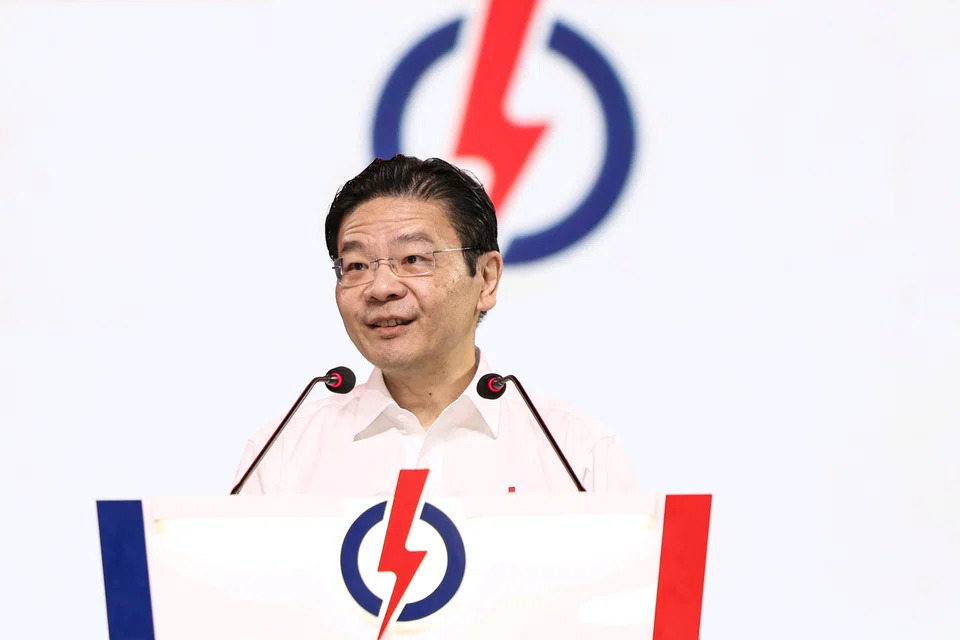
Singapore has responded by emphasizing the importance of honoring existing commercial contracts. Prime Minister Lawrence Wong said the country's gas importer would take the necessary steps to protect its contractual rights, while Energy and Trade Minister Tan See Leng confirmed that the importer could pursue commercial remedies if a breach were established.
However, Indonesian Energy and Mineral Resources Minister Bahlil Lahadalia has defended the decision, arguing that Indonesia continues to meet the minimum supply obligations stipulated in its agreements with Singapore. He attributed the reduction to maintenance requirements and rising domestic demand.
Although the immediate impact on Singapore's overall gas supply is expected to remain limited, the development raises broader questions about future energy cooperation between the two countries, particularly as their existing gas supply contracts approach expiration at the end of 2028.
Indonesia Redirects Gas Supplies to Meet Domestic Demand
The latest adjustment in Indonesia gas exports to Singapore reflects Jakarta's growing emphasis on domestic energy security as electricity demand increases across the country.
Beginning October 24, Indonesia redirected a combined 31 million standard cubic feet per day of natural gas that had previously been supplied to Singapore through pipeline networks. According to SKK Migas, the reduction consists of 15 million standard cubic feet per day from Natuna and another 16 million from Sumatra. [1]
The Natuna gas allocation is being redirected to PLN Batam through the WNTS-Pulau Pemping-Batam pipeline. Meanwhile, supplies from Sumatra are being redirected through the Transportasi Gas Indonesia pipeline to meet electricity requirements in Batam, Bintan, and Sumatra.
The regulator said the measure was intended to maintain the reliability of domestic gas supplies for electricity generation. It also cited Article 8, Paragraph 1 of Indonesia's Oil and Gas Law as the legal basis for prioritizing domestic utilization of natural gas.
The decision comes amid heightened attention to the reliability of electricity supplies in Indonesia. Earlier in October, Batam and several other cities in the Riau Islands experienced a blackout lasting approximately 16 hours, according to Reuters. The incident added to the urgency of ensuring adequate energy supplies for domestic power generation. [3]
Indonesia's position also reflects a broader economic consideration. Natural gas is not only an export commodity but also an important input for electricity generation, manufacturing, and other industrial activities. Diverting supplies toward domestic users can support local economic activity, provided that the gas reaches consumers with sufficient infrastructure and at commercially viable prices.
At the same time, reducing exports can affect the predictability of supply relationships with neighboring economies. For businesses that rely on long-term energy agreements, changes to contracted volumes can influence procurement planning, operational costs, and confidence in future energy availability.
Indonesia gas exports to Singapore therefore sit at the intersection of domestic resource allocation and international commercial commitments. The policy challenge is to balance the country's immediate electricity requirements with its interests as a regional energy supplier.
Singapore Expects Commercial Contracts to Be Honored
Singapore's response has focused on contractual obligations and the importance of maintaining confidence in commercial energy arrangements.
On October 25, Prime Minister Lawrence Wong said Singapore expected all parties to honor their commitments under commercial gas supply agreements. He added that the country's gas importer would take the necessary steps to protect its rights and interests under those contracts. [2]
Tan See Leng subsequently confirmed that Gas Supply Pte Ltd, Singapore's gas importer, would engage with its Indonesian suppliers to determine whether the reduction constituted a contractual breach. If a breach were established, the company could pursue the commercial remedies stipulated in its agreements. [4]
The distinction is important because a supply reduction does not automatically establish that a contract has been breached. The outcome depends on the minimum delivery requirements, permitted adjustments, maintenance provisions, and other relevant terms of the agreements.
Indonesia has maintained that its deliveries remain within the minimum contractual level. Bahlil said on October 26 that the country was still meeting its obligations despite reducing pipeline exports to redirect gas toward domestic power generation. The Indonesian government has therefore rejected the implication that the reduction necessarily represents a breach of contract. [3]
The two positions leave the contractual details at the center of the dispute. Singapore is seeking to ensure that its commercial rights are respected, while Indonesia argues that it retains the ability to manage supply within the boundaries of existing agreements.
For energy markets, the issue extends beyond the immediate volume of gas involved. Long-term supply contracts depend on predictable obligations, established procedures for handling disruptions, and clarity over the circumstances under which deliveries can be adjusted.
If the parties can resolve the disagreement through contractual mechanisms, the impact on their broader commercial relationship could remain contained. If uncertainty persists, however, energy buyers and suppliers may need to reconsider how future agreements allocate supply risks, domestic-priority provisions, and potential compensation.
The dispute also highlights a challenge for governments negotiating energy arrangements across borders: domestic policy objectives can change faster than the commercial infrastructure and contracts built around them.
Singapore's Energy Security Faces a Manageable Short-Term Test
Despite the reduction, Singapore's government has said it has sufficient natural gas supplies to meet domestic demand.
The cut of 31 million standard cubic feet per day represents approximately 8% of Indonesia's pipeline gas deliveries to Singapore, according to Reuters. However, the reduction is equivalent to roughly 2% of Singapore's daily gas demand, meaning its impact on the country's overall energy balance is considerably smaller than the headline export reduction suggests. [3]
The distinction matters because Singapore relies heavily on natural gas for electricity generation. According to government and media reports, natural gas accounts for approximately 95% of the city-state's electricity generation, making reliable access to the fuel an important component of its economic infrastructure. [2]
Singapore has nevertheless spent years diversifying its natural gas procurement. In a September 2025 parliamentary response, the Ministry of Energy and Trade and Industry said liquefied natural gas, or LNG, accounted for close to 60% of Singapore's total natural gas supplies. No single country accounted for more than 30% of its gas imports in 2024. The government also confirmed plans to expand LNG import capacity through a second terminal expected to become operational by the end of the decade. [5]
This diversification gives Singapore alternatives when pipeline deliveries are disrupted. Unlike pipeline gas, which depends on fixed infrastructure and specific supply corridors, LNG can be transported by ship from producing countries around the world.
Singapore's Energy Market Authority has also confirmed that contingency arrangements are in place to manage supply reductions. Tan said replacement gas was available from other sources, including LNG. [4]
However, alternative supply does not eliminate every risk. Replacing a contracted pipeline volume may require changes to procurement schedules or additional purchases from the spot LNG market, where prices can fluctuate with international demand and supply conditions.
A prolonged disruption or a larger reduction could therefore create more pressure than the current adjustment. The impact would depend on the availability and price of replacement cargoes, the extent of any further cuts, and the reliability of production at the relevant gas fields.
For now, the available evidence points to a manageable short-term disruption rather than an immediate threat to Singapore's electricity supply. The more significant concern is whether repeated adjustments could alter the assumptions underpinning its long-term energy procurement strategy.
The 2028 Contract Expiry Raises Longer-Term Questions
The future of Indonesia gas exports to Singapore will depend not only on the present disagreement but also on what happens when existing supply agreements approach expiration.
Singapore's Ministry of Energy and Trade and Industry confirmed in September 2025 that its current contracts to import natural gas from Indonesia expire at the end of 2028. The ministry also acknowledged that Indonesia's growing domestic gas demand could affect how much it remains able to export to other countries. [5]
That timeline creates a potential turning point for both markets.
For Singapore, the challenge is to ensure that gas remains available at competitive prices while reducing excessive reliance on any single supply route or supplier. Continued investment in LNG infrastructure and international procurement relationships can help manage this exposure, although global gas prices and shipping availability will remain important variables.
For Indonesia, retaining more gas for domestic use could support electricity generation and industrial expansion. However, redirecting additional volumes requires more than changing export allocations. Domestic buyers must be connected to producing regions through adequate pipelines and other infrastructure, and the economics of supplying local markets must support ongoing production.
Reuters cited an analyst from Rystad Energy who said that redirecting more gas domestically would require infrastructure investment. The analyst also noted that Singapore's existing supply diversification should help it manage the latest reduction unless cuts deepen or gas-field production is disrupted. [3]
This points to a practical limit on Indonesia's ability to substitute domestic consumption for exports. If pipeline capacity, production levels, or distribution infrastructure cannot accommodate additional domestic demand, simply withholding export volumes may not be enough to solve regional supply constraints.
The question is therefore not just whether Indonesia will export less gas in the future. It is also whether domestic gas production and distribution can expand sufficiently to accommodate rising consumption while maintaining commercially attractive supply arrangements with neighboring markets.
Both governments will need to consider these factors when discussing future energy cooperation. The terms agreed before the end of 2028 could determine how much flexibility Indonesia retains over domestic allocations and how much certainty Singapore can secure for its gas procurement needs.
Domestic Energy Priorities Must Be Balanced With Regional Trade
The debate over Indonesia gas exports to Singapore illustrates a challenge that extends beyond the two countries: how governments can prioritize domestic energy security without undermining confidence in cross-border trade.
For resource-producing economies, exporting natural gas can generate commercial revenue and sustain long-standing regional partnerships. Domestic consumption, meanwhile, supports electricity generation, industrial development, and the reliability of essential services.
These objectives do not necessarily conflict. A country with adequate production capacity, distribution infrastructure, and a clear export framework can serve domestic customers while maintaining reliable supplies to overseas buyers. Problems arise when demand increases faster than infrastructure and production can respond, or when the rules governing export adjustments become uncertain.
In Indonesia's case, rising electricity demand is one of several considerations shaping gas allocation decisions. The government must weigh the needs of domestic power generators against the commercial implications of reducing exports. That calculation also depends on whether domestic users can absorb redirected supplies efficiently and whether producers receive prices that justify continued investment.
For Singapore, the lesson is that energy security requires more than maintaining sufficient volumes under existing contracts. It also involves diversifying suppliers, developing alternative import infrastructure, and preparing for disruptions in neighboring markets. LNG procurement provides one layer of protection, while longer-term diversification can reduce exposure to changes in individual pipeline relationships.
The latest reduction is unlikely to have a major immediate effect on Singapore's overall gas demand, according to current assessments. Nevertheless, the episode demonstrates how a relatively small adjustment in aggregate supply can raise substantial commercial questions when it affects a critical energy relationship.
The next phase will depend on the outcome of discussions between Gas Supply and its Indonesian suppliers, the interpretation of their existing contractual obligations, and both governments' approach to future energy cooperation.
With current contracts scheduled to expire at the end of 2028, the management of Indonesia gas exports to Singapore will increasingly depend on whether both sides can reconcile domestic energy requirements with the predictability needed for long-term regional trade.
Read More