


 Wednesday, 28-10-26


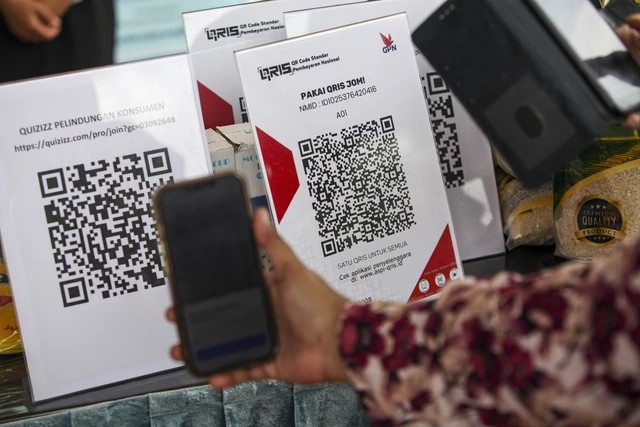
Bank Indonesia (BI) plans to use transaction data from the Quick Response Code Indonesian Standard (QRIS) as a basis for credit scoring in the financial services industry.
The initiative could help financial institutions assess users' creditworthiness, including that of small merchants.
BI Governor Destry Damayanti reiterated the plan at the Danantara Technology Innovation Investment Forum (DTIIF) 2026 in Jakarta on Monday, October 26. The proposal was first discussed last year but has yet to be implemented.
Bank Indonesia Plans to Use QRIS for Credit Scoring
Destry said QRIS transaction records could provide an alternative source of information for assessing creditworthiness, particularly among small merchants who may have limited access to financial services.
“This is at least a success in providing financial access to smaller merchants, including small-scale merchants, whose data can later serve as a form of credit scoring. That is how it will work in the future,” Destry said.
The initiative would build on the payment system's role in expanding access to digital financial services. Transaction records could potentially provide financial institutions with additional information when evaluating applications for credit.
QRIS Reaches 71 Million Users and 49.4 Million Merchants
QRIS continues to record growth in adoption, according to Destry. The system now has 71 million users, up from 67 million in September 2026.
The September figure represented approximately one-quarter of Indonesia's total population. The latest figures indicate that QRIS continues to expand its reach among consumers and businesses.
Destry also reported that QRIS has 49.4 million merchants, of which 97% are micro, small, and medium-sized enterprises (MSMEs).
The large share of MSMEs among QRIS merchants highlights the system's reach among smaller businesses. Their transaction records are among the data that could potentially support future credit assessments.
QRIS Transaction Data Could Expand Access to Credit
The Financial Services Authority (OJK) previously welcomed the use of QRIS transaction histories as alternative data for evaluating creditworthiness, including in the online lending industry.
In a statement published on the InterActive QRIS website in late 2025, OJK Chief Executive for Financing Institutions, Venture Capital Companies, Microfinance Institutions, and Other Financial Services Institutions Agusman said the regulator viewed the proposal positively.
“OJK welcomes the use of financial transaction data, including QRIS, as alternative data for assessing creditworthiness in the online lending industry,” Agusman said.
Using transaction histories could give financial institutions another source of information when assessing potential borrowers. The proposal is particularly relevant to small merchants whose QRIS activity could provide additional evidence of their business transactions.
However, the use of QRIS data for credit scoring remains a proposal discussed by BI and welcomed by OJK. The source article does not establish that the system has already been implemented for credit assessments.
OJK Highlights Data Protection and Prudent Credit Assessment
Agusman stressed that using QRIS transaction data for credit scoring would require further examination. He said the approach must comply with personal data protection requirements and maintain the validity of the information used.
“Implementation requires further study, while continuing to consider personal data protection, data validity, and the principle of prudence,” he emphasized.
These considerations are central to the proposed use of payment data in credit assessments. Financial institutions would need to account for the reliability of transaction records and the protection of users' personal information when considering how such data could be applied.
BI's latest statement renews attention on the potential role of QRIS in credit assessment as its user base and merchant network continue to grow. However, the implementation of QRIS-based credit scoring remains subject to further development, with data protection, data validity, and prudent practices identified by OJK as important considerations.
PHOTO: ANTARA FOTO
This article was created with AI assistance.
We make every effort to ensure the accuracy of our content, some information may be incorrect or outdated. Please let us know of any corrections at [email protected].
Read More