


 Wednesday, 28-10-26


Indonesia has changed its procurement system for crude oil, fuel and liquefied petroleum gas (LPG), moving from business-to-business tenders toward government-to-government (G2G) and government-to-business (G2B) agreements under Presidential Regulation No. 107 of 2026, signed by President Prabowo Subianto (26/10).
The policy aims to strengthen energy supply certainty for domestic needs amid geopolitical tensions.
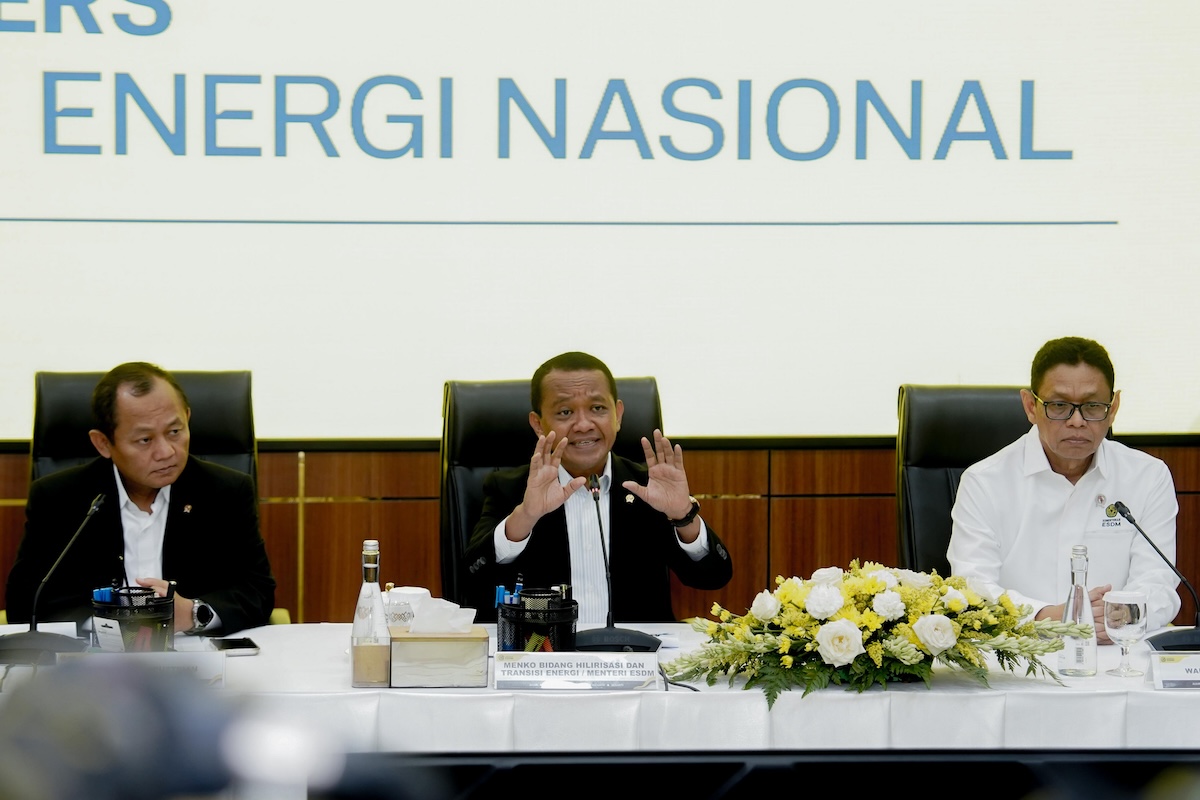
Energy and Mineral Resources Minister Bahlil Lahadalia announced the change at a press conference in Jakarta on October 26, 2026, following a meeting with the minister of industry, the head of the Special Task Force for Upstream Oil and Gas Business Activities (SKK Migas), and Pertamina executives.
The meeting discussed measures to anticipate the impact of geopolitical tensions in the Middle East on Indonesia’s energy security.
Indonesia Changes Crude Oil Imports Under Presidential Regulation No. 107 of 2026
Bahlil, who also serves as coordinating minister for downstream industries and energy transition, said the regulation marks a new phase in Indonesia’s national energy procurement system. Under the previous arrangement, Pertamina relied on business-to-business tenders that often took a long time to complete.
“Previously, Pertamina used a B2B process, and the tenders took a long time. With this presidential regulation, we are moving to G2G and G2B. This means we can now choose which countries we want to source supplies from,” Bahlil said.
The new system allows the government to negotiate directly with supplier countries or businesses to secure crude oil, fuel and LPG supplies for domestic consumption.
Why Indonesia Is Changing Its Energy Procurement System
According to Bahlil, the previous tender process sometimes left Pertamina without supplies even after the company had won a tender at a lower price. Suppliers could choose other buyers willing to pay more, leaving Pertamina further down the priority list.
“Pertamina had already won at a low price in the supplier’s country. However, if another country came in afterward and offered a higher price, Pertamina was always pushed further down the list,” Bahlil said.
Under the new arrangement, the government will negotiate directly with supplier countries, while a government-appointed public service agency, known as a Badan Layanan Umum (BLU), will handle procurement. Pertamina will then purchase the supplies from the BLU, removing other companies from the procurement chain.
“So, it will simply be country to country,” Bahlil said.
The regulation still allows Pertamina to import supplies directly under certain conditions, including when national reserves are critically low or when geopolitical disruptions affect a country from which Indonesia sources oil. Any direct imports under these circumstances must be coordinated with the BLU.
Indonesia’s Dependence on Crude Oil, Fuel and LPG Imports
Indonesia continues to rely on imports to meet part of its domestic energy demand. The country still imports crude oil, although its crude supplies no longer come from the Middle East.
Approximately 80% of Indonesia’s LPG needs are supplied by imports from the United States, according to the ministry’s statement. Indonesia no longer imports diesel fuel but continues to import RON 90 gasoline, marketed as Pertalite, as well as some RON 92, RON 95 and RON 98 gasoline.
Bahlil said the new regulation would give him greater flexibility to explore potential supplier countries alongside Pertamina President Director Simon and Pertamina Patra Niaga President Director Ega.
“With this presidential regulation, thank God, Mr. Simon, Pertamina’s president director, Mr. Ega, Pertamina Patra Niaga’s president director, and I will have greater flexibility to explore which countries we can develop supplies from,” Bahlil said.
Indonesia Seeks Long-Term Energy Supply Agreements
As a follow-up to the new policy, Bahlil is scheduled to visit several countries, including India and China, to seek greater certainty over energy supplies. The government has also tasked him with pursuing long-term supply contracts.
Through the new procurement system, the government aims to secure crude oil, fuel and LPG supplies for households and industry amid uncertainty in the global geopolitical situation.
PHOTO: MINISTRY OF ENERGY AND MINERAL RESOURCES
This article was created with AI assistance.
We make every effort to ensure the accuracy of our content, some information may be incorrect or outdated. Please let us know of any corrections at [email protected].
Read More