


 Wednesday, 28-10-26


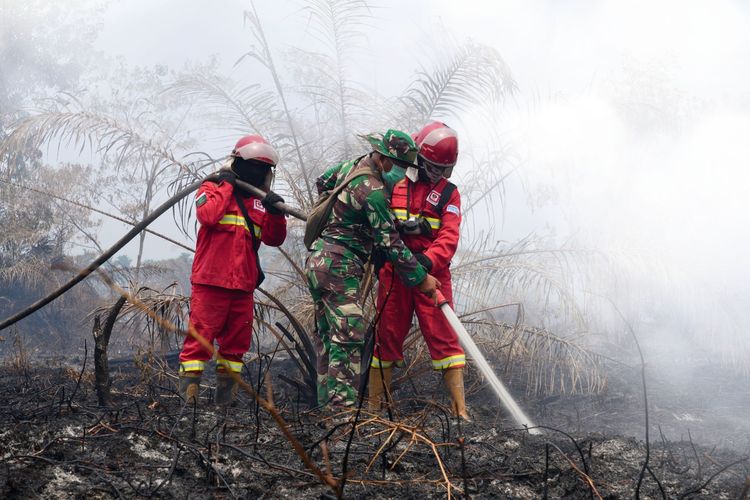
Indonesia’s agricultural sector is estimated to face losses of around Rp50 trillion due to forest and land fires in 2026, while the Ministry of Agriculture has yet to obtain data on the extent of affected plantation areas in Kalimantan (27/10).
Agriculture Minister Andi Amran Sulaiman said the ministry was still identifying plantation areas affected by the fires. He said the data was important to ensure that assistance reached the appropriate locations.
Agriculture Ministry Still Identifying Affected Plantation Areas
Amran said the ministry had not yet received data on the total area of plantation land affected by forest and land fires in Kalimantan during 2026. However, ministry officials were checking the affected areas.
“We have not received it yet, but our team is checking for now,” Amran said at the Ministry of Agriculture building in South Jakarta on Tuesday, October 27, 2026.
The ministry was also considering providing seeds to support planting in affected areas. Amran said assistance could be provided if the land was used to grow corn or rice.
“The point is, if the location is plantation land, then we will help with seeds for corn or rice. Please do not try to provoke me into that,” he said.
Indonesia Forest Fires Could Cause Rp204 Trillion in Economic Losses
Forest and land fires in Indonesia were estimated to have caused economic losses of Rp167 trillion by mid-October 2026. The figure could increase to around Rp204 trillion if the remaining fire season followed patterns recorded in 2015 and 2019.
Teguh Yudo Wicaksono, a macroeconomist, policy analyst and academic who serves as dean of the Faculty of Economics and Business at the International Islamic University Indonesia, said the estimates were based on a study using data and calculation methods drawn from World Bank research.
“This estimate is the result of a study using data and calculation methods based on World Bank research, not an official figure for losses published by the government,” Teguh told Kompas.com on Friday, October 16, 2026.
The estimated losses of Rp167 trillion were equivalent to around 0.65% of Indonesia’s nominal gross domestic product (GDP) in 2026. If losses reached Rp204 trillion over the full fire season, they would represent approximately 0.79% of GDP.
The estimated losses through mid-October ranged from Rp136 trillion to Rp234 trillion, reflecting uncertainty in the calculations.
Teguh used a benefit-transfer method based on the World Bank’s assessment of damage and losses caused by the 2015 fires. The study estimated losses in 2015 at Rp221.4 trillion, based on an officially recorded burned area of approximately 2.61 million hectares.
After adjusting the figure for price changes through 2026, the estimated loss reached around Rp119.7 million per hectare. This amount was then multiplied by the estimated 1.39 million hectares burned in 2026.
The estimated burned area was calculated using satellite data on carbon emissions and burned land, with the 2026 fire season compared against the patterns recorded in 2015 and 2019. However, the official burned-area data cited in the study covered only 202,011 hectares through July 2026.
Agriculture and Forestry Among the Sectors Facing Major Losses
The agricultural sector is estimated to face losses of around Rp50 trillion from the fires. The forestry sector is projected to incur losses of approximately Rp41 trillion, while losses associated with carbon emissions are also estimated at around Rp41 trillion.
According to Teguh, the carbon valuation used an assumed price of US$5 per ton.
The impact of forest and land fires extends beyond damaged land and lost production. Smoke from the fires also disrupts economic activities, affects transportation and tourism, and causes damage to biodiversity.
Forest Fires Affect Education and Public Health
The fires have also disrupted community activities in affected areas. According to the study materials, approximately 1.43 million students were reported to be studying from home as of September 1, 2026.
Public health data showed 283,270 cases of acute respiratory infections in affected areas through October 13, 2026. In addition, a model developed by the Centre for Research on Energy and Clean Air (CREA) estimated around 1,700 deaths linked to smoke in August 2026.
Teguh also warned that the fire season had not yet ended.
PHOTO: MINISTRY OF FORESTRY
This article was created with AI assistance.
We make every effort to ensure the accuracy of our content, some information may be incorrect or outdated. Please let us know of any corrections at [email protected].
Read More