





 Sunday, 04-10-26








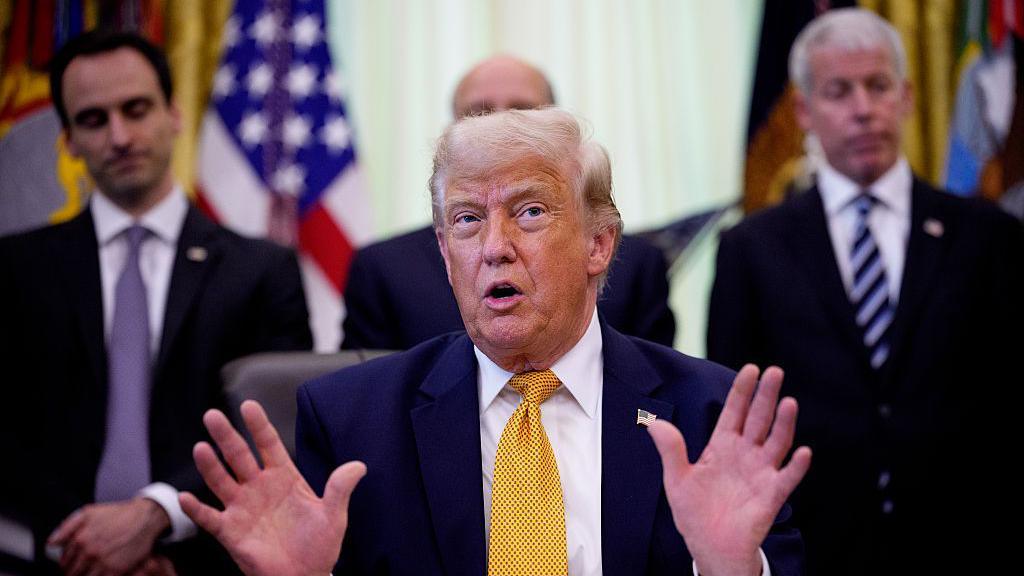
Donald Trump’s latest tariff warning has turned the digital services tax debate back into a live global trade issue. On June 26, 2026, Reuters reported that Trump threatened a 100% tariff on goods from any country that imposes a digital services tax on American companies, a move that immediately sharpened transatlantic trade tensions. The threat came after European Union countries had met Trump’s July 4 deadline to cut tariffs on U.S. goods, which made the timing especially combustible.
The core dispute is not new. For years, Washington has argued that unilateral digital taxes unfairly target U.S. technology companies, while many foreign governments say their tax rules are simply an effort to capture revenue where digital value is created. That tension has resurfaced in a more aggressive form because Trump did not just criticize the policy, he said countries that apply a digital services tax would face immediate tariff retaliation.
Why The Digital Services Tax Became A Trade Flashpoint
The digital services tax has become politically sensitive because it sits at the intersection of tax sovereignty, trade policy, and the global dominance of large U.S. tech firms. Reuters reported that Trump’s warning targeted any country considering such a levy, not just one region, even though the immediate focus was Europe. The AP reported that the European Commission responded by saying these taxes are not discriminatory and apply to all large companies, while also warning it would react firmly if needed.
That reaction makes sense because the issue touches a long-running debate over who has the right to tax digital business models. Companies can generate revenue from users in one country, book profits in another, and keep intellectual property in a third. Governments have struggled to adapt traditional tax frameworks to that reality, which is why several countries introduced digital services taxes while broader international tax talks stalled. The OECD has warned that if a consensus solution fails, unilateral measures can multiply and lead to damaging tax and trade disputes.
Trump’s threat also matters because it raises the cost of policy experimentation. A country considering a digital services tax must now weigh domestic revenue goals against the possibility of losing access to the U.S. market. That changes the calculation for finance ministries, trade negotiators, and technology companies alike. In practical terms, the digital services tax is no longer just a tax rule. It is a negotiation trigger.
How The United States Has Challenged Digital Taxes Before
This is not the first time Washington has pushed back hard. The U.S. Trade Representative has a dedicated Section 301 page on digital services taxes, showing how actively the issue has been monitored and litigated over several years. That page lists investigations into France, India, Italy, Turkey, and the United Kingdom, along with earlier actions involving Brazil, the Czech Republic, the European Union, and Indonesia. The record shows that the digital services tax has been a recurring U.S. trade concern, not a one-off grievance.
The historical backdrop helps explain why Trump’s new warning landed so forcefully. If a policy has already been challenged repeatedly through U.S. trade channels, then a fresh tariff threat reads less like rhetoric and more like an escalation path already familiar to trade lawyers and policymakers. Section 301 is a particularly sharp instrument because it has been used to determine whether foreign policies are unreasonable, discriminatory, or burdensome to U.S. commerce.
That context also explains why the market tends to react quickly when digital tax disputes flare up. Large technology companies do not operate on narrow national silos. They rely on regional ad markets, cross-border cloud contracts, international data flows, and multinational compliance teams. A tariff threat tied to the digital services tax can therefore affect not only tax payments, but also corporate planning, pricing, and investment decisions.
What Existing Digital Services Taxes Actually Look Like
The United Kingdom’s digital services tax is one of the clearest examples of what these rules look like in practice. The UK government says the levy is 2 percent of revenues derived from UK users of search engines, social media services, and online marketplaces, and that it applies to large multinational enterprises. The government’s own guidance also says companies must pay the tax on revenues above a threshold and register within a set reporting period.
France also has a formal digital services tax regime. The French tax administration describes a tax on services provided by large companies in the digital sector, showing that this is not merely a theoretical policy debate. These national measures are the reason the term digital services tax has become shorthand for a broader struggle over how states should tax online business models that operate across borders.
The appeal of a digital services tax is easy to understand from a government’s perspective. These taxes are usually designed to target large platforms and high-revenue digital companies that may not have matching tax footprints in the countries where their users live. Supporters argue this creates a more equitable tax base. Critics argue it risks double taxation, retaliation, and fragmentation of the global tax system. The OECD has explicitly warned that uncoordinated unilateral measures can create those very problems.
Why Trump Is Using Tariffs As The Countermeasure
Trump’s 100% tariff threat is dramatic, but it fits a familiar pattern in his trade playbook. Instead of relying only on negotiation or multilateral pressure, he often uses the threat of steep import duties to force a faster policy response. Reuters reported that he said any country imposing a digital services tax would immediately face a 100% tariff on all goods sent to the United States. That language is designed to make retaliation feel immediate and expensive.
From a strategic standpoint, tariffs are being used here as leverage against tax policy. That is unusual, but not random. Trade policy can be quicker to deploy than tax diplomacy, and it gives Washington a direct pressure point over foreign treasuries. The problem is that tariff retaliation can also widen the conflict. Once a tariff is introduced as punishment for a digital services tax, the dispute stops being about tax design alone and starts becoming a broader market access battle.
The European Union response suggests that governments are not eager to back down. The AP reported that the European Commission defended the taxes as non-discriminatory and said it would react firmly if the U.S. moved ahead with tariffs. That creates a classic escalation risk. If neither side wants to retreat, then a policy question about how to tax digital platforms can become a wider fight over trade credibility and sovereignty.
What Businesses Should Watch Next
For businesses, the immediate issue is uncertainty. Any company with U.S. exposure, digital advertising revenue, cross-border platform activity, or a multinational supply chain has to watch how the digital services tax fight develops. Even firms that are not directly targeted may feel secondary effects through pricing, consumer demand, customs delays, or changes in investment sentiment. Reuters’ reporting makes clear that the threat is broad enough to affect any country that proceeds with a digital levy, which increases the number of markets that could be pulled into the dispute.
Investors should also pay attention to policy sequencing. If countries believe digital tax measures will trigger U.S. tariffs, some may delay implementation or redesign the rules to reduce friction. Others may move ahead anyway, betting that domestic revenue needs outweigh trade risk. The OECD’s warnings suggest that fragmented, unilateral tax action could undermine certainty and increase compliance costs, which is exactly the kind of environment markets dislike most.
The bigger takeaway is that the digital services tax has moved from specialist tax policy into mainstream geopolitical risk. That shift matters because once tax policy becomes a tariff trigger, it stops being a narrow finance issue and starts influencing trade negotiations, technology strategy, and diplomatic relations. For now, the dispute is not settled. But Trump’s latest threat has clearly raised the stakes.
Read More