





 Saturday, 03-10-26








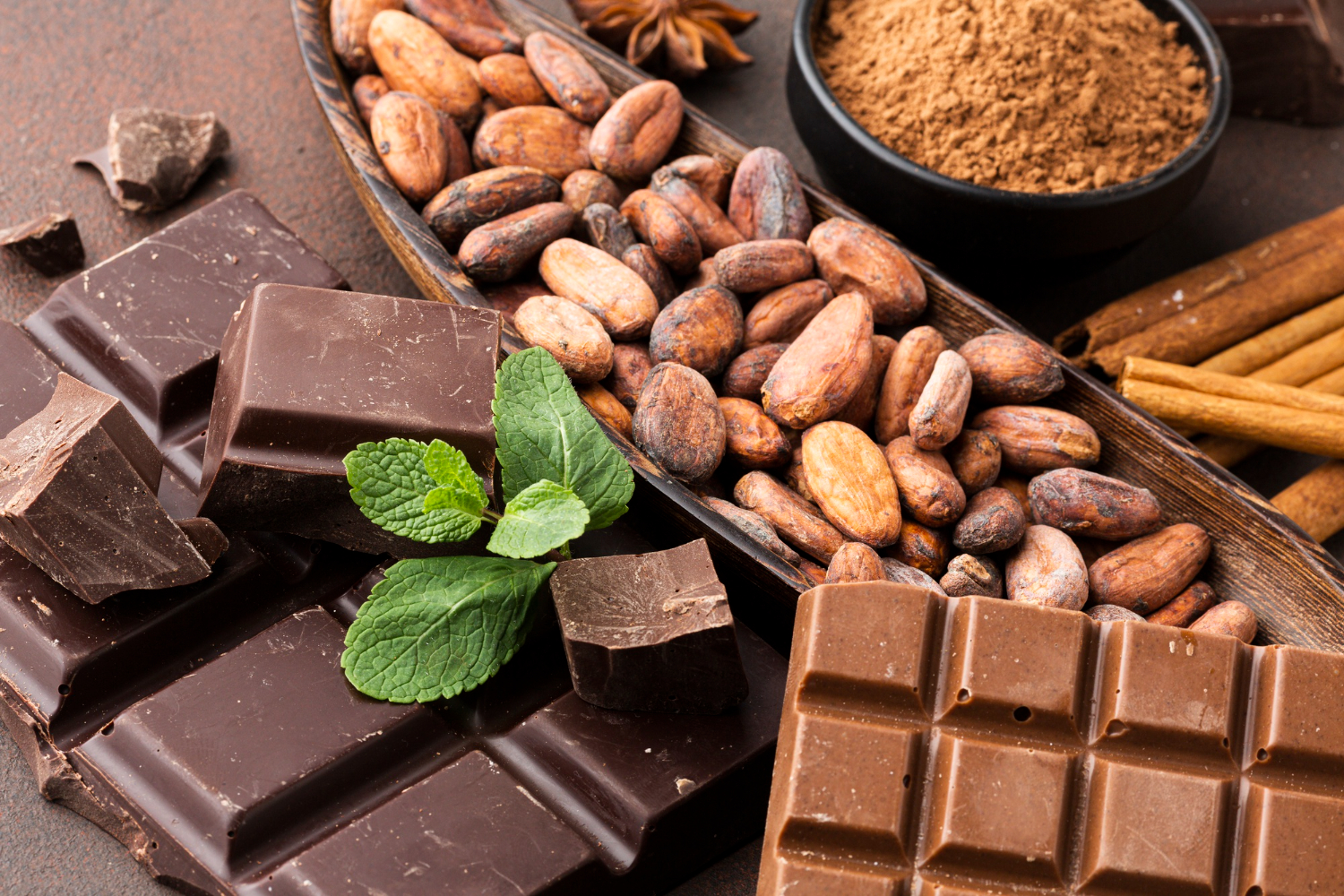
Indonesian cocoa powder and activated carbon products are set to explore the Middle East market after PT Visi Indonesia Parama and Bassam Salem Abdullah Fotis Company signed a memorandum of understanding (MoU) worth USD 197,305, or around Rp3.5 billion, in Bandung, West Java (10/08).
The MoU was signed by PT Visi Indonesia Parama Managing Director Lukman Nurjaman and Bassam Salem Abdullah Fotis, Managing Director of Bassam Salem, on Monday, August 10, 2026.
The signing was witnessed virtually by representatives of the Consulate General of the Republic of Indonesia, the Indonesian Trade Promotion Center (ITPC), the Export and Trade Services Human Resources Development Center (PPEJP) of the Ministry of Trade, the Directorate of Primary Product Export Development (PEPP) of the Ministry of Trade, and the West Java Provincial Industry and Trade Office.
The agreement resulted from business-matching facilitation by ITPC Jeddah in December 2025 and March 2026.
Indonesian Products Target Middle East Market
Director General of National Export Development at the Ministry of Trade Fajarini Puntodewi said the cooperation showed that Indonesia's production capabilities and product quality were strong enough to compete in international markets.
“Business cooperation between PT Visi Indonesia Parama and Bassam Salem Abdullah Fotis Company shows that Indonesia's production capabilities and product quality are already capable of competing in international markets. We hope that the business agreement signed today will be a good beginning for Indonesia's leading commodities in the Middle East market,” Fajarini said.
Head of ITPC Jeddah Bagas Haryotejo said Indonesian products remained competitive despite the challenges from the conflict situation in the Middle East.
ITPC Jeddah has continued to facilitate Indonesian businesses in meeting potential buyers to produce business agreements.
Bagas said buyer visits to production facilities were important for building trust, adjusting product quality to buyer requirements, and accelerating transactions.
Saudi Buyer Visits Indonesian Production Facility
Before the MoU signing, Bassam Salem Abdullah Fotis visited PT Visi Indonesia Parama's production facility on the same day.
Bassam appreciated the Ministry of Trade's facilitation, from the business-matching process to the visit to Indonesia.
“Indonesian products have good quality at competitive prices. We hope that this long-term cooperation can continue to be developed and that we can expand other product varieties that can be brought to the Middle East and African markets,” Bassam said.
PT Visi Indonesia Parama Managing Director Lukman Nurjaman welcomed the visit by the Saudi buyer.
Lukman said the direct visit allowed the company to demonstrate its production capabilities and product quality, while also offering other products that could be marketed in export destination countries.
“Through this visit, the buyer can directly see the production process and quality standards to meet the desired specifications. We hope that the cooperation can run well and develop into a long-term partnership,” Lukman said.
Indonesia-Saudi Arabia Trade Reaches USD 1.68 Billion
Indonesia's total non-oil and gas trade with Saudi Arabia reached USD 1.68 billion in January-June 2026.
Indonesia's exports to Saudi Arabia during the period reached USD 1.02 billion, while imports from Saudi Arabia stood at USD 665.10 million.
In 2025, total non-oil and gas trade between Indonesia and Saudi Arabia reached USD 3.94 billion. Indonesia recorded exports of USD 2.89 billion to Saudi Arabia and imports of USD 1.06 billion, resulting in a non-oil and gas trade surplus of USD 1.82 billion.
Indonesia's main exports to Saudi Arabia included vehicles and parts, animal or vegetable fats and oils, ships, various processed foods, and wood and wood products.
Meanwhile, Indonesia's main imports from Saudi Arabia included salt, sulfur and lime; plastics and plastic products; organic chemicals; various chemical products; and fruits.
PHOTO: FREEPIK
This article was created with AI assistance. We make every effort to ensure the accuracy of our content, some information may be incorrect or outdated. Please let us know of any corrections at [email protected].
Read More