





 Sunday, 04-10-26








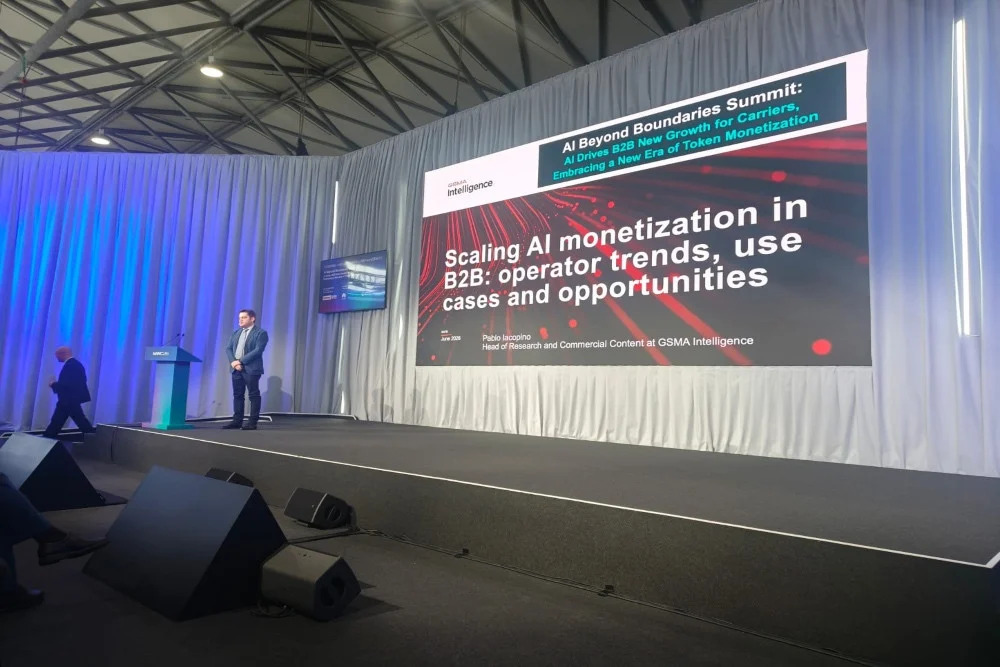
MWC Shanghai 2026 is not just another telecom exhibition. It has become a clear signal that the industry is moving from experimentation to execution, especially around artificial intelligence, 5G, and new commercial models. The event opened on June 24, 2026 at the Shanghai New International Expo Centre, with GSMA positioning it as Asia’s largest and most influential connectivity event. This year’s agenda places unusual emphasis on AI-led revenue streams, and that is why telecom AI monetization is now one of the most important themes to watch.
The Bisnis article’s framing is consistent with what GSMA is showing on the ground in Shanghai: China and Asia Pacific are no longer passive adopters of telecom innovation. They are increasingly setting the pace for how operators turn network capabilities into revenue. That shift matters because the industry is under pressure to find growth beyond connectivity alone. In that context, telecom AI monetization is not a buzzword. It is becoming a strategic requirement.
Why Shanghai Matters For Telecom AI Monetization
Shanghai matters because it is where the telecom ecosystem is currently stress-testing its next business model. GSMA’s official MWC Shanghai agenda includes a dedicated Mobile AI Monetisation Summit, which brings together operators, cloud providers, device ecosystem players, and developers to examine AI-native services, agentic experiences, token-based models, and new value exchange across connectivity, cloud, edge, devices, and applications. The event is built around the commercial question that now defines the sector: how do telecom companies actually make money from AI?
That is a sharp change from the previous era, when AI in telecom mostly meant internal efficiency, network optimization, or customer service automation. Those use cases still matter, but they are no longer the whole story. GSMA’s Mobile Economy 2026 says operators are increasingly moving beyond internal AI use cases to focus on revenue, with 45 percent seeing monetisation as a strategic priority. That is an important signal for the market because it shows a real shift in operator intent, not just conference rhetoric.
MWC Shanghai 2026 is also where GSMA is giving that shift a public stage. The event introduced a Mobile AI Innovation Frontiers zone, and the summit agenda includes discussions on AI traffic growth, edge and cloud compute demand, premium connectivity, AI agents, data services, developer platforms, and token based access models. In practical terms, telecom AI monetization in Shanghai is being framed as a business architecture, not just a product line.
Why China And Asia Pacific Are Leading The Market
The regional leadership angle is not accidental. GSMA’s MWC Shanghai press release says China now accounts for more than 40 percent of global 5G connections, with 5G Advanced commercialized across more than 330 mainland cities and more than 30 million users. GSMA also projects that mobile technologies generated $1.5 trillion in economic value in China in 2025, rising to $2.1 trillion by 2030. Those numbers explain why China has such influence over the direction of telecom AI monetization.
Asia Pacific as a broader region is also well positioned. GSMA Intelligence’s Mobile Economy Asia Pacific report says the mobile sector contributed 5.6 percent of regional GDP in 2024, equal to $950 billion, and is expected to rise further as AI becomes more deeply integrated into business and consumer services. That kind of scale creates the demand base needed for new AI services to move beyond pilots. In other words, the region has both the network footprint and the market size to support serious commercialization.
The APAC Business Roundtable at MWC Shanghai 2026 makes this ambition explicit. Its stated objective is to identify and de risk the most commercially viable AI and 5G Advanced monetization opportunities over the next 6 to 12 months, while extracting repeatable blueprints from China’s large scale industrial deployments for the wider APAC region. That is a clear sign that telecom AI monetization is being treated as a regional growth play, not just a country specific experiment.
China’s policy and industrial environment help explain the momentum. The country has already built strong momentum in 5G Advanced, industrial AI, and connected systems, and the GSMA has repeatedly emphasized the size of China’s digital economy and the importance of mobile infrastructure to that economy’s future growth. When those conditions combine with high operator density and an active enterprise market, the result is a fertile environment for telecom AI monetization to move faster than in many other regions.
What Telecom AI Monetization Actually Means
In simple terms, telecom AI monetization means turning AI related capabilities into revenue, not just savings. That can include premium network services, AI enabled enterprise offerings, compute access, developer tools, token based models, and industry specific packages built on top of network intelligence. It also includes monetizing the traffic and infrastructure that AI systems consume, especially where high performance connectivity, low latency, and edge computing are part of the value proposition.
GSMA’s 2026 research helps clarify the commercial logic. The Mobile Economy 2026 says partnerships with hyperscalers, AI platform providers, and IT companies are helping operators reduce time to market, mitigate capital risk, and differentiate service delivery. That is exactly the kind of ecosystem alignment needed for operators to move from concept to revenue. It also suggests that future winners will not be the companies trying to build everything alone. They will be the ones capable of packaging network assets into usable, priced AI services.
This is why the summit language around token based models is important. Token based access could become one way to bundle AI usage, compute, agent interactions, and developer ecosystem participation into more flexible commercial offers. The summit description also highlights new value exchange across connectivity, cloud, edge, devices, and applications. That broader framing tells us telecom AI monetization may evolve into a layered business model, with operators acting as platform orchestrators rather than only bandwidth sellers.
GSMA’s other AI work points in the same direction. Its AI Use Case Library documents deployments that improve mobile networks, automate processes, and enhance customer experience, while its Open Telco LLM Benchmarks initiative focuses on telecom specific model performance, safety, and energy efficiency. These initiatives show that the industry is trying to create the technical foundations for commercial AI adoption, not just the marketing language around it.
What Operators And Investors Should Watch Next
For operators, the next question is which AI use cases produce measurable revenue within a realistic sales cycle. That includes AI for customer support, enterprise workflow tools, premium connectivity for AI heavy applications, and network intelligence services for vertical industries. GSMA’s Mobile AI Monetisation Summit is useful because it focuses on concrete deployment models rather than abstract optimism. The market is clearly moving toward proving what can scale and what cannot.
For investors, the important point is that the telecom sector is no longer asking whether AI matters. It is asking which parts of AI can be monetized sustainably, and at what layer of the stack. That shift is visible in the GSMA data showing monetisation as a strategic priority for 45 percent of operators, and it is reinforced by the packed agenda in Shanghai. The opportunity exists, but the bar is higher now. Infrastructure, regulation, partner ecosystems, and time to market all matter.
For Asia Pacific, the strategic upside is significant. The region already has scale, regulatory diversity, strong operator density, and a fast growing appetite for AI driven services. If China continues to commercialize 5G Advanced at scale and APAC operators keep building repeatable AI business models, then telecom AI monetization could become one of the defining growth stories of the next mobile cycle. That would also strengthen the region’s role as an export hub for telecom operating models, not just a consumer market for new technologies.
The bigger lesson from MWC Shanghai 2026 is that telecom companies are being pushed to think like digital product companies. Connectivity remains the base layer, but the value creation is increasingly happening above it. That is why telecom AI monetization is no longer a side topic. It is becoming central to how operators, vendors, and ecosystem partners define growth in a market where AI, 5G Advanced, and enterprise transformation are converging.
Read More