





 Sunday, 04-10-26








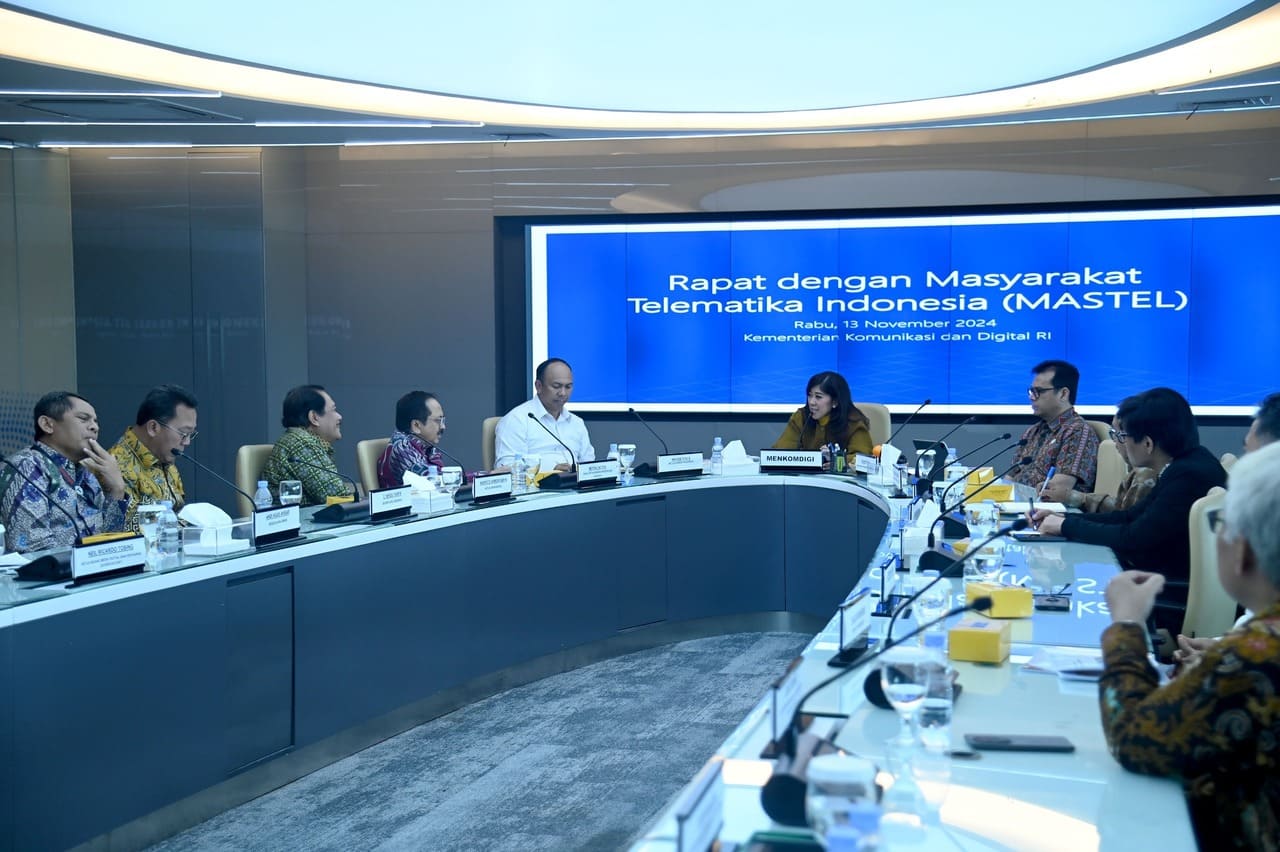
Digital disinformation is no longer a side issue in Indonesia’s online ecosystem. MASTEL’s new policy paper treats it as a structural problem that affects democracy, public trust, and crisis response. The paper argues that disinformation spreads through open platforms such as YouTube, TikTok, Facebook, Instagram, and X, as well as encrypted spaces like WhatsApp, Telegram, and Signal, where content is harder to monitor and correct. A recent UGM discussion on the same topic added that deepfakes, agentic AI, and engagement driven algorithms are making the problem more urgent.
Why Digital Disinformation Has Become A National Problem
The biggest mistake policymakers can make is to treat digital disinformation as a simple content problem. MASTEL’s policy paper defines disinformation as false or misleading information that is deliberately created and distributed to deceive people and cause public harm. It also frames the issue as systemic and recurring, not accidental. That distinction matters, because a systemic problem needs institutional solutions, not only reactive takedowns. The paper also notes that disinformation is amplified by social and political tensions, declining trust in traditional information sources, and the economics of digital attention.
This is one reason the topic has gained so much traction in 2026. At UGM, speakers warned that artificial intelligence is changing the scale and speed of deception. Deepfake tools can manufacture convincing visual and audio fabrications, while agentic AI may eventually help automate the spread of disinformation. The discussion also emphasized that platform algorithms often reward engagement over accuracy, which gives sensational falsehoods a structural advantage over slower, verified reporting.
For Indonesia, the risk is not just reputational. Disinformation can inflame local tensions, distort elections, damage public health communication, and intensify social polarization. MASTEL’s paper notes that false narratives often spread faster than fact checks, especially when they trigger anger, fear, or outrage. In other words, the viral mechanics of the internet can make the least reliable content the most visible. That is why digital disinformation is increasingly treated as an information security issue, not merely a media literacy problem.
What MASTEL’s Roadmap Proposes
MASTEL’s roadmap is built around five pillars: digital literacy, fact checking, quality journalism, digital governance, and research and innovation. The policy paper says these pillars should be coordinated through a national architecture rather than executed in isolation. It also proposes a three layer structure that includes a national coordination council, an operational task force, and an independent information resilience network. The intended result is a more coherent system that can plan, execute, and evaluate anti-disinformation policy over time.
The roadmap is also explicitly long term. Instead of responding only after a crisis breaks out, it proposes a 2026 to 2028 framework that can move Indonesia from reactive enforcement toward preventive governance. MASTEL argues that disinformation should be managed as an ecosystem problem, with regular assessment, shared accountability, and stronger policy feedback loops. That is an important shift, because fragmented interventions often fail when each institution acts alone and none of them owns the full problem.
A major strength of the roadmap is that it does not reduce the answer to takedown culture. The UGM discussion stressed that the roadmap is not a censorship tool. Instead, it is meant to support evidence based policy dialogue while protecting freedom of expression. That balance is crucial. Overbroad responses can suppress legitimate debate, while weak responses can let falsehoods harden into public belief. MASTEL’s framing aims for a middle path: stronger governance without turning information control into a blunt political instrument.
The paper also brings international practice into the discussion. It points to Finland, the European Union, and ASEAN as examples of how digital literacy can be institutionalized as public policy. In particular, the paper highlights the EU’s Digital Education Action Plan and ASEAN’s digital transformation commitments as evidence that literacy cannot remain an optional campaign. It must be embedded into schools, training systems, and national strategy. This is a useful lesson for Indonesia, where digital usage is high but capability is uneven.
Why Collaboration Matters More Than Content Removal
One of the clearest messages from the MASTEL and UGM discussions is that no single institution can solve digital disinformation alone. Fact checkers can correct claims, but they cannot remove the underlying incentives that reward false content. Journalists can publish verified reporting, but they cannot regulate platform design. Government can set standards, but it cannot credibly govern every online interaction in real time. That is why the roadmap emphasizes cross sector collaboration among government, platforms, media, academics, and civil society.
This is also why the paper gives so much attention to digital governance. It argues that platform accountability, transparency, and risk mitigation must be strengthened at the system level. The logic is simple. If algorithms are helping amplify harmful content, then regulators need more than a reactive moderation model. They need clearer obligations, better oversight, and a framework that recognizes how platform design shapes public discourse. The paper’s emphasis on meaningful transparency reflects that shift from case by case moderation toward systemic supervision.
Research and innovation are the least visible part of the roadmap, but they may be the most important. MASTEL argues that policy will always lag behind the techniques used to spread disinformation unless institutions keep producing evidence on new threats, new platforms, and new tactics. That includes better mapping of actors, better measurement of spread patterns, and better tools for detection and response. In 2026, when synthetic media is advancing quickly, policy makers need evidence that can move as fast as the threat environment.
The government is moving in a similar direction. Komdigi has already signaled that AI strategy will be part of the response to disinformation and information integrity challenges. That matters because it suggests the conversation is shifting from panic about AI to practical use of AI for monitoring and verification. The policy challenge now is not whether technology can be used in this fight, but whether institutions can govern it responsibly.
What This Means For Indonesia’s Digital Future
Digital disinformation is a test of institutional maturity. Indonesia has a large, active, and highly connected online population, which means falsehood can travel fast and reach many communities at once. But high connectivity also gives the country an advantage if it can coordinate literacy, journalism, platform oversight, and research into one coherent system. MASTEL’s roadmap matters because it tries to make that coordination concrete instead of abstract.
The broader lesson is that resilience is built before a crisis, not during one. Digital literacy programs need to reach beyond urban elites. Fact checking needs distribution systems, not just polished corrections. Quality journalism needs economic support. Platform governance needs enforceable standards. Research needs funding and continuity. When these pieces are connected, digital disinformation becomes harder to weaponize. When they are fragmented, it remains a permanent weakness.
For businesses, media organizations, policymakers, and civil society groups, this roadmap is a reminder that information integrity is now a strategic asset. A market cannot function well when rumors move faster than verification. A democracy cannot function well when emotion consistently outruns evidence. And a digital economy cannot function well when trust keeps eroding. That is why the MASTEL initiative is more than a policy document. It is a signal that Indonesia is starting to treat digital disinformation as a national resilience issue.
Read More