





 Friday, 23-10-26








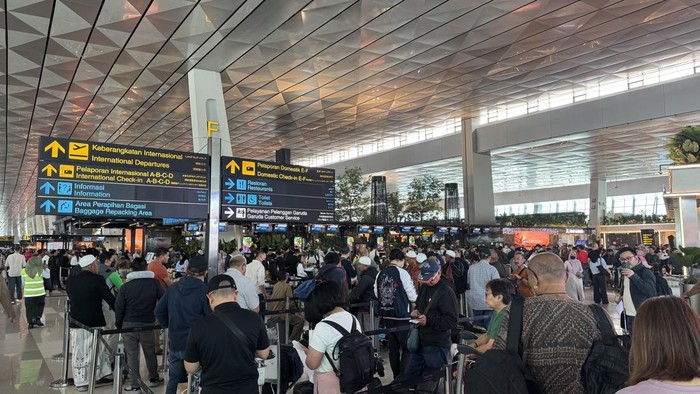
Air travel across Western Indonesia faced unprecedented disruptions in early September 2026 following a massive volcanic eruption from Mount Anak Krakatau located in the Sunda Strait. Plumes of dangerous volcanic ash surged into the upper atmosphere, spreading across Banten, Jakarta, Lampung, and portions of West Java at altitudes reaching up to 50,000 feet. In response to severe flight safety hazards, the Ministry of Transportation, alongside civil aviation authorities, issued emergency Notices to Airmen ordering the immediate suspension of operations across key commercial and general aviation facilities. The resulting Anak Krakatau Eruption Airport Closures disrupted more than 2,300 domestic and international flights, stranding over 268,000 passengers during one of the most significant aviation emergencies in the region in recent years.
Volcanic ash poses an existential threat to modern jet engine aircraft, making immediate grounding decisions mandatory under international aviation safety regulations. To mitigate the severe operational bottleneck created by the sudden closure of Indonesia's primary air transit hubs, transportation authorities rapidly activated emergency contingency plans. These measures included redirecting air traffic toward seven alternative secondary airports operating outside the volcanic ash dispersion corridor, alongside expanding intermodal ground transportation services to carry affected travelers to their final destinations.
Primary Aviation Facilities Affected by Volcanic Ash Disruption
The scope of the current transportation crisis centers around the vital air corridors connecting Java and Sumatra. Seven major air facilities were forced to halt operations as satellite monitoring and atmospheric sampling confirmed high concentrations of abrasive silicate dust throughout lower and upper flight levels. The Anak Krakatau Eruption Airport Closures primarily affected four major commercial jet hubs and three specialized regional airfields across four provinces.
Soekarno-Hatta International Airport in Tangerang, Banten, sustained the most severe operational impact. As Indonesia's busiest international gateway, Soekarno-Hatta experienced over 1,300 flight cancellations and delayed itineraries for more than 173,000 passengers within a 48-hour window. Halim Perdanakusuma Airport in East Jakarta, which handles critical point-to-point domestic connections and executive flights, similarly ceased all runway activity to protect aircraft turbines from particle ingestion.
In Lampung province, Radin Inten II Airport in Bandar Lampung and M. Taufiq Kiemas Airport in Krui were shut down due to their direct downwind proximity to the Sunda Strait eruption center. Meanwhile, in West Java and Banten, Husein Sastranegara Airport in Bandung, Budiarto Airport in Curug, and Pondok Cabe Airport in South Tangerang were included in the mandatory operational halt. Together, these seven closures temporarily severed the core air transit artery linking the capital region with surrounding economic corridors.
Technical Hazards of Volcanic Ash on Modern Commercial Aircraft
Understanding the absolute necessity of these flight cancellations requires examining how volcanic plume composition interacts with modern aircraft architecture. Unlike soft organic smoke or atmospheric clouds, volcanic ash consists of tiny, microscopic fragments of pulverized rock, minerals, and volcanic glass with high concentration levels of silica. These hard, abrasive particles act like fine sandpaper when striking aircraft exteriors at cruising velocities.
When an aircraft flies through a volcanic ash cloud, the microscopic glass particles enter the high-temperature combustion chambers of jet engines. Because jet engines operate at temperatures exceeding the melting point of silica, the airborne ash instantly melts and turns into a liquid glass state. This molten substance coats internal turbine blades, fuel nozzles, and cooling vents. As the glass moves into cooler sections of the engine, it re-solidifies, choking airflow, disrupting thermodynamic balance, and frequently causing catastrophic total engine flameouts.
Beyond engine damage, volcanic ash severely impairs critical avionics and flight control systems. Abrasive particles scrape cockpit windshields, rendering them completely opaque and destroying pilot visibility during approach and landing. Furthermore, silicate dust clogs external pitot tubes and static sensors, sending erratic airspeed and altitude data to cockpit instrument displays. Because these physical risks threaten airframe integrity, Anak Krakatau Eruption Airport Closures remain the only viable safety policy during major explosive eruptions.
Seven Strategic Alternative Airports Designated for Air Traffic Rerouting
To prevent complete paralysis of the national logistics and passenger transport system, the Ministry of Transportation and state airport operator InJourney Airports designated seven alternative air facilities. Located outside the active volcanic plume trajectory, these alternative hubs served as emergency diversion points for airborne flights and alternative departure nodes for re-booked passengers.
Kertajati International Airport in Majalengka, West Java, served as the primary diversion site for long-haul and wide-body international flights originally bound for Jakarta. Featuring an expansive 3,000-meter runway and modern terminal infrastructure, Kertajati absorbed dozens of diverted long-haul flights from Europe and the Middle East, offering passenger processing capabilities and direct highway connections toward Eastern West Java.
Ahmad Yani International Airport in Semarang and Juanda International Airport in Surabaya acted as vital central and eastern redirection hubs. Both facilities accommodated diverted domestic flights from Central and East Java, providing smooth intermodal connections for passengers traveling across the Trans-Java transportation grid. In Sumatra, Sultan Mahmud Badaruddin II International Airport in Palembang and Kualanamu International Airport in Medan accommodated redirected air traffic from Lampung and Northern Sumatra.
Additionally, Yogyakarta International Airport in Kulon Progo and Sultan Syarif Kasim II International Airport in Pekanbaru functioned as secondary backup hubs. By operating 24-hour emergency scheduling, these seven designated alternative airports successfully prevented widespread airspace gridlock and provided safe landing zones for dozens of international flights caught in transit when the initial closure orders were issued.
Expansion of Intermodal Ground Transportation Corridors
Because air travel capacity across the greater capital region remained heavily restricted, state transportation enterprises mobilized ground transport networks to move stranded passengers. Railway operator PT Kereta Api Indonesia immediately added extra carriages to executive and economy train services operating along the Jakarta, Bandung, Cirebon, and Semarang corridors. Railway stations near affected airports, including Gambir, Pasar Senen, and Bandung Main Station, saw a dramatic increase in ticket demand as passengers transitioned from air to rail travel.
State-owned bus operator DAMRI, in coordination with private intercity bus companies, deployed emergency shuttle fleets connecting major airport terminals directly to regional railway stations and alternative airports like Kertajati. Dedicated bus convoys were arranged to transport international transit passengers from Soekarno-Hatta Airport directly to hotel accommodations or secondary rail terminals.
Across the Sunda Strait, maritime transport authority PT ASDP Indonesia Ferry monitored maritime conditions closely. While airborne ash grounded aircraft, maritime ferry services between Merak Port in Banten and Bakauheni Port in Lampung adjusted sailing routes to maintain vital supply lines for goods and passenger vehicles. By establishing integrated land and sea transit corridors, transportation authorities successfully absorbed a significant portion of the displaced passenger volume created by the Anak Krakatau Eruption Airport Closures.
Airline Passenger Mitigation Protocols and Industry Policy
In response to the operational disruption, major commercial carriers operating in Indonesia, including Garuda Indonesia, Lion Air Group, Citilink, and Indonesia AirAsia, activated comprehensive passenger relief protocols. Aligned with Ministry of Transportation regulations concerning flight cancellations caused by natural disasters, airlines waived standard ticket change fees and offered full monetary refunds or travel vouchers to all affected ticket holders.
Airlines set up temporary customer service counters and expanded digital call center operations to handle thousands of rebooking requests. Passengers were strongly advised to verify flight statuses through official mobile applications and airline notification systems prior to departing for airport terminals. For transit passengers stranded at major hubs, airline operators provided complimentary meals, refreshment vouchers, and temporary hotel accommodations in accordance with national aviation consumer protection mandates.
Simultaneously, aviation meteorology teams from the Meteorology, Climatology, and Geophysics Agency worked in continuous coordination with the Darwin Volcanic Ash Advisory Centre. Using satellite imagery, radar tracking, and real-time atmospheric sampling, scientists continuously updated volcanic ash dispersion maps. These real-time data feeds allowed aviation authorities to review airspace safety status every few hours, ensuring that flight operations could resume promptly as soon as atmospheric conditions cleared.
Strengthening Aviation Resilience Against Volcanic Risks
The dramatic events surrounding the Anak Krakatau Eruption Airport Closures serve as a powerful reminder of the geographic realities facing Southeast Asian aviation networks. Positioned along the geologically active Pacific Ring of Fire, Indonesia hosts over 120 active volcanoes, making volcanic ash management an essential discipline for air traffic controllers, airline operators, and airport managers.
In recent years, Indonesia's civil aviation sector has invested heavily in advanced volcanic hazard mitigation technology. Modern satellite monitoring tools, automated NOTAM distribution platforms, and standardized emergency response protocols have significantly improved the speed at which authorities can detect ash hazards and clear airspace safely. The coordinated activation of alternative airports and ground transport linkages during this crisis demonstrates a mature, resilient transportation framework capable of adapting quickly to severe natural phenomena.
As Mount Anak Krakatau's volcanic activity stabilizes and atmospheric clearing progresses, transportation authorities continue to prioritize flight safety above operational convenience. Through rigorous safety standards, transparent communication, and robust intermodal coordination, Indonesia continues to set high standards for managing natural disaster disruptions across its complex archipelagic transport network.
Read More