


 Wednesday, 21-10-26


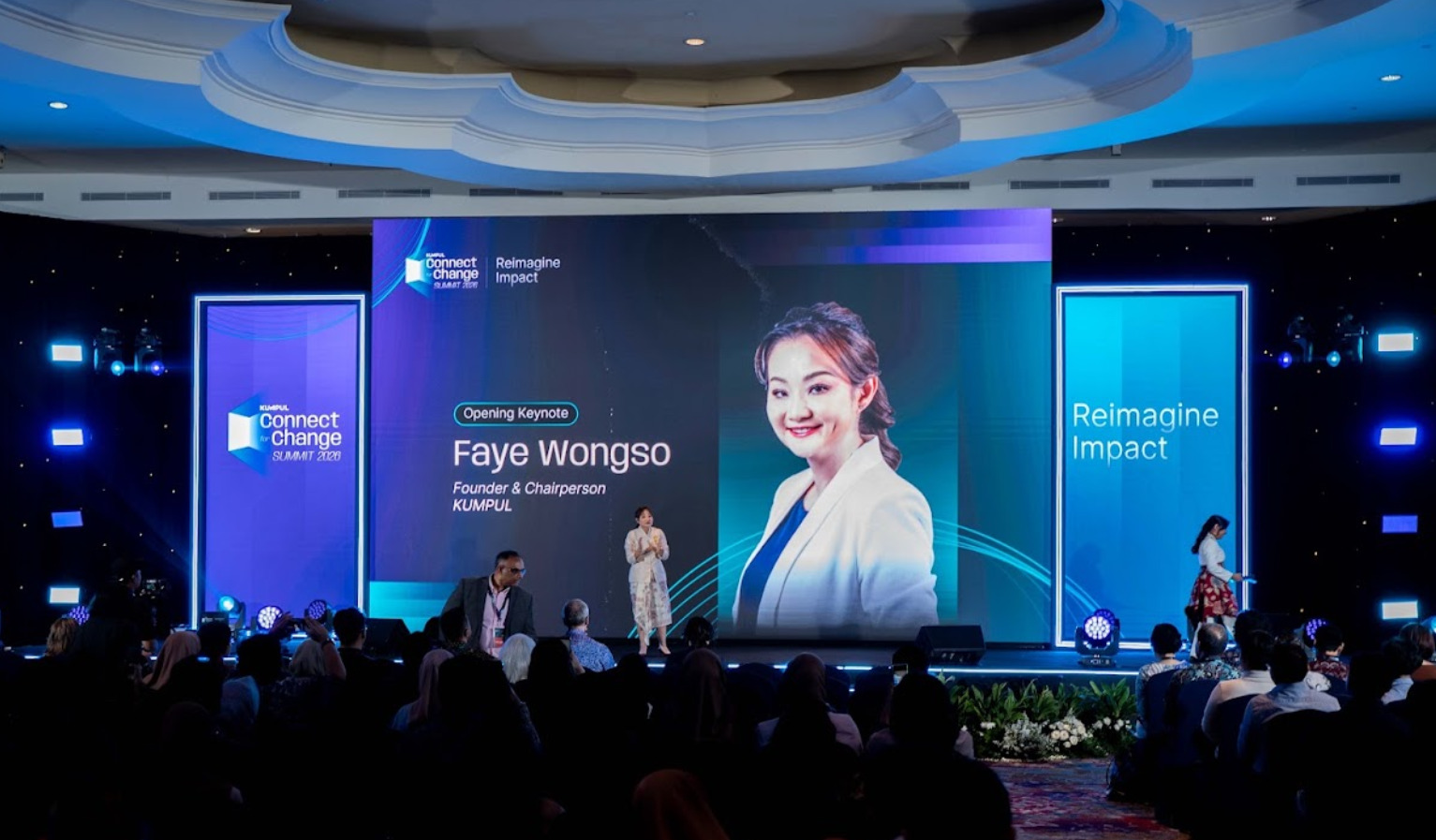
Jakarta, October 21, 2026 - The second edition of the KUMPUL Connect for Change Summit 2026 brought together business leaders, entrepreneurs, investors, policymakers, corporations, and ecosystem enablers in Jakarta to explore how stronger partnerships, more accessible financing, and innovation can accelerate inclusive economic growth in Indonesia and across Southeast Asia.
Held on October 20–21, 2026, at The Ritz-Carlton Mega Kuningan, Jakarta, under the theme “Reimagine Impact,” the Summit continued the platform established by its inaugural edition in 2025. This year's discussions focused on strengthening the connections between investors, growing businesses, institutions, and supporting networks to build a more inclusive and resilient entrepreneurship ecosystem.
The Summit addressed several structural challenges facing entrepreneurs and small and growing businesses (SGBs), including limited access to capital, gaps in business infrastructure, regulatory barriers, and fragmented ecosystem support. Speakers also explored the role of artificial intelligence (AI), social enterprises, climate-smart solutions, and regional partnerships in creating new pathways for sustainable growth.
Through keynote presentations and cross-sector discussions, the Summit emphasized that entrepreneurship development requires more than capital alone. Businesses also need access to markets, reliable data, appropriate financing mechanisms, enabling policies, and long-term partnerships that help them move from early-stage operations to sustainable growth.
Reimagining Financing to Unlock Southeast Asia's Missing Middle
One of the Summit's central themes was the financing gap facing small and growing businesses, often referred to as the “Missing Middle.” These businesses have moved beyond the earliest stages of entrepreneurship but remain underserved by traditional financing systems, limiting their ability to expand operations, invest in technology, and create jobs.
Miguel Soriano, PhD, Country Anchor for Indonesia and Timor-Leste, Financial Institutions Group (FIG) Advisory, International Finance Corporation (IFC), part of the World Bank Group, highlighted the scale of the challenge. He pointed to an estimated annual financing gap of USD 300 billion in Southeast Asia, underscoring the need to rethink how financial institutions assess and serve smaller businesses.
The issue extends beyond the availability of money. Many growing businesses lack the collateral, documentation, and financial track records required by conventional lending systems. Traditional financing often relies on land titles and real estate, while businesses may have more accessible assets in the form of invoices, receivables, purchase orders, and other equipment.
Soriano highlighted Indonesia's supply chain finance opportunity, estimated at USD 172 billion, as an area where alternative financing mechanisms could help businesses unlock capital. By recognizing assets and transactions beyond traditional collateral, financial institutions and corporate partners could improve access to funding for businesses operating within supply chains.
The urgency is also linked to employment. Soriano cited projections indicating that approximately 1.2 billion young people will reach working age over the next 10–15 years, while only around 420 million jobs are expected to be available, leaving a potential gap of approximately 800 million jobs. Expanding the ability of growing businesses to access capital and scale operations will be important to addressing this challenge.
Soriano outlined four pillars of the World Bank Group's MSME strategy: Visible, Connected, Enabled, and Funded.
The Visible pillar focuses on making business activity more transparent through digital payments, invoicing, and alternative data that establish a track record for credit assessment. The Connected pillar emphasizes shared digital services and platforms that link businesses with customers, suppliers, and logistics networks at lower costs.
The Enabled pillar calls for simpler licensing, registration, procurement, and insolvency systems, supported by collaboration with regulators and policymakers to improve the use of open data and open finance. Meanwhile, the Funded pillar promotes stronger partnerships between banks, fintech companies, and other financial institutions through guarantees, receivables financing, and securitization.
The broader message was that closing the financing gap requires coordinated action. Entrepreneurs need to digitize transactions and make cash flows more visible, financiers need to test cash-flow-based lending and alternative credit data, corporations can use purchase orders and supplier information to unlock supply chain finance, and policymakers need to establish interoperable systems and proportionate regulations.
Building Inclusive Finance for Women Entrepreneurs and Climate-Smart Businesses
The discussion on financing also extended to women-led businesses and enterprises developing climate-smart solutions. While these businesses can generate economic, social, and environmental benefits, their financing needs do not always align with conventional lending models.
Poppy Ismalina, M.Ec.Dev., Ph.D., Associate Professor of Economics at the Faculty of Economics and Business, Universitas Gadjah Mada (UGM), discussed the barriers faced by women microentrepreneurs seeking to adopt climate-smart technologies, including biocomposters and solar dryers.
Although these tools can improve productivity and support more sustainable business practices, their adoption often requires substantial upfront investment. Entrepreneurs may lack sufficient collateral, while small loans, remote training, equipment maintenance, and collection processes can be expensive for financial providers. Climate-related fluctuations in cash flow can also make conventional repayment schedules difficult to meet.
Experiences from solar energy initiatives in Bangladesh illustrate a similar challenge. Low-income households may be unable to afford the initial cost of equipment, while providers face difficulties serving remote customers over long repayment periods and covering installation, maintenance, and collection costs.
These challenges raise a fundamental question: how can financial institutions support businesses whose social and environmental benefits may exceed their immediate financial returns?
The discussion highlighted the importance of risk-sharing arrangements that bring together concessional funding, development finance institutions, and commercial capital. Rather than requiring commercial lenders to absorb all the risks, blended financing structures can allocate risks among partners according to their respective mandates and capacities.
Such arrangements require clear agreements on first-loss protection, eligibility criteria, claims procedures, common impact metrics, and exit timelines. Verified results, including energy savings and other measurable outcomes, can help demonstrate the value of these investments and strengthen accountability.
The approach underscores the need to design financing mechanisms around the realities of underserved entrepreneurs, particularly women-led businesses and enterprises working at the intersection of economic development and environmental sustainability.
Corporate Innovation and AI: Turning Potential into Business Value
The Summit also examined how established companies can adapt to technological change and translate innovation into measurable business outcomes.
Under the session “Open for Business, Closed to Change: Why Corporate Innovation Stalls and How to Fix It,” Angela Tanoesoedibjo, Co-CEO of MNC Group, discussed the importance of leadership, clear objectives, and accountability in navigating an evolving business environment.
As artificial intelligence develops rapidly across East Asia and other markets, businesses face growing opportunities to improve research, content production, operational processes, and international expansion. However, awareness of AI alone is not enough to deliver meaningful results.
Organizations need clear objectives for implementation and people who can manage complex AI workflows, evaluate outputs, and maintain accountability for decisions. The discussion emphasized that AI adoption should be approached as a business transformation agenda rather than simply a technology deployment exercise.
Indonesia's large domestic market and creative talent base provide opportunities to develop and apply AI-driven solutions across industries. The country's younger generation also represents an important source of innovation, particularly in areas where technology can support creative production and new business models.
However, realizing this potential requires companies to establish the right processes, capabilities, and governance structures. As AI applications expand across markets and organizational functions, businesses must ensure that innovation is aligned with strategic priorities and responsible implementation.
The discussion reinforced the importance of connecting technological capability with commercial opportunities, enabling Indonesian businesses to strengthen competitiveness while exploring opportunities beyond the domestic market.
Social Enterprises and Collective Action for Sustainable Impact
Beyond technology and financing, the Summit highlighted the role of social enterprises in addressing economic, social, and environmental challenges.
Sandiaga Salahuddin Uno, Board Advisor at JWSI, businessman, and Minister of Tourism and Creative Economy of Indonesia from 2020 to 2024, delivered a keynote titled “Spirit and the Future.” He emphasized that Indonesia's potential depends on its ability to connect entrepreneurs with government institutions, investors, corporations, academia, philanthropy, and other ecosystem partners.
He noted that entrepreneurial approaches can create opportunities across multiple sectors, including agriculture, education, healthcare, and the creative economy. Social enterprises, in particular, can combine commercial sustainability with measurable social and environmental impact.
However, their development continues to face challenges, including limited funding, fragmented information, and weak connections across the entrepreneurship ecosystem.
Addressing these barriers requires stronger collaboration between stakeholders and a shift from isolated initiatives toward collective action. Investors need to understand the financial and impact potential of social enterprises, while corporations and public institutions can help provide market access, partnerships, and enabling infrastructure.
The discussion positioned social enterprises not merely as businesses with social objectives, but as potential contributors to broader economic transformation. By aligning commercial models with community needs and environmental priorities, these enterprises can help create more inclusive pathways to growth.
Trust, Education, and Indonesia's Position in the Global Economy
The Summit also explored the relationship between trust, human capital, and Indonesia's ability to compete internationally.
Retno Marsudi, Minister of Foreign Affairs of the Republic of Indonesia from 2014 to 2024, discussed the importance of building trust through consistent actions and long-term investment. She emphasized that trust cannot be established through self-assertion alone; it must be earned and strengthened over time.
Her remarks also highlighted the importance of education as a long-term investment in national development. Building Indonesia's future competitiveness requires sustained attention to human capital, innovation, and the capabilities of younger generations.
Indonesia's economic and technological progress must also be understood within a global context. As part of an interconnected international system, the country needs to maintain credibility, strengthen its capabilities, and respond to developments in other markets.
The discussion extended to the relationship between technology, natural resources, and economic growth. As AI infrastructure expands, rising demand for water and energy presents new challenges. Agriculture already accounts for a substantial share of global freshwater use, while growing populations and competing economic needs put pressure on limited water resources.
These challenges reinforce the need for innovation that balances technological advancement with resource efficiency. For Indonesia, developing solutions that support AI adoption while addressing water and environmental constraints will be increasingly important to sustainable economic development.
Rewriting the Value Chain to Help SMEs Grow
The role of policy and business infrastructure in supporting small and medium-sized enterprises (SMEs) was another major focus of the Summit.
Rahayu Saraswati, Deputy Chairperson of Commission VII of the House of Representatives of the Republic of Indonesia, discussed the structural barriers that prevent many Indonesian businesses from moving beyond survival-oriented operations toward scalable growth.
Although SMEs represent a substantial part of Indonesia's business landscape, many continue to struggle with access to financing, market opportunities, and the resources needed to expand. Businesses built around intangible assets, including engineering expertise, technology, and intellectual property, can face particular difficulties when conventional financing systems place greater weight on physical collateral.
Saraswati highlighted the need to consider how businesses can demonstrate scalability and commercial viability, especially when their principal assets are talent, technology, or intellectual property rather than land and buildings.
She also pointed to the need for a more supportive environment for entrepreneurship, including better financing mechanisms and stronger collaboration across industries. Venture capital and impact investors can help address some funding needs, but broader support is required to ensure that businesses can access capital at different stages of development.
Industrial ecosystems, intellectual property development, and stronger connections between Indonesian talent and commercial markets were also identified as important areas for improvement. Initiatives that promote Indonesian intellectual property, including in creative sectors such as gaming, can help businesses develop new revenue opportunities and reach international markets.
The discussion emphasized that SME growth depends on more than individual entrepreneurial effort. Businesses need an ecosystem that connects financing, policy, infrastructure, intellectual property protection, and access to customers.
From Connections to Collaboration and Collective Impact
Across the Summit's discussions, a common message emerged: Indonesia's entrepreneurship ecosystem requires stronger coordination between capital providers, businesses, corporations, policymakers, and community organizations.
The Missing Middle challenge demonstrates that financing must be designed around the actual needs and assets of growing businesses. Discussions on women entrepreneurs and climate-smart technologies showed that inclusive financing also requires appropriate risk-sharing mechanisms and measurable impact outcomes.
Meanwhile, conversations on AI, social enterprises, education, and intellectual property highlighted the importance of developing the capabilities and partnerships needed to turn innovation into sustainable economic value.
Through its second edition, the KUMPUL Connect for Change Summit 2026 continued its mission of connecting stakeholders across sectors and creating opportunities for collaboration. The Summit reinforced the importance of building an entrepreneurship ecosystem in which growing businesses can access not only funding, but also knowledge, technology, markets, and strategic networks.
By strengthening these connections, Indonesia and the wider Southeast Asian region can work toward a more inclusive business environment, where entrepreneurs have greater opportunities to scale, create jobs, and contribute to long-term economic and social development.
Read More