


 Wednesday, 21-10-26


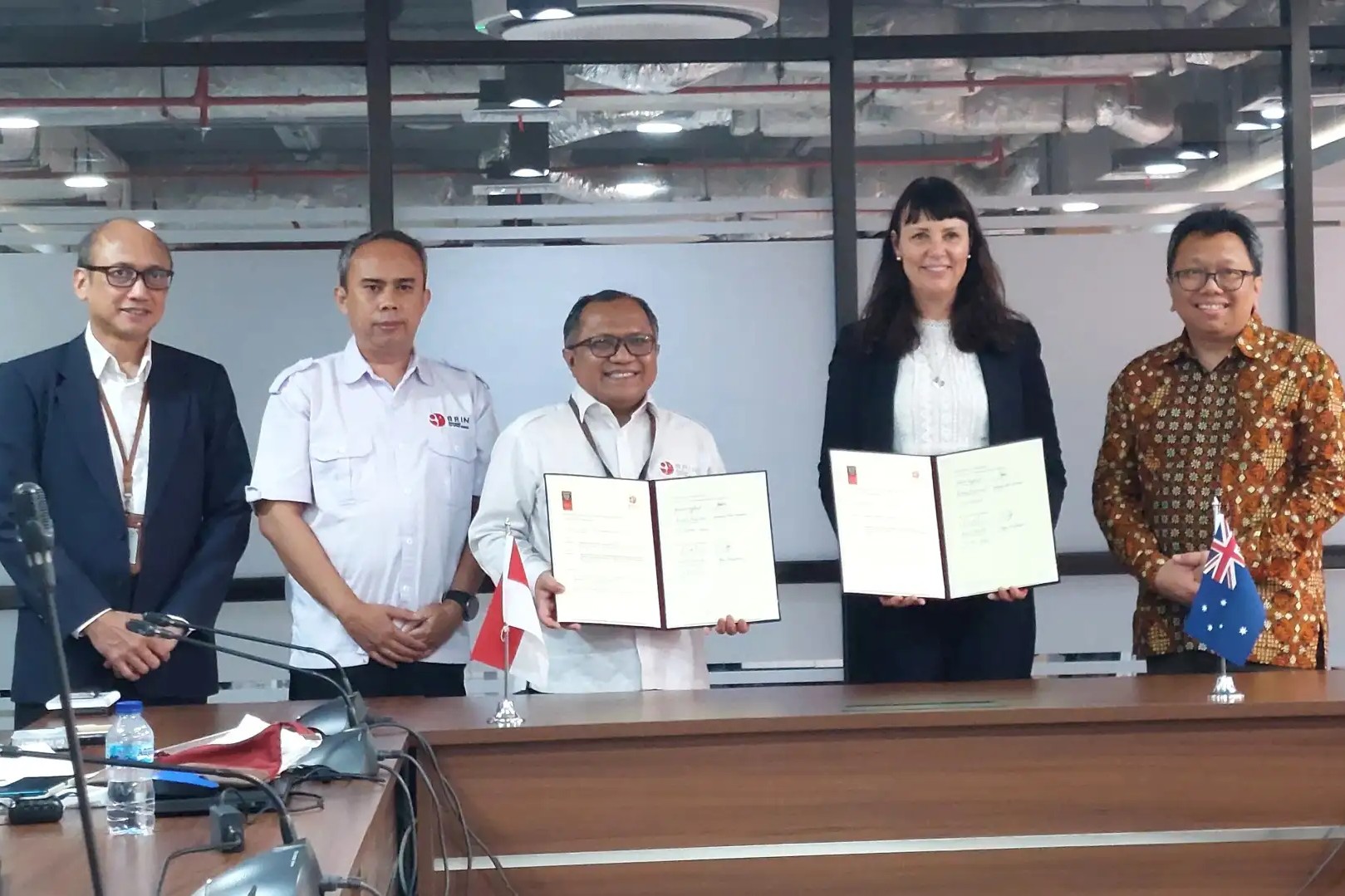
Indonesia’s National Research and Innovation Agency (BRIN) is strengthening its research collaboration with Australia’s Swinburne University of Technology to develop zero-carbon solar panel recycling technologies and support a circular economy (19/10).
The collaboration is being conducted through the Si-ZERO (Silicon Zero Emission Recycling, Refining and Production) project, which focuses on processing solar photovoltaic (PV) panels that have reached the end of their useful lives. The research covers mechanical and thermal pretreatment, the recovery of valuable materials through hydrometallurgical methods, and the development of technologies to support green industries.
BRIN and Swinburne Develop Zero-Carbon Solar Panel Recycling Technology
BRIN Deputy for Science and Technology Human Resources Edy Giri Rachman Putra said the partnership was a strategic step toward expanding research cooperation and strengthening the capabilities of Indonesian researchers, particularly in minerals and metallurgy.
“The signing of this cooperation agreement with Swinburne University is a very important step for us, not only to extend our existing collaboration, but how we can explore and expand the scale of research cooperation. Swinburne is one of our strategic partners, with a highly specific subject focus that our researchers at BRIN need, particularly in the fields of minerals and metallurgy,” Edy said at the B.J. Habibie Building in Jakarta on Monday (19/10).
The research partnership builds on existing cooperation between the two institutions. It is intended to support the development of recycling technologies by combining their respective expertise, technologies, and laboratory facilities.
Research Collaboration Supports Material Recovery and Knowledge Exchange
Ratno Nuryadi, head of BRIN’s Research Organization for Nanotechnology and Materials, said the collaboration would allow both institutions to complement each other’s capabilities through the exchange of knowledge, research experience, and technology.
“This collaboration strengthens a research program that has already been running between BRIN and Swinburne. Both institutions have technologies and laboratory facilities that complement each other. Through this cooperation, we can share knowledge, experience, and technology to strengthen research capacity and produce innovations with a broad impact,” Ratno said.
The partnership also includes human resource development through degree-by-research programs for BRIN researchers and students pursuing master’s and doctoral degrees. The programs are expected to strengthen knowledge exchange and improve researchers’ skills in technology development and innovation.
Swinburne Commits to Long-Term Research Partnership with BRIN
Bronte Neyland, representing Swinburne University of Technology, welcomed the partnership and expressed the university’s commitment to building long-term relationships with strategic partners in Indonesia.
“Swinburne is very proud of this partnership. We want to build deep partnerships based on the principle of having fewer partners but much stronger relationships. This partnership is built on a very strong foundation of close personal relationships between researchers from both organizations,” Bronte said.
The collaboration is intended to strengthen the relationship between researchers from the two institutions while supporting the exchange of knowledge and experience in their respective fields.
Partnership Targets Sustainable Materials and International Publications
BRIN and Swinburne aim to develop technical recommendations, produce sustainable materials innovations, and publish scientific research in international journals through the collaboration.
Ratno said the partnership would provide opportunities for researchers to learn from one another and improve research capabilities in Indonesia. He also emphasized the importance of developing researchers’ skills alongside the availability of advanced research facilities.
“We hope that through strengthening this cooperation, we can learn a great deal and continue to improve research capacity in the country. If we have advanced facilities but do not balance them with improvements in researchers’ capabilities, we will remain in the same position. We want the quality of our research to continue improving and to be on par with international standards,” Ratno said.
PHOTO: BRIN
This article was created with AI assistance.
We make every effort to ensure the accuracy of our content, some information may be incorrect or outdated. Please let us know of any corrections at [email protected].
Read More