





 Friday, 23-10-26








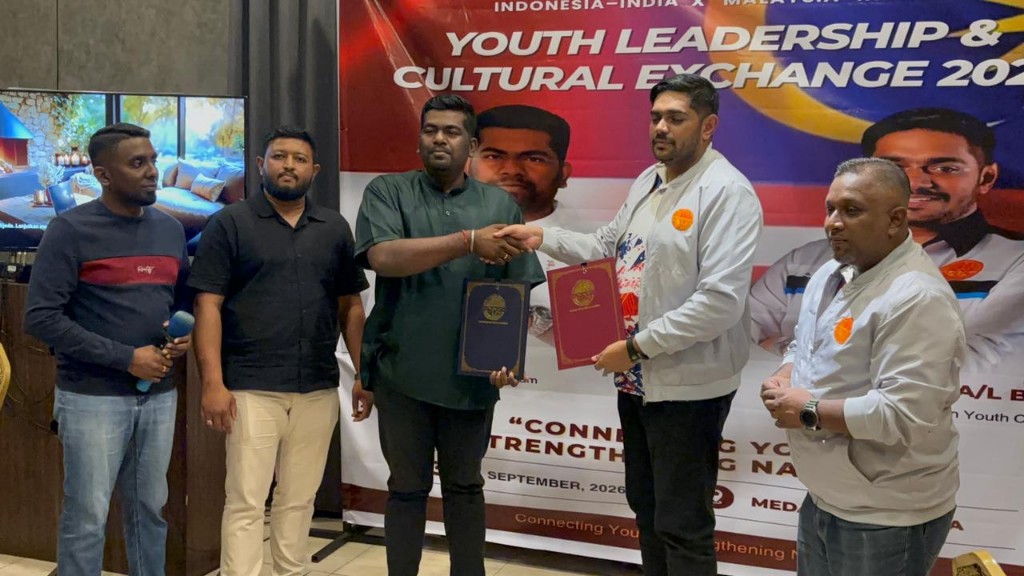
Medan, North Sumatra, is not the city most people picture when they think about international diplomacy. Yet on September 3, 2026, it became the setting for a quiet but meaningful step toward international youth unity. Two youth organizations, the Indonesia India Youth Forum (IIYF) and the Malaysia India Youth Council (MIYC), signed a Memorandum of Understanding (MoU) aimed at deepening cooperation among young people across Indonesia, India, and Malaysia. The agreement may not dominate national headlines, but for anyone tracking how youth groups are shaping regional relationships, it points to something larger: the idea that lasting partnerships between countries often begin with people, not just policy.
A Quiet City With a Long History of Connection
Medan has long served as a meeting point between Indonesian and Indian communities, home to generations of Indian-origin families who settled in North Sumatra decades ago. That history made the city a fitting location for the signing ceremony. Representatives from both organizations gathered not for a grand diplomatic summit, but for what organizers described as a practical step, putting a formal structure around relationships that youth leaders from the three countries had already been building informally for years. The choice of Medan over a capital city like Jakarta or Kuala Lumpur was itself a quiet statement that international youth unity does not need to start in a palace or a ministry building. It can start in a community that has already been living out that connection for generations.
Inside the IIYF and MIYC Partnership
The Indonesia India Youth Forum has positioned itself as a bridge between Indonesian youth and the wider Indian diaspora, focusing on networking, leadership development, and cultural exchange. The Malaysia India Youth Council plays a similar role on the Malaysian side, connecting young people of Indian heritage with broader national and regional youth movements. Bringing these two organizations together was not a random pairing. Both groups already share an interest in the same demographic story, large, historically rooted Indian communities living across Southeast Asia, with young members eager to turn cultural ties into practical cooperation. The MoU gives that shared interest a formal shape, setting out a framework the two organizations can build programs around rather than relying on one-off events.
What the Agreement Actually Covers
According to organizers, the MoU is meant to go beyond a symbolic handshake. It lays groundwork for joint programs in areas such as knowledge sharing, cultural exchange, entrepreneurship, education, technology, and leadership training. That list matters because it reflects a common complaint about youth-focused agreements, that they are signed with fanfare and then quietly forgotten. By naming specific areas of cooperation upfront, IIYF and MIYC appear to be trying to avoid that fate, at least on paper. Whether the partnership delivers concrete programs in these fields will likely determine whether the agreement is remembered as a milestone in international youth unity or as another well-intentioned document that never left the shelf.
Ravindra's Vision for International Youth Unity
IIYF chairman Ravindra was direct about what he sees as the stakes of the agreement. He described the MoU not as a piece of paperwork but as a shared commitment to building unity among young people across borders, framing youth as a force capable of bridging differences and turning trust into collaboration that benefits ordinary communities. In his view, the relationship between Indonesia, India, and Malaysia carries real potential precisely because of the strength of youth networks, provided that cooperation is steered toward programs that are concrete and sustainable rather than ceremonial. He also pushed back against the idea that young people should be passive participants in international relations, arguing that they need to act as decision makers who help shape the direction of the future, not simply as an audience watching older generations negotiate on their behalf.
Dhanes Basil and MIYC's Call for Real Outcomes
MIYC representative Dhanes Basil welcomed the signing with similar enthusiasm, describing the partnership as a bridge connecting Malaysian and Indonesian youth while also widening ties with Indian communities across the region. He pointed out that Malaysian and Indonesian youth already share a great deal culturally and socially, and that the Indian network gives both groups room to build even stronger relationships. Basil was careful to note that the value of the MoU will ultimately be judged by results. He argued that the agreement needs to translate into actions, programs, and outcomes that young people can actually feel, rather than remaining a diplomatic gesture. For him, international youth unity is less about official statements and more about whether young people from different countries genuinely get to know each other and choose to work together across generations and national lines.
A Regional Pattern: Youth Diplomacy Is Gaining Ground
This agreement did not happen in isolation. Youth-focused cooperation between Malaysia, India, and Indonesia has been building for several years. In August 2024, Malaysia and India signed a government-level MoU on youth and sports cooperation during an official visit by Malaysian officials to New Delhi, part of a broader package of agreements covering everything from digital technology to traditional medicine. Around the same period, youth delegates from Indonesia, Malaysia, India, and more than a dozen other countries gathered in Kuala Lumpur for the Non-Aligned Movement Youth Summit, where discussions ranged from climate change to global diplomacy. Indonesia has also used platforms like the G20-linked Y20 youth summit to push young people into a more active role in shaping national and regional policy. Seen against that backdrop, the IIYF-MIYC MoU looks less like an isolated gesture and more like one node in a growing web of youth diplomacy stretching across Southeast Asia and South Asia.
From Paper to Practice: Turning the MoU Into Real Programs
The real test for any agreement like this comes after the cameras leave. Both organizations have signaled that they want to move quickly from signing ceremonies to actual joint activities, whether that means student exchanges, entrepreneurship workshops, cultural festivals, or joint leadership training. History suggests this is the hardest part of any youth cooperation agreement. It is relatively easy to bring two organizations together for a signing event. It is much harder to sustain funding, coordinate schedules across three countries, and keep volunteer-driven youth groups engaged over multiple years. If IIYF and MIYC can avoid that trap, the MoU could become a template other youth organizations in the region look to when trying to formalize their own cross-border relationships in the name of international youth unity.
Why This Matters for Indonesia, Malaysia, and India's Shared Future
Indonesia, Malaysia, and India are all countries with young, fast-growing populations, and all three have significant historical and cultural ties to one another through trade, migration, and shared diaspora communities. As these nations continue to deepen economic and diplomatic relationships at the government level, agreements like the IIYF-MIYC MoU suggest that civil society and youth organizations want a seat at that table too, rather than waiting for top-down policy to trickle down to them. That matters because young people are the ones who will eventually inherit whatever relationships their governments build today. Giving them early ownership over programs focused on international youth unity, rather than treating them purely as beneficiaries of state-level diplomacy, could make those relationships more durable over the long run.
Looking Ahead
For now, the MoU between IIYF and MIYC remains a starting point rather than a finished achievement. Its long-term value will depend on whether the two organizations can turn broad language about unity, trust, and collaboration into specific projects that young people in Indonesia, Malaysia, and India actually experience. Both Ravindra and Dhanes Basil seem aware of that challenge, repeatedly framing the agreement as a foundation rather than an endpoint. If they follow through, this small signing ceremony in Medan may end up being remembered as an early and meaningful chapter in a much larger story about international youth unity across Southeast Asia and South Asia.
Read More