





 Friday, 23-10-26








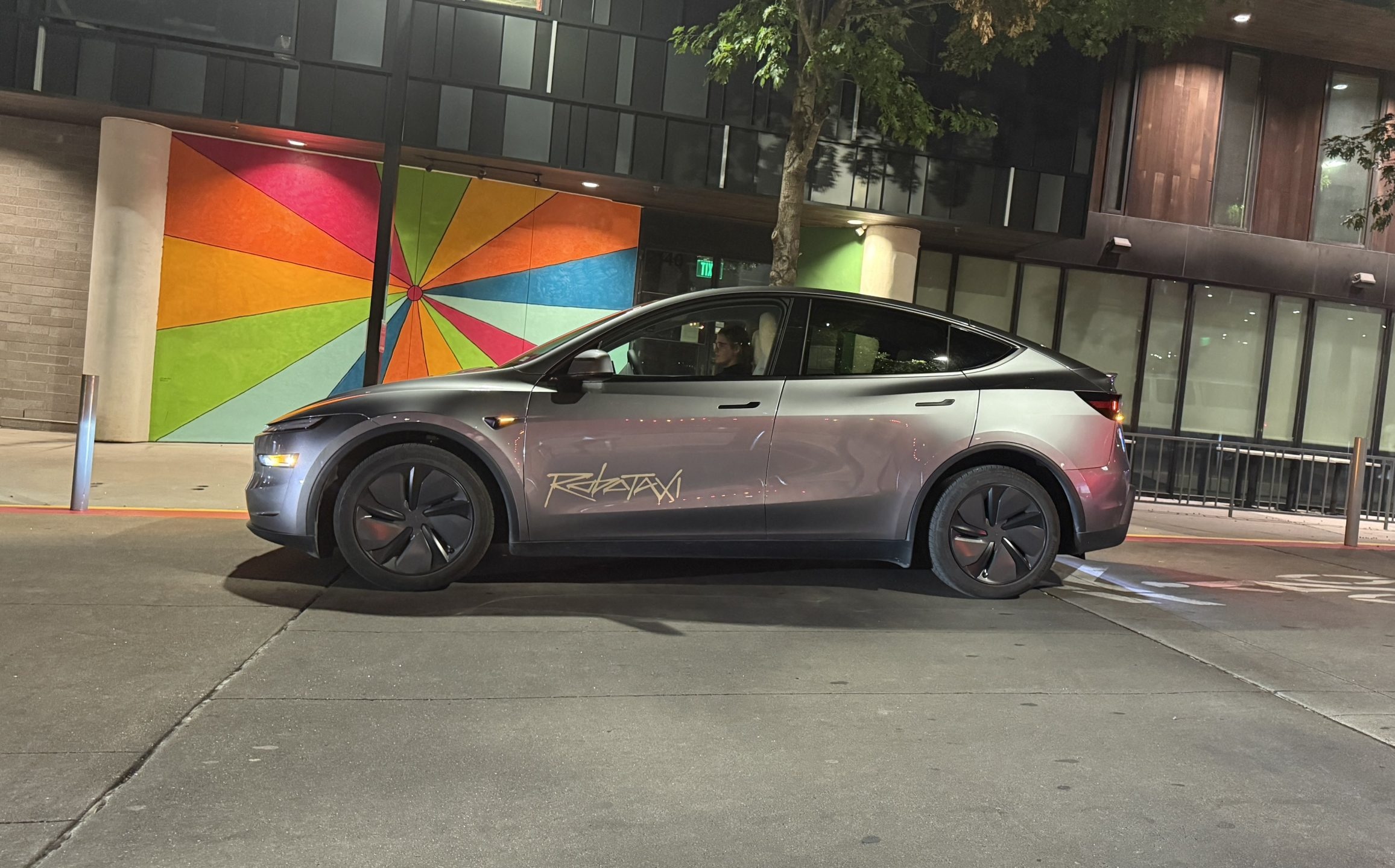
Las Vegas is moving closer to becoming one of the world's largest commercial autonomous vehicle markets. The Nevada Transportation Authority has unanimously approved permits for Tesla, Uber, and Waymo to operate commercial robotaxi services in Clark County, creating the potential for thousands of autonomous vehicles to enter the market over the next year. The approvals could allow as many as 8,000 robotaxis to operate across Clark County. Tesla received authorization for up to 5,000 vehicles, while Waymo and Uber each received permission for up to 1,000 vehicles. Uber's service will rely on partnerships with autonomous vehicle companies Motional and Zoox. The scale of these approvals makes robotaxis in Nevada more than a technology story. The development could influence the future of urban transportation, reshape the competitive landscape for ride-hailing companies, and create significant pressure on traditional taxi and gig-economy drivers.
Nevada Opens the Door to Thousands of Robotaxis
The Nevada Transportation Authority's decision marks a major step for autonomous transportation in the state. The three permits cover commercial operations in Clark County, which includes Las Vegas and some of the most heavily traveled tourist areas in Nevada.
Tesla's authorization is the largest of the three. The company can deploy as many as 5,000 robotaxis during the first year. Waymo received approval for up to 1,000 autonomous vehicles, while Uber received authorization for another 1,000 through its autonomous vehicle partnerships.
Zoox, which already has its own autonomous vehicle network company permit in Nevada, can operate up to 100 robotaxis. Taken together, the approvals create the possibility of a large autonomous fleet competing for passengers in the same market.
However, the approved numbers should not be interpreted as guaranteed deployment figures. During the Nevada hearing, Tesla representatives indicated that reaching the full 5,000-vehicle ceiling within one year would be unlikely. Tesla's Cybercab chief engineer Eric Early said the company would be satisfied with reaching roughly 2,500 vehicles, or potentially somewhat more, during that period.
That distinction is important. Regulatory approval establishes the legal capacity to operate a fleet, but manufacturing, vehicle certification, mapping, charging infrastructure, software readiness, fleet operations, and commercial demand will determine how quickly those vehicles can actually appear on the road.
Why Las Vegas Matters for Autonomous Transportation
Las Vegas offers an unusually attractive environment for robotaxi companies. The city has a concentrated tourism economy, high transportation demand, and a relatively defined set of major destinations. The Las Vegas Strip, hotels, convention centers, airports, entertainment venues, and surrounding commercial districts generate a steady flow of passengers. For autonomous vehicle companies, that density can make fleet utilization more efficient. A robotaxi does not need to serve a widely dispersed suburban market to generate substantial passenger demand. Instead, vehicles can operate within carefully defined areas where ride requests are frequent.
Clark County is also already familiar with autonomous vehicle testing. According to TechCrunch, the Golden Triangle between Harry Reid International Airport and Las Vegas Boulevard has been an important testing area, while Motional has also been testing in downtown Las Vegas and the Town Square shopping district. Nevada has also spent years developing a regulatory framework intended to accommodate autonomous vehicle technology. The Nevada Department of Motor Vehicles describes the state as an early leader in autonomous vehicle regulation and allows different levels of automation to operate on public roads when applicable safety and registration requirements are satisfied. The state uses a self-certification framework rather than testing or certifying every autonomous technology directly. That regulatory environment helps explain why robotaxis in Nevada can move from testing toward commercial operations faster than in jurisdictions with more restrictive frameworks.
Tesla, Waymo, and Uber Take Different Approaches
Although Tesla, Waymo, and Uber are entering the same market, their strategies are not identical. Tesla is pursuing a vertically integrated approach built around its own vehicles and autonomous driving technology. The company has positioned the Cybercab as a purpose-built autonomous vehicle and is working toward expanding its robotaxi operation. Its Nevada permit provides room for significant fleet growth, although Tesla's own testimony suggests the company does not expect to reach the full 5,000-vehicle limit within the first year.
Waymo has taken a more established robotaxi approach. The company has already built commercial autonomous ride services in other U.S. markets and is expanding its presence in Nevada. Its authorization for up to 1,000 vehicles gives it an opportunity to build a substantial Las Vegas operation while competing directly with Tesla. Uber's strategy is different again. Rather than relying exclusively on its own autonomous vehicle technology, Uber is building partnerships with autonomous vehicle developers. In Nevada, its approved operation will use vehicles from Motional and Zoox. This model allows Uber to remain a major part of the autonomous transportation market without having to develop an entire autonomous driving stack itself. It also preserves Uber's existing role as a marketplace connecting passengers with transportation providers.
Uber Pushes a Hybrid Model
Uber has also advocated for a hybrid ride-hailing model that combines human drivers and autonomous vehicles. The company's argument is that robotaxis should complement human-driven vehicles rather than immediately replace them. A mixed network could allow transportation platforms to increase autonomous vehicle availability during periods of high demand while maintaining human drivers as an important part of the system.
This approach could become particularly relevant in Las Vegas, where demand can fluctuate sharply based on conventions, sporting events, concerts, holidays, and major tourism periods. Uber has previously advocated for policies that would require robotaxis to operate within ride-hailing networks that also include human drivers. The company argues that such a model could help cities introduce autonomous vehicles gradually instead of allowing large numbers of robotaxis to enter the market simultaneously. The strategy also gives Uber flexibility. If autonomous vehicles scale more slowly than expected, the company can continue relying on its traditional driver network. If autonomous transportation expands rapidly, Uber can increase its autonomous fleet through partnerships.
The Workforce Impact Could Be Significant
The expansion of robotaxis in Nevada is likely to generate debate about employment. Traditional taxi operators and representatives of the local transportation industry have already expressed opposition to the permits. During the Nevada Transportation Authority hearing, representatives raised concerns about potential oversaturation in the commercial transportation market and increased congestion on Las Vegas roads.
The labor impact is more complicated than simply counting the number of driving jobs that could disappear. Robotaxi fleets require maintenance, cleaning, charging, remote assistance, fleet management, software support, and vehicle logistics. As autonomous fleets expand, demand could grow for workers with technical and operational skills. At the same time, driving is a major source of income for taxi drivers and gig workers. If autonomous vehicles eventually become cheaper to operate and can provide reliable service at scale, ride-hailing companies could reduce their dependence on human drivers. The result could be a gradual shift in the transportation workforce rather than an immediate replacement of drivers. Cities and companies may need to consider how workers can transition into new roles as autonomous fleets grow.
Regulation Will Remain Critical
The approval of commercial robotaxi permits does not mean autonomous vehicles have unrestricted access to Nevada roads. Nevada law requires autonomous vehicle network companies to obtain a valid permit before conducting business in the state. The Nevada Transportation Authority has regulatory authority over these companies, while the state's autonomous vehicle framework establishes additional requirements for vehicle operation.
Tesla's existing Nevada permit illustrates how specific these restrictions can be. Its initial authorization limits operations to an approved operational design domain and geofence, restricts passenger transportation on roads with posted speed limits above 45 miles per hour, and requires vehicles to be clearly identified as robotaxis. The permit also establishes reporting requirements for accidents, security incidents, system failures, communication interruptions, and other events. These conditions show that regulatory approval is not a blank check. Autonomous operators must work within defined operational boundaries and comply with ongoing safety and reporting obligations.
What the Robotaxi Race Means for Las Vegas
The emergence of robotaxis in Nevada could turn Las Vegas into one of the most closely watched autonomous transportation markets in the United States. The combination of Tesla, Waymo, Uber, Motional, and Zoox creates a competitive environment in which several business models will be tested at the same time. Tesla will be able to push its own autonomous fleet strategy, Waymo will bring experience from its existing commercial operations, and Uber will use its transportation marketplace and partnerships to compete.
The actual outcome will depend on more than the number of vehicles approved. Fleet availability, customer adoption, pricing, safety performance, wait times, operating costs, charging infrastructure, and the ability to handle unusual road situations will all determine whether autonomous transportation can become a mainstream service. The approved fleet ceilings are therefore best viewed as a sign of where the market could go rather than a prediction of where it will be one year from now.
Nevada Could Become a Major Autonomous Vehicle Test Market
The significance of the Nevada decision extends beyond Las Vegas. Nevada has spent years positioning itself as an innovation-friendly environment for autonomous vehicle development, and the state's regulatory structure gives companies a relatively clear pathway toward commercial deployment. The Nevada DMV states that it does not issue separate licenses or permits based on the level of vehicle automation. Instead, autonomous vehicles can operate on public roads when they satisfy applicable safety and registration requirements. The state also uses self-certification for manufacturers and developers. That framework could encourage more autonomous transportation companies to view Nevada as a commercially attractive market. For Las Vegas, the next stage will be about execution. The city now has regulatory approval for thousands of autonomous vehicles, but the real test will come when those vehicles begin competing for passengers at scale.
If deployment proceeds successfully, robotaxis could become a familiar part of the Las Vegas transportation network. If operational, regulatory, or commercial challenges slow adoption, the approved fleet numbers may remain well below their permitted ceilings.
Either way, the decision represents a meaningful turning point. The competition is no longer simply about which company has the most advanced autonomous driving technology. It is increasingly about who can operate a reliable, scalable, and commercially sustainable transportation network. As Tesla, Uber, and Waymo prepare to expand their presence, Las Vegas is becoming a real-world laboratory for the next generation of mobility. The outcome could provide an important signal for how quickly autonomous transportation can move from controlled testing environments into everyday urban life.
Read More