





 Friday, 02-10-26








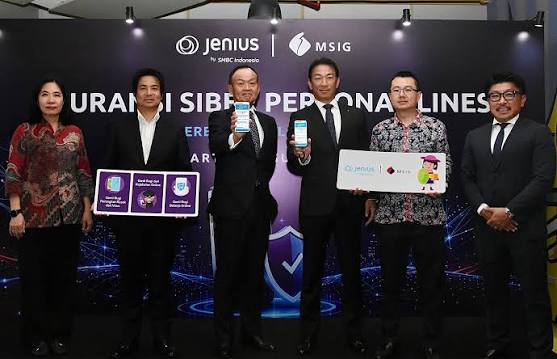
Indonesia’s rapidly expanding digital economy is creating new opportunities – and new risks. In response to a surge in online fraud and cybercrime, Jenius (the digital banking arm of Bank SMBC Indonesia) and MSIG Indonesia have introduced a cyber insurance product aimed at retail customers. Launched in August 2026, this “Personal Lines Cyber Insurance” provides financial protection for Jenius users who experience unauthorized transactions or other digital financial crimes. The product is designed to be simple and affordable: premiums start at just IDR 70,000 (about USD 4) per year, and coverage can reach up to IDR 50 million in a policy period. By integrating insurance directly into the banking app, the companies aim to give Indonesians greater confidence as they carry out more of their daily transactions online.
Rising Cyber Threats in Indonesia
The need for this new cyber insurance offering is underscored by the alarming rise in cyber attacks and financial fraud in Indonesia. Government data shows that cyber threats have exploded in recent years. According to the National Cyber and Crypto Agency (BSSN), Indonesia experienced roughly 1.52 billion cyberattacks in the first half of 2026 alone. These attacks include everything from malware infections to phishing campaigns aimed at stealing personal data or login credentials. Meanwhile, the Financial Services Authority (OJK) and Indonesia’s Anti-Scam Center reported 608,000 cases of cyber fraud from November 2024 through June 2026, resulting in losses of about IDR 7.5 trillion. Such statistics highlight how common unauthorized transfers, online shopping scams, and other digital crimes have become.
Key points on Indonesia’s cyber risk environment include:
- Massive attack volume: BSSN tracked over 1.52 billion cyber attack attempts in H1 2026, indicating that individuals and institutions face constant threats.
- Widespread fraud losses: Authorities have recorded hundreds of thousands of cases of financial fraud, with billions of rupiah lost. The true cost is likely higher, since many incidents go unreported.
- Human factor: Experts note that many cyber incidents involve social engineering (tricking users into giving up credentials). Studies suggest a large share of breaches exploit user behavior like clicking fake links or reusing passwords.
- Rapid response needed: In addition to technology defenses, consumer awareness and protective measures have become crucial. As the government strengthens cybersecurity and fraud response, insurance is emerging as an additional layer of protection.
These trends mean that ordinary bank customers cannot rely solely on firewalls or antivirus software. Even secure banks face complex hacking attempts. In this context, cyber insurance for individuals is gaining attention as part of a broader digital safety net.
Introducing the Jenius–MSIG Cyber Insurance
Recognizing these risks, Jenius and MSIG Indonesia collaborated to create a targeted cyber insurance policy for retail banking customers. The official name of the product is Personal Lines Cyber Insurance. According to a joint press release, it is “designed to protect customers' digital financial transactions from various cybercrime risks,” and is fully integrated into the Jenius mobile app.
Some highlights of the new policy include:
- Coverage for unauthorized transactions: If a user’s Jenius account is hijacked through phishing or malware, the policy can reimburse the stolen funds (up to the coverage limit). This specifically covers “account takeover” scenarios where fraudsters drain a savings balance or other products linked to the Jenius account.
- Protection against online shopping fraud: Victims of fraud during e-commerce transactions can claim compensation for their losses under the policy (subject to terms). This means if a purchase is made without the owner’s consent or through deception, the policy helps cover the resulting loss.
- Digital-first purchase process: Customers can buy the insurance entirely through the Jenius app. No paperwork or external documentation is required. Users simply go to Assets → Insurance → Digital Protection in the app, select a plan, and pay the premium – the policy becomes active within days.
- Affordable premiums and plans: The entry-level plan (“Silver”) costs IDR 70,000 per year and offers a base coverage (for example, IDR 5 million aggregate in some terms). Higher plans are available for greater coverage, with the maximum stated coverage reaching IDR 50 million per policy period. All plans are intended to be budget-friendly, reflecting MSIG’s goal of “simple, affordable, and easily accessible” protection.
The companies emphasize that the coverage is tailored to the modern digital lifestyle. Unlike traditional insurance aimed at property or health, this product specifically addresses risks such as identity theft, cyber extortion, malware damage (data loss recovery), and similar incidents. For example, MSIG’s documentation indicates that the policy includes groups of guarantees like data theft protection, data recovery costs, and even hardware replacement for certain cyber-related damages. In short, it bundles several cyber-related protections in one plan.
The introduction of this cyber insurance signifies a shift in how Indonesian banks and insurers think about consumer needs. As Lilyana Sutianto of Bank SMBC Indonesia (Jenius) noted, customers now do almost everything – transacting, shopping, investing – through digital channels, which creates new expectations for “protection that is personal, integrated, and reliable”. By offering insurance at the point of transaction, Jenius ensures that protection is available exactly when and where customers need it, rather than as a separate add-on product.
Coverage, Benefits, and Cost
To clarify exactly what the Jenius–MSIG cyber insurance covers, it helps to look at the main benefits in plain terms:
- Account Takeover Protection: If a fraudster gains access to a user’s account (for example through phishing or stolen credentials) and makes unauthorized transfers, the user can claim back the lost funds up to the coverage limit.
- Online Purchase Fraud Compensation: If a user is defrauded during an online shopping transaction (such as making a payment for goods that never arrive), the policy will reimburse the losses as long as the claim meets the policy conditions.
- Identity Theft and Extortion: Some plans include coverage for identity theft incidents and certain types of cyber extortion (ransomware demands), as well as costs for professional assistance in case of a cyber crisis (e.g. incident response).
- Data Recovery Costs: If malware or hacking causes data loss, the policy can cover the expense of restoring important digital files or accounts. It may also cover the cost of replacing some damaged hardware linked to the cyber incident.
The official benefits list in the press release mentions three core “benefits” (account takeover and online fraud), plus the ease of purchase and affordable pricing. MSIG’s product documents reveal even more categories of coverage, typically grouped under five main headings: money theft, identity theft, online shopping fraud, cyber extortion, and data/hardware recovery.
Importantly, this insurance is meant to work with existing banking security measures, not replace them. For example, banks may block certain transactions or freeze accounts when fraud is detected. The insurance steps in if a fraudulent transfer still occurs. Customers must also report incidents quickly (usually within 30 days) with documentation. But overall, MSIG advertises the process as straightforward: buy online, submit claims online, get payouts if approved.
A key selling point is the low premiums. At IDR 70,000 per year for the basic plan, this product is priced more like a convenience fee than a luxury. For comparison, a similar product from another insurer might have been expected to cost hundreds of thousands of rupiah. In fact, in markets like the US or Europe, personal cyber insurance is often quite expensive and not widely adopted for individuals. By keeping premiums low, Jenius and MSIG hope to encourage many users to buy coverage as a precaution. The insurer’s director emphasized that “cyber protection should be simple, affordable, and easily accessible”, which is reflected in the pricing strategy.
The annual cost versus coverage is as follows: a Silver plan at 70K rupiah provides up to 5 million coverage (aggregate) as a sample, while higher-tier plans (Platinum, Ultimate) cost more and cover up to 50 million rupiah per year. These figures match the press release’s statement that coverage “can reach up to IDR 50 million per coverage period”.
Digital Purchase and Accessibility
One of the most innovative aspects of this offering is how the insurance is sold. It is fully digital and embedded in the Jenius app’s workflow. Users do not need to talk to an agent or fill out forms; instead, they simply tap through the app’s insurance section. This frictionless approach is a departure from traditional insurance distribution in Indonesia, which often involves paper forms or bank tellers.
By making the purchase instant and document-free, the companies ensure that any Jenius customer who wants cyber coverage can get it in a minute or two. The simplicity also means younger or less tech-savvy users can access it easily. MSIG promised a fast policy issuance (“within 2 working days after purchase, it becomes active”) and transparent benefit details in-app. All this matches the broader trend of “insurtech” solutions that cater to the digital lifestyle.
Furthermore, the claim process is also designed to be digital. If a customer suffers a loss (such as an unauthorized transfer), they lodge a claim through the app or MSIG’s digital channels with the required proof (bank statements, police report, etc.). The insurer’s dedicated cyber incident team then assesses and pays out if the criteria are met. This end-to-end digital experience – from sign-up to claims – is intended to give customers confidence without hassle.
Industry Context and Competition
The Jenius–MSIG collaboration is part of a wider industry response to cyber threats. Other insurers and banks in Indonesia have been moving in the same direction. For example, in March 2026 PT Chubb General Insurance Indonesia partnered with DBS Bank Indonesia to launch “Cyber Guard,” a similar personal cyber insurance product. Cyber Guard covers unauthorized card transactions, account takeovers, and social engineering fraud, and it is sold through DBS’s channels. Like Jenius’s product, Cyber Guard offers a basic tier at around IDR 60,000 per year for 10 million coverage and a higher tier at IDR 150,000 for 50 million coverage.
The emergence of these products shows that Indonesian insurers see a growing retail market for cyber insurance. Businesses have long bought cyber coverage, but only recently have insurers tailored plans for individuals. According to industry analysis, general cyber insurance premiums in Indonesia rose sharply (around 40% in 2025) as carriers adjusted to rising claims. However, the new personal-line offerings like Jenius’s aim to expand the market rather than focus on high-risk cases. By simplifying policies and capping coverage at modest levels, insurers can serve a broad base of consumers.
This trend also reflects banks’ strategies to integrate financial services. As Ms. Lilyana Sutianto noted, insurance is now being “placed directly in the digital customer journey”. Banks benefit by adding value to their apps and potentially earning fees on insurance, while customers get protection tailored to their banking activity. It’s a win-win if implemented well.
What This Means for Consumers
For individual consumers, having cyber insurance available means one more tool in managing digital risk. Traditionally, a user who suffered fraud might only get reimbursed by the bank under limited terms (some banks have fraud policies) or have to absorb the loss. With this insurance, a covered loss could be at least partly compensated. In practice, a customer who loses money to a phishing scam or shopping scam and has this policy could submit a claim for up to 50 million rupiah. That does not cover all possible cyber losses (for example, it does not insure investment losses or unapproved crypto trades), but it does cover routine transaction fraud.
It is important to note the exclusions and limits. As with any insurance, not every scenario is covered. MSIG’s policy excludes things like intentional acts, business-related transactions, war or terrorism, crypto trading losses, and other specified items. Consumers must still read the fine print to know what’s not covered. But for most everyday users, the main threats (online payments, card fraud, identity theft via online accounts) are included.
Another implication is behavioral: having insurance may encourage better security habits. If users are aware that phishing and unauthorized access can have financial consequences, they might be more vigilant. Some observers suggest that complementary measures – like fraud education and stronger authentication – combined with insurance create a layered defense. Indeed, MSIG has highlighted that the biggest shift in cyber risk is that attacks increasingly target humans, not just systems.
From a broader perspective, the product signals that Indonesia’s financial sector is maturing in cybersecurity. The collaboration between a bank’s digital unit and an insurer acknowledges that “digital trust” is critical for growth. When customers feel their funds are safer, they may be more willing to try digital banking and fintech services. In that sense, affordable cyber insurance might help accelerate the shift to digital wallets and online finance in Indonesia.
Conclusion
The launch of the Jenius–MSIG cyber insurance product illustrates how Indonesia’s finance industry is adapting to modern challenges. By offering a low-cost, easy-to-access insurance plan against fraud and theft in digital transactions, the companies are betting that consumers value peace of mind in the digital age. The policy’s key features – coverage for account takeover and online shopping fraud, simple purchase through a banking app, and premiums from just IDR 70,000 a year – are designed to match the needs of today’s bank users.
As digital transactions continue to grow, such insurance products could become commonplace. If Indonesian consumers adopt this insurance, it could mitigate some of the financial damage from cybercrime. In turn, insurers and banks will learn more about pricing and claims management for personal cyber risk. However, the ultimate effectiveness will depend on execution. Consumers will need to understand when and how to claim, and insurers will need to balance offering protection with managing fraud.
In the meantime, the Jenius–MSIG initiative adds an important option for those who want extra security in their financial lives. It shows that even small steps – like a 70,000-rupiah insurance plan – can be part of a bigger strategy to bolster online trust. If nothing else, it raises awareness that cyber threats are real and that there are tools beyond passwords and antivirus software to address them.
Read More