





 Monday, 21-09-26








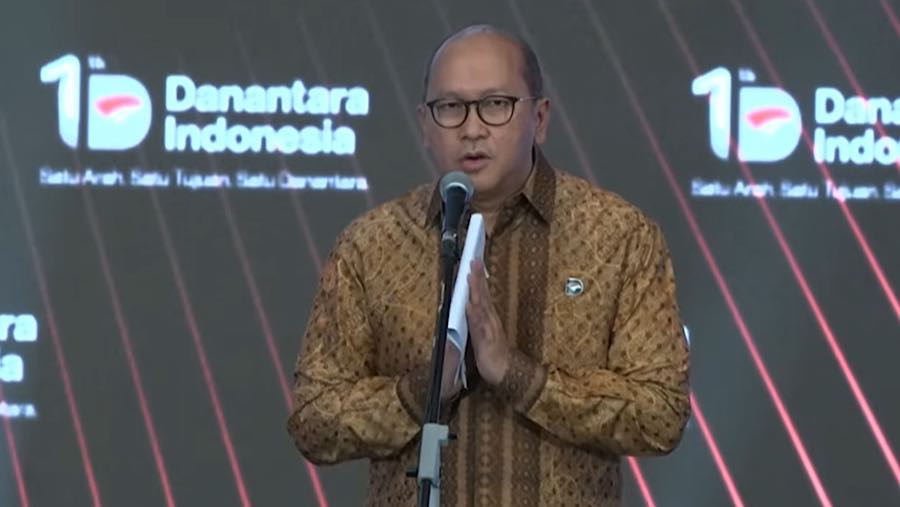
Why Danantara Has Become A Key Player
Danantara’s involvement in Indonesia’s planned international financial centre has quickly become one of the most closely watched parts of the policy push. The state investment agency is being positioned not only as a supporter, but also as a practical enabler of the project, with reports saying it could provide initial capital and help bring in technical expertise from the Dubai International Financial Centre ecosystem. Danantara’s own mandate is to manage and optimize strategic state assets in support of Indonesia’s long term economic transformation, which makes it a natural institution to help anchor a high-profile financial hub initiative.
The timing matters. On July 21, 2026, Reuters reported that Indonesia’s parliament had passed the law establishing international financial centres, following a fast-tracked legislative process. The law is designed to attract foreign capital, create a stronger financial-services platform, and support the government’s growth ambitions. That means Danantara is entering the picture at exactly the moment when the policy is shifting from concept to implementation.
What The International Financial Centre Is Trying To Achieve
At its core, the international financial centre project is an attempt to deepen Indonesia’s financial ecosystem and make the country more competitive in the hunt for global capital. Reuters reported that the government sees the initiative as a way to attract between Rp300 trillion and Rp500 trillion in investment, through foreign bank branches, business entities, and related financial activity. That is a serious number, and it explains why policymakers have moved quickly to define the legal and institutional framework.
The Finance Ministry has framed the initiative as a way to complement domestic finance with a world class ecosystem, rather than replace what already exists. In other words, the goal is not to create a separate economy, but to build a more competitive platform for banking, wealth management, fintech, dispute resolution, and capital formation. The ministry also said the new framework is intended to strengthen Indonesia’s position as an international financial hub.
Why Dubai Is The Reference Point
The Dubai International Financial Centre has become the model everyone keeps mentioning, and that is not accidental. Multiple local reports and official statements said Indonesia is looking at Dubai’s financial centre as a benchmark because it combined regulatory clarity, a business friendly environment, and strong international credibility. That is also why the phrase international financial centre is now being discussed alongside practical questions like tax treatment, legal certainty, and how the zone will be governed.
Danantara’s involvement with Dubai-linked expertise is especially important because it signals that the government wants to borrow not just the branding of Dubai, but the operating logic behind it. Kontan reported that officials met with a former chief executive of Dubai Financial Centre to study the PFII concept more deeply, and that Danantara was also prepared as the provider of initial capital for the financial centre. That combination of seed funding and imported know-how is exactly the kind of setup that can turn a policy idea into a functioning institution.
How The New Law Changes The Game
The new law gives the international financial centre project a formal legal base, which is critical for investor confidence. Reuters reported that the legislation includes a governing body reporting to the president and parliament, a dedicated arbitration body, and a special court to handle disputes related to the financial centres. It also includes major incentives, such as a 50 year tax holiday for qualifying investors, exemptions on income generated outside Indonesia, and some VAT exemptions.
That kind of legal structure matters because international investors do not just look at tax breaks. They look at how disputes are resolved, whether contracts are enforceable, and whether the rules stay stable long enough to justify long term commitment. In that sense, the legal architecture around the international financial centre may matter as much as the headline tax incentives. Indonesia is trying to prove that it can offer both competitiveness and predictability.
Why Danantara’s Capital Role Matters
If Danantara does provide early capital, that would give the project more than symbolic support. It would show that the state is willing to put balance sheet credibility behind the idea. That matters because financial centres are not built on slogans. They are built on infrastructure, institutions, legal certainty, and a credible opening pool of capital. Danantara’s public role as a state investment manager gives it a unique position to help bridge policy ambition and market execution.
This is also why the international financial centre discussion has become so closely tied to Danantara. The agency is not merely a sponsor in the background. It is increasingly being framed as part of the operating backbone, whether through initial capital, strategic partnerships, or long term stewardship of the financial ecosystem. That interpretation is reinforced by recent reporting that Danantara has been meeting with leadership teams, investment officials, and external experts to build the project’s institutional foundations.
Bali, Investment Appeal, And The Bigger Location Question
Location remains one of the biggest questions surrounding the international financial centre. Reuters reported that Bali is a strong candidate, while other local reporting has described Bali as the favored location because of its global recognition and tourism pull. Supporters argue that Bali could help Indonesia attract international investors faster, provided the legal and regulatory environment is strong enough to support financial activity beyond tourism.
That said, location alone will not make the project succeed. The financial centre needs connectivity, digital infrastructure, professional services, and credible institutions around it. If those pieces do not arrive together, the location advantage will fade quickly. That is why Danantara’s role is so important: it can help align capital, policy, and ecosystem building in one coordinated process.
What Investors Will Watch Next
Investors will likely focus on four things. First, they will want clarity on the final governance structure. Second, they will want to know whether the promised tax and legal incentives survive implementation without confusion. Third, they will look for evidence that Danantara and other institutions can actually seed the market with enough credibility to attract follow on capital. Fourth, they will want to see whether the international financial centre can offer something genuinely different from existing financial hubs in the region.
That last point is especially important. Indonesia is not starting from zero, but it is entering a crowded field. Regional investors already have choices across Southeast Asia and the Gulf. To stand out, the new centre will need more than attractive headlines. It will need a stable rulebook, competent administration, and institutions that can handle disputes, onboarding, supervision, and tax treatment with speed and consistency.
The Risks Are Real Too
A project like this always comes with risk. The biggest one is credibility. If the international financial centre is perceived as too generous on tax, too unclear on enforcement, or too slow in delivery, the market may treat it as a policy experiment rather than a serious destination. That would weaken its ability to compete with better known financial centres and reduce the quality of investors it attracts.
There is also the question of coordination. A financial centre cannot be built by one agency alone, even a powerful one like Danantara. It requires a disciplined division of roles between lawmakers, regulators, ministries, local authorities, and private sector participants. Danantara can help anchor the project, but the long term success of the international financial centre will depend on whether the whole machine moves in sync.
Why This Story Matters For Indonesia
This is more than a piece of financial engineering. It is a signal that Indonesia wants to compete more aggressively for global capital and modern financial services. Reuters has already indicated that the government sees the project as capable of drawing tens of billions of dollars in investment, while the Finance Ministry has described it as a way to strengthen the domestic economy with a world class financial ecosystem. That makes the international financial centre one of the country’s most ambitious economic experiments in years.
Danantara’s role gives that experiment a stronger foundation. If the agency can help provide seed capital, attract credible technical partners, and support the institutional buildout, the project will look much more serious to both domestic and foreign investors. For now, the message is clear: Indonesia is no longer just discussing a financial centre. It is building one, and Danantara is becoming one of the most important names in that process.
Read More