





 Tuesday, 20-10-26








Why The Ethanol Plants Announcement Matters
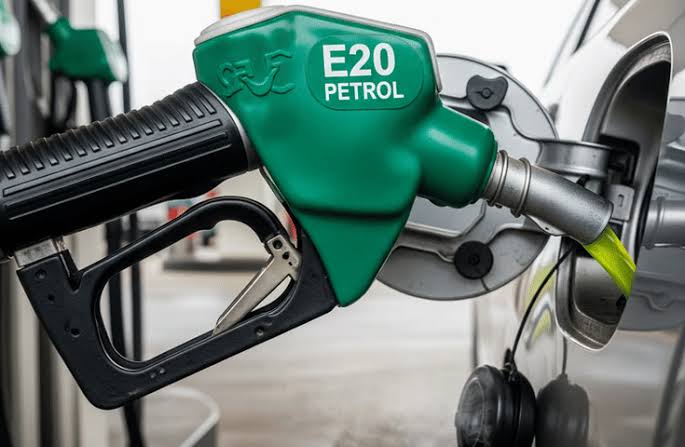
President Prabowo Subianto’s order to build up to 50 ethanol plants is more than a headline about fuel policy. It is a signal that Indonesia is trying to move faster on energy diversification while reducing its dependence on imported gasoline. The Jakarta Globe reported that Prabowo approved at least 30 bioethanol plants, with room to expand that number to 50, as part of the government’s push toward an E20 fuel program. Reuters and Antara confirmed the same broad direction, including the target of up to 50 new plants.
For Indonesia, this is not a small technical adjustment. It touches agriculture, industrial investment, fuel imports, and the way the country thinks about energy sovereignty. The plan also shows that ethanol plants are becoming a core piece of the broader biofuel agenda, not just a side project. If the government can scale production, it could reshape both the fuel market and the domestic supply chain behind it.
The E20 Goal Behind The Policy
The government’s ultimate aim is to introduce ethanol-blended gasoline at scale. Reuters reported in February that Indonesia planned to require a 10 percent bioethanol blend in gasoline by 2028, after earlier targets were pushed back because of supply constraints. Reuters later reported on July 17 that Indonesia plans to mix non-subsidised gasoline with at least 5 percent ethanol in Java during the 2026 to 2027 period, before increasing the proportion to 10 percent by 2028.
That timeline helps explain why ethanol plants are suddenly so important. A blend mandate cannot work without enough local supply. The government knows that, and Prabowo’s new directive appears designed to fix the production bottleneck before it becomes a larger policy failure. In that sense, the ethanol plants plan is not just about capacity. It is about making the E20 path realistic.
The Energy and Mineral Resources Ministry has already framed ethanol blending as part of Indonesia’s resilience strategy. In February, the Cabinet Secretariat said the government highlighted E5 and E10 bioethanol blending as a strategic measure to strengthen energy resilience and sovereignty. The ministry also said the policy is meant to expand domestic energy business activity while imports may still be needed until production is sufficient.
Why Indonesia Needs More Production Capacity
The biggest challenge is supply. RRI reported that Indonesia currently has only one ethanol plant, which is a strikingly small base for a country discussing nationwide E20 implementation and eventually even E100. That means the new plan is not an incremental scale-up. It is a rebuild of the production landscape itself.
This is also why the phrase ethanol plants matters so much in search and in policy. Indonesia cannot talk about cleaner gasoline blends while leaving production capacity thin. Reuters reported earlier this year that supply shortages had already forced the country to delay its mandatory ethanol blend timeline. The government had initially aimed for a 5 percent target by 2025, but it did not meet that goal because ethanol supply was insufficient.
Prabowo’s move is essentially a response to that gap. Rather than relying on imports or waiting for market forces to solve the problem, the government is pushing the industrial base directly. That includes building new ethanol plants, speeding up replanting, and linking the fuel strategy to agricultural production. This is a classic supply-side fix to a supply-side problem.
Sugarcane, Cassava, Corn, And The Agricultural Link
One reason the policy is politically and economically appealing is that it connects energy with farming. In March, Jakarta Globe reported that Agriculture Minister Andi Amran Sulaiman said the biofuel push would use ethanol derived from corn, cassava, and sugarcane. Reuters also reported on July 17 that Prabowo ordered the agriculture ministry to accelerate sugarcane replanting programs so the supply base could expand more quickly.
That linkage matters because ethanol plants are only one part of the story. The feedstock pipeline is equally important. If sugarcane yields stay weak or planting is too slow, the fuel program will remain vulnerable. By tying plant construction to replanting, the government is trying to avoid a mismatch between industrial ambition and agricultural reality.
The upside is obvious. More local feedstock means more domestic value creation, more rural activity, and potentially better income stability for farmers. Reuters reported that Prabowo also wants Indonesia to increase domestic sugarcane and bioethanol production as part of a broader drive for energy self sufficiency. That makes the policy larger than a fuel blend rule. It becomes a rural industrial policy as well.
How This Fits Into Indonesia's Biofuel Strategy
Indonesia is already deep into biofuel policy through biodiesel. Reuters reported in June that the country was on track to launch its B50 biodiesel program on July 1, 2026. That means 50 percent palm oil based biodiesel was being introduced as another step in the country’s effort to reduce fuel imports and strengthen energy resilience. The ethanol plants plan sits inside that wider biofuel framework.
This is important for understanding government priorities. Indonesia is not treating biofuels as a temporary experiment. It is building a layered strategy in which biodiesel and bioethanol each play a role. The biodiesel side has already moved forward. The ethanol side now needs the factories, the feedstock, and the logistics to catch up. That is why the current announcement feels like a structural milestone rather than a simple expansion plan.
Prabowo’s comments also suggest a long-term ambition. RRI reported that he spoke about E20, and even raised the idea of E100, pointing to Brazil as an example and India as a country already using E20. That framing matters because it shows the government is not thinking only about a near-term blend target. It is thinking about where Indonesia wants to sit in the global biofuel hierarchy.
The Investment Question Behind The Policy
Whenever a government orders new industrial capacity, investors ask the same question: who will pay for it, and how quickly can it be built? The available reports do not spell out the full financing structure, but they do show a policy environment that is clearly pushing private and public actors toward action. The approved range of 30 to 50 ethanol plants suggests the state wants scale, not symbolism.
That scale could create opportunities across engineering, construction, logistics, agribusiness, and energy processing. It could also produce bottlenecks if land, feedstock, or permitting takes too long. The history of Indonesia’s delayed ethanol targets shows that execution risk is real. Reuters reported in February that the earlier E10 timeline slipped because supply was not ready. So the current plan will only work if the government moves more quickly on both industrial buildout and raw material supply.
For the market, the key signal is that the government appears serious about reducing gasoline imports. Reuters reported in March that the E20 rollout was meant to shield Indonesia from global energy shocks and curb rising fuel imports. That makes ethanol plants a strategic asset, not just an industrial project. If successful, they would help keep more of the energy value chain inside Indonesia.
What Happens Next
The next stage will be execution. Indonesia now has a policy direction, a target blend level, and a clear acknowledgment that supply must expand. The question is how quickly the ethanol plants can be built, where they will be located, and whether agricultural output can support the ramp-up. Reuters reported that the government is also planning replanting acceleration, which suggests the administration understands that fuel policy and farm policy must move together.
If the government follows through, the ethanol plants plan could become one of the most important pieces of Indonesia’s broader energy transition. It would not only support E20. It would also help build a domestic market for bioethanol, strengthen the role of farmers in the energy chain, and reduce exposure to imported fuel volatility. If the rollout stalls, however, the policy could join a long list of ambitious energy targets that looked stronger on paper than in practice.
For now, the message is clear. Indonesia is betting that ethanol plants can help turn a fuel blending policy into a real industrial system. That is a much bigger challenge, but also a much more meaningful opportunity.
Read More