





 Friday, 16-10-26








Freeport’s Next Growth Phase Is Also A Fiscal Story
Freeport Indonesia is not just scaling production. It is also positioning itself to become a much larger contributor to the Indonesian state budget. According to Jakarta Globe’s report, the company expects annual payments to Indonesia to exceed $7 billion once its mining operations and new smelter reach full capacity. That makes state revenue contributions the central theme of Freeport’s next phase, not a side effect. The number is striking because it reflects several revenue streams at once, including taxes, royalties, dividends, and other government-related payments tied to one of Indonesia’s most important mining assets. Freeport’s Grasberg district in Papua remains one of the world’s largest copper and gold reserves, and the company has spent years rebuilding its production model around downstream processing and higher-value output.
Why The $7 Billion Figure Matters
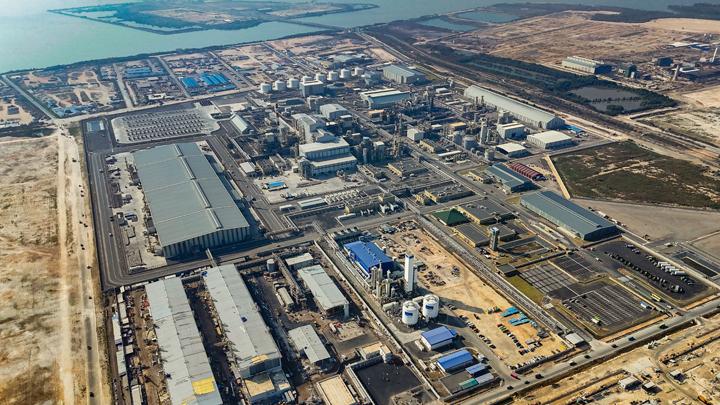
A headline about state revenue contributions can sound abstract, but the implication is concrete. More than $7 billion a year would place Freeport among the most significant private contributors to Indonesia’s public finances. It would also reinforce the idea that mining policy is no longer only about extraction. It is about how much value can be retained domestically through processing, refining, and formal fiscal channels. That matters for Indonesia because the government has spent years pushing mineral downstreaming. The goal is to turn raw ore into finished or semi-finished products at home, where more jobs, more industrial capability, and more tax revenue can be generated. Freeport’s smelter is a visible symbol of that strategy. Reuters reported that the company’s $3.7 billion Gresik copper smelter has an annual input capacity of 1.7 million metric tons of copper concentrate and is expected to produce roughly 650,000 tons of copper cathode and 50 to 60 tons of gold each year.
What Freeport Is Building In Indonesia
Freeport Indonesia’s core asset is the Grasberg mining district in Papua, a site that Freeport-McMoRan describes as one of the world’s largest recoverable copper and gold reserves. The operation has been active for decades, and its long life gives the company unusual importance in Indonesia’s mining landscape. The company’s industrial footprint now goes beyond extraction. Its new copper smelter in Gresik is designed to convert concentrate into refined output, which should raise the domestic value captured from each ton of ore. Reuters reported that the smelter began producing copper cathodes in September 2024 and was expected to reach full capacity by the end of that year, although the path to full operation has not been entirely smooth. That is important because state revenue contributions rise when a project matures from a simple mining operation into a more integrated industrial chain. Smelting tends to deepen local economic linkages, support logistics and utility demand, and broaden the tax base. In other words, the fiscal upside comes not only from the volume of material moved, but from the level of transformation that happens inside Indonesia.
The Revenue Story Has Been Building For Years
Freeport’s role in state finance is not new. In 2022, PT Freeport Indonesia said President Joko Widodo was pleased that the company’s contribution to state revenue reached US$7.5 billion in 2021. That earlier figure shows that the company has already operated at a scale where its payments to the state can reach multibillion dollar levels even before the latest production expansion is fully realized.
More recently, PT Freeport Indonesia said in May 2026 that its total contribution to the state reached IDR75 trillion in 2025 and early 2026, including dividends, regional allocations, and other obligations. That official update gives the latest context for why state revenue contributions have become such a prominent talking point in coverage of the company.
Taken together, those figures suggest that the $7 billion annual target is ambitious but not detached from Freeport’s existing scale. The company is already a major fiscal actor. What changes now is the degree of confidence that more of the value chain can be monetized domestically and more of the resulting revenue can be captured for the state.
Why State Revenue Contributions Matter More In Freeport’s Next Phase
The phrase state revenue contributions matters because it captures more than a payment line item. It points to how Indonesia’s mining model is evolving. Instead of relying only on export earnings from raw or semi-processed material, the country is trying to lock in larger and more stable fiscal benefits from integrated industrial activity. Freeport is one of the clearest test cases for that approach.
There is also a policy reason the number matters now. Indonesia has long used regulation to encourage domestic processing, including restrictions on raw mineral exports. Reuters reported that Freeport and other miners received export permit extensions while their smelters were completed, underscoring how tightly the government links export access to downstream investment. That framework is designed to convert natural resource wealth into long-term industrial capacity and, eventually, higher state revenue contributions.
From a budget perspective, that can be meaningful at both the national and regional levels. Mining payments flow through taxes, royalties, profit sharing, and local allocations, so the benefits are not limited to Jakarta. The company’s footprint in Papua and East Java means that communities near its operations can feel the effects through jobs, infrastructure, and local government transfers.
The Smelter Is The Key Variable
The most important operational variable behind Freeport’s target is the smelter. Reuters reported that the Gresik facility was built at a cost of $3.7 billion and designed to process 1.7 million metric tons of copper concentrate annually. Once the plant runs smoothly and the mine supplies enough feedstock, the economics of the business improve, and state revenue contributions can rise accordingly.
But the smelter also illustrates the risks of industrial transition. In March 2025, Reuters reported that Indonesia granted Freeport a six month export permit while the smelter was being repaired after a fire in October. That episode showed how operational disruptions can quickly affect output, exports, and government royalty flows. For a project this large, even temporary setbacks can ripple through the fiscal outlook.
That is why the $7 billion target should be read as a forward-looking estimate rather than a guarantee. It depends on stable operations, commodity prices, regulatory continuity, and the company’s ability to keep the mine and smelter synchronized. In mining, output targets can look straightforward on paper, but the path to them is rarely linear.
What This Means For Indonesia’s Mining Strategy
Freeport’s growing state revenue contributions align with Indonesia’s broader downstreaming agenda. The government wants more minerals processed domestically, more industrial jobs created at home, and more value captured before products are exported. Freeport’s smelter investment fits that ambition almost perfectly.
The policy logic is simple. If Indonesia can move from exporting concentrates to exporting refined products, it can increase the taxable value of each shipment while reducing dependence on raw commodity swings. That does not eliminate volatility, but it improves the structure of national earnings. In that sense, Freeport is not just a mining company. It is one of the most important proof points for Indonesia’s industrial policy.
The company’s long presence in Papua also adds a regional development dimension. Freeport’s operations have supported local economic activity for years, and its contribution to state revenue helps fund broader public spending across the country. As the company moves into a more integrated production model, the state stands to gain not just from more output, but from a more sophisticated industrial base.
The Outlook For The Coming Years
If Freeport’s mine and smelter perform as planned, annual state revenue contributions above $7 billion could become a realistic benchmark rather than a one off headline. The company has already shown that its payments to the state can reach very large levels, and the latest expansion adds another layer of capacity to that story.
Still, the outlook should be read carefully. Commodity markets fluctuate, smelters require stable technical performance, and policy settings can shift. The strength of Freeport’s contribution will depend on whether the company can keep translating geological wealth into industrial output and, from there, into reliable state revenue contributions. That is the real test behind the headline figure.
For Indonesia, the upside is clear. A stronger Freeport means stronger fiscal receipts, deeper downstreaming, and a more mature mining value chain. For Freeport, the reward is a more durable operating model in a market that increasingly expects local processing, higher transparency, and tangible national benefits. In that sense, state revenue contributions are no longer just a financial metric. They are the measure of how successfully Indonesia is converting natural resources into long term national value.
Read More