





 Friday, 16-10-26








Indonesia Is Moving Fast On Fuel Policy
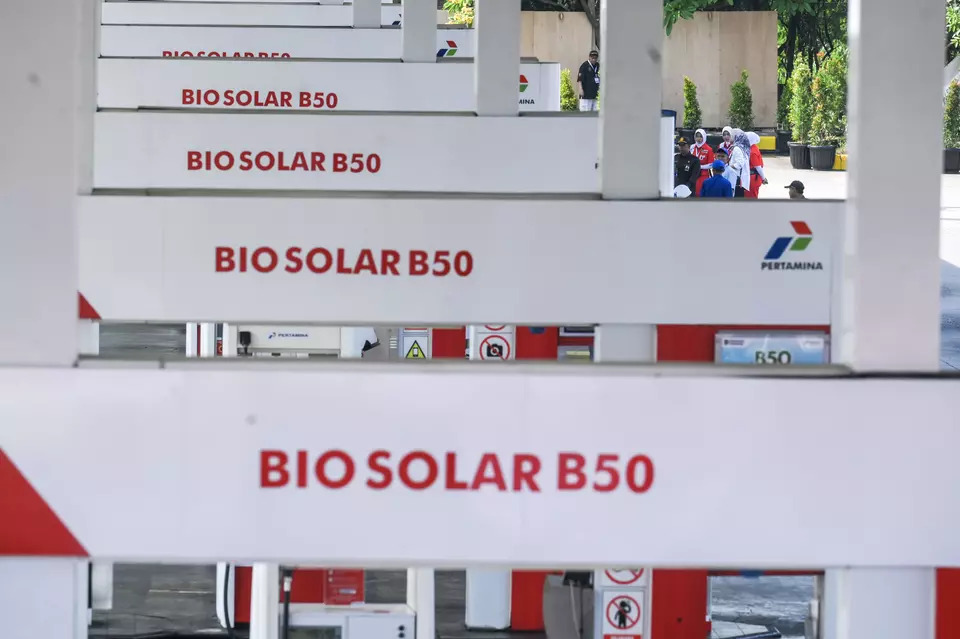
Indonesia is giving its B50 biodiesel program a firm deadline, and that deadline matters for more than just fuel stations. According to Jakarta Globe, all gas stations in the country must sell B50 biodiesel by October 1, 2026, after a three-month transition period. The program blends 50 percent palm oil-based biodiesel with 50 percent conventional diesel, making Indonesia the first country to roll it out at national scale.
The shift is a major policy move because it ties together energy security, foreign exchange savings, and the future of the palm oil industry. The government says the program is meant to reduce fuel imports after global crude prices were pushed higher by the US-Iran war. That makes B50 biodiesel not only an energy policy, but also a macroeconomic one.
What The New Mandate Actually Says
The clearest part of the announcement is the timeline. Government spokesperson Muhammad Qodari said gas stations should continue using remaining B40 stocks during the transition, but all stations must be ready to sell B50 biodiesel by October 1. Jakarta Globe reported that the government framed this as a three month adjustment period rather than an open-ended rollout.
That detail is important because it shows the government is trying to balance ambition with implementation. A nationwide fuel mandate affects storage, logistics, station equipment, and supply planning. If the rollout is rushed too hard, it risks confusion at the pump. If it is delayed too long, the policy loses momentum. The transition window is the compromise the government has chosen.
Indonesia also says it believes the policy can bring large economic gains. Qodari said the B50 biodiesel program could cut the import bill by as much as Rp170 trillion, or almost $9.4 billion, and create Rp23.49 trillion in added value from crude palm oil. Those are big numbers, and they show why B50 biodiesel has become one of the country’s most closely watched energy policies this year.
Why B50 Biodiesel Matters For Energy Security
The main reason the government is pushing B50 biodiesel is simple: Indonesia wants to reduce dependence on imported diesel. Reuters reported earlier that the state has repeatedly framed B50 as a way to lessen gasoil imports and strengthen energy security, with officials saying the program could move forward in 2026 after technical testing. Reuters also reported that the government sees the initiative as part of a broader effort to keep more fuel spending inside the domestic economy.
This is not a small shift. Indonesia is the world’s largest palm oil producer, and that gives it a unique position in global biofuel policy. By raising the biodiesel blend from B40 to B50 biodiesel, the government is using domestic raw materials more aggressively to replace imported diesel. In policy terms, that means more value stays in Indonesia, at least if the supply chain can keep up.
The move also has geopolitical context. Reuters reported that the government revived its B50 timetable after global supply disruptions and oil market shocks raised concern about import dependence. In other words, the policy is partly an energy strategy and partly a hedge against future volatility.
The Money Equation Behind The Policy
The fiscal logic behind B50 biodiesel is one of the biggest reasons it has political support. Jakarta Globe reported that the government expects the program to cut foreign exchange spending while creating significant added value from crude palm oil. Pertamina, Indonesia’s state energy giant, is already planning adjustments in distribution, and its chief executive said the mandate could cut diesel imports by around 310,000 barrels a day.
That kind of reduction would matter for the balance of payments and the trade balance. Indonesia slipped into a trade deficit in May 2026, according to the same Jakarta Globe report, and officials are clearly looking for domestic fuel substitution to ease pressure. The B50 biodiesel policy is therefore being sold not just as a green or agricultural policy, but as a fiscal stabilizer.
Still, the money equation is not one sided. The government is partly funding the biodiesel program through palm oil export levies, which means more domestic palm oil use can reduce the pool of product available for export. Fabby Tumiwa of the Institute for Essential Services Reform warned that if the policy absorbs too much palm oil, it could narrow the country’s fiscal room and force the government to keep evaluating efficiency.
Palm Oil Supply Is The Real Pressure Point
The biggest practical question is whether Indonesia can supply enough crude palm oil without creating new bottlenecks. Reuters reported that B50 would require much more biodiesel feedstock than the current B40 scheme, and earlier coverage noted that the government has been reviewing allocations and possible levy changes to support the program. Reuters also said the B50 mandate could increase palm oil use substantially and reduce exports if domestic demand rises too quickly.
That is where the policy becomes more complicated. Palm oil is both a strategic energy input and a major export commodity. If too much of it gets redirected into fuel, then export earnings could fall even as fuel imports decline. That tradeoff is the heart of the debate around B50 biodiesel. It is not simply a case of good or bad. It is a question of what balance Indonesia wants between energy sovereignty and export revenue.
The government appears to believe the domestic gains outweigh the risks. It has emphasized the added value created by turning crude palm oil into biodiesel and the foreign exchange saved by using less imported diesel. Critics, however, worry that the program could tighten supply chains and increase pressure on state support mechanisms if prices move in the wrong direction.
What Experts Say About The Rollout
Analysts have not dismissed the B50 biodiesel program, but they do want flexibility. Fabby Tumiwa said the policy looks more attractive when crude prices are high, because the import savings become larger. He also warned that when crude prices are lower, the government may need bigger financial support to keep the program viable. Reuters reported a similar point earlier, noting that implementation depends heavily on the price spread between crude oil and crude palm oil.
That is a sensible caution. Fuel blending mandates usually work best when there is enough price advantage to justify the switch and enough supply stability to keep the system smooth. If both conditions are present, B50 biodiesel can help the trade balance. If not, the fiscal burden may rise faster than policymakers expect.
There is also a technical layer to the debate. Jakarta Globe previously reported that Indonesia’s auto industry says diesel vehicles are ready for B50, which helps reduce concerns about engine damage or compatibility. That does not solve the supply and financing issues, but it does remove one of the most common objections to a higher biodiesel blend.
What This Means For Gas Stations And Drivers
For station operators, the transition means inventory management will be critical. During the three month window, they are allowed to sell down existing B40 stock before the B50 biodiesel mandate fully kicks in. That gives distributors time to adjust storage and delivery schedules, but it also means the next few months will be a live test of how well the fuel system can adapt.
For drivers, the immediate effect may be less dramatic than the policy headlines suggest. The fuel at the pump will simply contain a higher palm oil share, while the government works to keep distribution stable. The bigger consequences may show up indirectly through fuel pricing, supply consistency, and the broader behavior of palm oil markets.
That is why B50 biodiesel is best understood as a system policy, not just a fuel specification. It touches energy, agriculture, logistics, trade, and the state budget all at once. Any move of that scale creates winners and losers, and Indonesia is betting that the overall national gain will be worth the friction along the way.
The Bigger Outlook
Indonesia has already spent years building its biodiesel policy ladder, from B20 to B35 to B40 and now toward B50 biodiesel. The latest announcement shows the country is treating biofuel as a core part of energy strategy rather than a side experiment. Reuters and the Energy Ministry have both indicated that the B50 push is tied to import reduction, resilience, and stronger use of domestic resources.
The October deadline will therefore serve as a useful stress test. If the transition goes smoothly, Indonesia will strengthen its reputation as the global leader in palm oil based biodiesel policy. If it runs into supply, fiscal, or logistics problems, the government may need to slow the pace or recalibrate support. Either way, the decision has already changed the national conversation about energy independence.
For now, the direction is clear. Indonesia wants B50 biodiesel on the road, in every station, and in the national fuel mix by October. The policy is ambitious, costly, and politically significant. It is also one of the clearest signals yet that Indonesia plans to use its palm oil strength not only for exports, but for energy security at home.
Read More