





 Friday, 16-10-26








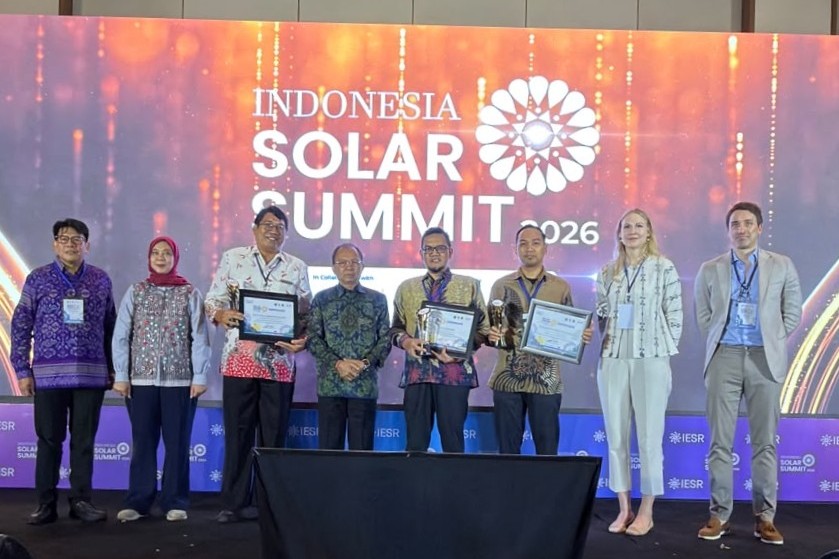
Bali is strengthening its efforts to achieve energy independence through clean energy by accelerating solar energy development and regional collaboration at the Indonesia Solar Summit 2026 (ISS 2026) in Bali Beach Convention Center, The Meru, Bali (14/07).
The event was organized by the Institute for Essential Services Reform (IESR) in collaboration with the Coordinating Ministry for Economic Affairs, the Bali Provincial Government, and the National Energy Council (DEN), with support from Climate Group RE100, Greenvolt Power Indonesia, and iForte Energy.
The forum highlighted that Indonesia’s solar energy acceleration cannot rely only on ambitious national targets. To support energy independence, solar energy needs to be implemented through concrete actions in regions, including government buildings, tourism areas, industrial zones, reservoirs, lakes, and small islands.
IESR Chief Executive Officer (CEO) Fabby Tumiwa said Indonesia’s solar energy future is not only about developing more power plants. The key challenge is ensuring solar energy can be integrated into the electricity system reliably, flexibly, and provide real benefits for communities and regional economies.
“The success of the energy transition is not only determined by ambitious national targets. Big targets need to be followed by political commitment, cross-sector coordination, and the ability of all stakeholders to move in the same direction. In Indonesia’s context, subnational collaboration is very important because solar energy implementation will take place in regions,” Fabby said.
Solar Energy Acceleration Requires Regional Collaboration
Fabby explained that solar energy development cannot be achieved through one major project or a single institution. The implementation will involve thousands of projects across various regions.
These projects will include rooftop solar installations on government buildings, industrial areas, tourism areas, reservoirs, lakes, villages, small islands, and new economic growth centers.
“Subnational collaboration needs to continue to be encouraged. This success will be largely determined by what is done at the provincial, regency, city, and village levels,” Fabby said.
The message is aligned with the development direction of the Bali Provincial Government. During the opening of ISS 2026, Bali Governor Wayan Koster stated the province’s commitment to realizing Bali Energy Independence through Clean Energy.
The vision is combined with the local value of Nangun Sat Kerthi Loka Bali, which places environmental preservation, people, and Balinese culture as the foundation of development.
Bali Strengthens Clean Energy Policies and Infrastructure
The approach is included in the Haluan Pembangunan Bali Era Baru 2025–2125: Development that Respects Nature. The framework includes several key policy directions, including climate management, ensuring clean air availability, and achieving Bali Energy Independence through Clean Energy.
“The establishment of policy directions and regulations toward Bali Energy Independence has been determined through Bali Governor Regulation Number 45 of 2019 concerning Bali Clean Energy. It includes the Regional Energy General Plan of Bali Province and the implementation of clean energy policies from upstream to downstream,” Wayan Koster said.
The Bali Provincial Government has also introduced several policies to accelerate the transition toward clean energy.
These policies include the use of battery-based electric motor vehicles through Bali Governor Regulation Number 48 of 2019, acceleration of rooftop solar power implementation through Bali Governor Circular Letter Number 5 of 2022, and expansion of electric vehicle charging infrastructure through Bali Governor Circular Letter Number 17 of 2024.
Through these measures, Bali is developing clean energy not only through electricity generation but also by building supporting systems, including transportation electrification, charging infrastructure, and rooftop solar utilization.
Bali is targeting the development of environmentally friendly power plants with a total capacity of 1,550 MW by 2031 as part of efforts to strengthen clean energy supply toward an electricity capacity of around 3,000 MW in Bali.
Indonesia Solar Summit 2026 Promotes Solar Energy Action
Indonesia Solar Summit 2026 provides a platform for central government, regional governments, PLN, businesses, financial institutions, academics, development partners, and civil society organizations to work together.
The forum is expected to support concrete cooperation to accelerate solar energy utilization in Indonesia.
The event emphasized that the energy transition needs to move from ambition to action. Solar energy targets require regional support, investment, consistent regulations, grid readiness, and public participation.
PHOTO: IESR
This article was created with AI assistance.
We make every effort to ensure the accuracy of our content, some information may be incorrect or outdated. Please let us know of any corrections at [email protected].
Read More