





 Tuesday, 20-10-26








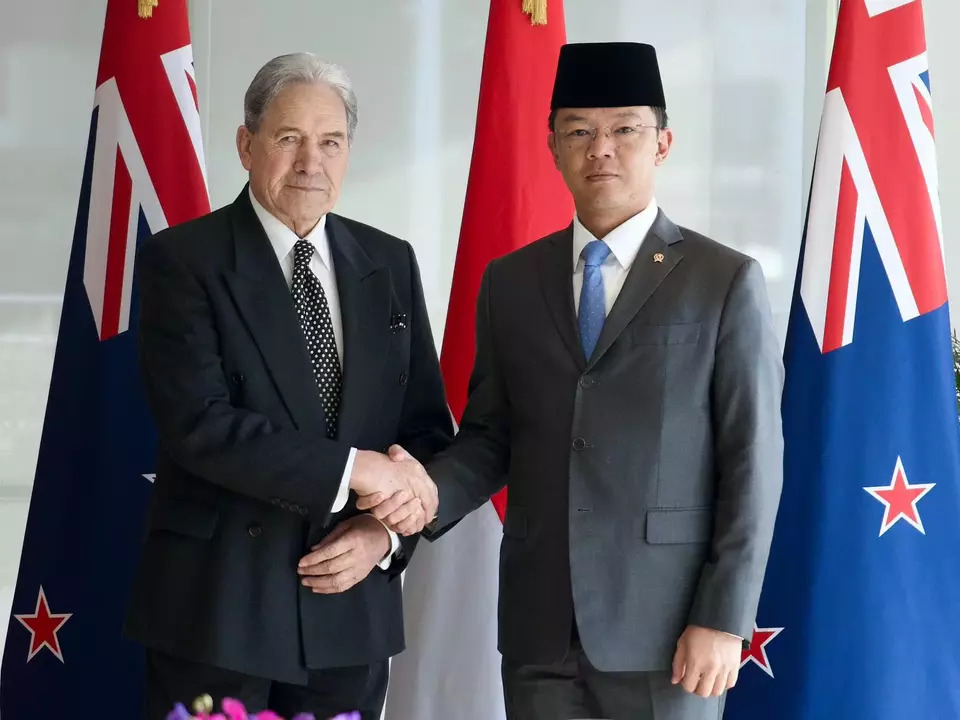
Indonesia and New Zealand are actively charting an ambitious path to elevate their economic partnership to unprecedented heights. Following high-level diplomatic talks in Auckland between Indonesian Foreign Minister Sugiono and New Zealand Foreign Affairs Minister Winston Peters, both nations reaffirmed their commitment to nearly double their annual commercial exchange. The strategic roadmap targets a robust trade volume of 6 billion New Zealand dollars, equivalent to approximately 3.5 billion US dollars, by the end of 2029. Achieving this ambitious figure requires overcoming persistent structural bottlenecks, streamlining regulatory frameworks, and maximizing mutual economic synergies. As Southeast Asia's largest economy and Oceania's premier agricultural exporter align their commercial strategies, expanding Indonesia New Zealand Bilateral Trade stands as a central priority for both governments.
To understand the trajectory of this economic partnership, one must examine the current baseline of cross-border commerce. In 2025, total trade between the two nations reached just under 1.9 billion US dollars. Recent government statistics from the first half of 2026 show that mid-year trade volume stood at 958.7 million US dollars, representing a slight contraction of 0.41 percent compared to the same period in the prior year. Furthermore, Indonesia recorded a widening trade deficit with New Zealand, which surged by more than 47 percent year-on-year to reach 315.1 million US dollars. Dairy products, particularly milk and related agricultural commodities, account for the predominant share of Indonesia's import basket from New Zealand. Balancing this commercial equation while boosting total trade volumes necessitates diversifying export portfolios and utilizing modern trade facilitation frameworks.
Strategic Synergies in the Halal Industry Ecosystem
A cornerstone of the strategy to revitalize trade flows lies in the formal integration of halal industry standards. Indonesia represents the world's most populous Muslim-majority country, featuring a vast domestic market where consumer preference for certified halal goods is paramount. Beginning in October 2026, Indonesia will enforce mandatory halal certification requirements for a wide array of fast-moving consumer goods, food, and beverage products entering or circulating within its domestic market. Rather than viewing this regulatory shift as a barrier, both governments have turned it into a competitive advantage.
In 2025, Indonesia and New Zealand signed a comprehensive bilateral agreement on mutual halal recognition. This landmark accord enables accredited New Zealand certification bodies to certify meat, dairy, and food exports in accordance with Indonesian standards before shipment. By reducing administrative friction and eliminating redundant testing procedures, the halal agreement ensures seamless market access for high-grade New Zealand primary products. Strengthening mutual certification systems creates a solid foundation for Indonesia New Zealand Bilateral Trade across high-value food sectors. Simultaneously, leveraging this halal ecosystem serves as a primary engine to accelerate Indonesia New Zealand Bilateral Trade toward the 3.5 billion US dollar target.
Eliminating Non-Tariff Barriers to Ensure Commercial Continuity
While tariff reduction agreements have historically lowered cost barriers, non-tariff measures frequently create operational friction that slows commercial velocity. Recognizing this challenge, the joint diplomatic statement from Auckland specifically highlights a shared commitment to resolve non-tariff trade barriers. Complex sanitary and phytosanitary inspections, custom clearance delays, and disparate technical standards have occasionally delayed agricultural shipments and increased compliance overhead for private enterprises.
To establish trade continuity, bilateral working groups are actively streamlining electronic documentation systems and customs processing. Replacing paper-based verification with automated digital certification accelerates port clearance for perishable agricultural goods, dairy products, and fresh horticulture. For Indonesian exporters, standardized quality assurance protocols facilitate greater entry for tropical fruits, coffee, rubber, and manufactured goods into New Zealand stores. Eliminating these administrative hurdles creates a predictable regulatory environment, encouraging small and medium enterprises to participate actively in cross-border commerce.
Leveraging Regional Trade Agreements and Preferential Pacts
The framework supporting Indonesia New Zealand Bilateral Trade relies significantly on powerful regional economic treaties. Both nations are active signatories to the ASEAN-Australia-New Zealand Free Trade Area, commonly known as AANZFTA. Recent modernizing upgrades to the AANZFTA agreement introduced dedicated provisions covering e-commerce, digital trade, micro, small, and medium enterprises, and sustainable supply chain management. These updated clauses allow businesses to engage in seamless cross-border digital transactions while enjoying zero or reduced tariff structures.
In addition to AANZFTA, both countries are leveraging the Regional Comprehensive Economic Partnership, representing the world's largest free trade bloc. Under RCEP, virtually all goods originated from ASEAN member states enter New Zealand duty-free, while New Zealand exporters enjoy reciprocal preferential terms across Southeast Asia. RCEP also establishes integrated rules of origin, enabling manufacturers in Indonesia to source raw materials from regional partners, process them locally, and export finished products to New Zealand with preferential tariff treatment. By fully operationalizing these multi-country pacts, businesses on both sides can maximize profit margins and build resilient regional value chains.
Expanding Commercial Horizons Beyond Traditional Agriculture
While dairy, livestock, and primary agricultural produce currently dominate bilateral commercial exchanges, achieving long-term trade targets requires expanding into non-traditional high-growth sectors. Indonesia's accelerating industrial downstreaming policies and rapid digital transformation present new commercial avenues for New Zealand investors and service providers. Key sectors offering significant promise include geothermal energy development, agricultural technology, vocational education, digital services, and sustainable forestry management.
Beyond raw commodities, diversifying into technology and renewable energy will redefine Indonesia New Zealand Bilateral Trade in the years ahead. New Zealand is recognized globally for its expertise in geothermal engineering and clean energy innovation. Indonesia, possessing some of the world's largest geothermal energy reserves, actively seeks technical collaboration and foreign direct investment to power its green energy transition. Joint ventures in renewable energy infrastructure not only support decarbonization goals but also generate high-value commercial contracts. Similarly, partnerships in agritech and cold-chain logistics enable Indonesian farmers to boost yield productivity and preserve food quality, thereby increasing the volume of agricultural goods available for international markets.
Agricultural Cooperation and Balancing Bilateral Commerce
Addressing the growing trade deficit remains an operational priority for Indonesian policymakers seeking to ensure sustainable commercial growth. Enhancing the competitiveness of Indonesian exports requires targeted capacity building, quality standardization, and active trade promotion. Increased trade representation, regular business-to-business matchmaking forums, and joint trade expos provide direct channels for Indonesian manufacturers to connect with Oceanian distributors.
Furthermore, New Zealand's commitment to supporting agricultural development in Southeast Asia provides a framework for technical cooperation. Through joint training initiatives, specialized research partnerships, and technology transfers, Indonesian agricultural producers can improve compliance with global food safety standards. As Indonesian coffee, cocoa, processed spices, and manufactured garments gain broader market acceptance in New Zealand, the overall bilateral trade balance will become more symmetric and sustainable over the coming decade.
Strategic Outlook and Road to the 2029 Target
The road toward reaching 3.5 billion US dollars in annual trade by the end of 2029 requires sustained political determination, regulatory flexibility, and private sector execution. The proactive diplomatic engagement between Minister Sugiono and Minister Winston Peters reflects a shared vision that views economic integration as a catalyst for regional stability and prosperity. By harmonizing halal standards, eliminating non-tariff obstacles, modernizing supply chains, and expanding into renewable technology, both nations are constructing a modern economic framework.
As corporate leaders and policymakers align their operational strategies, expanding Indonesia New Zealand Bilateral Trade will deliver tangible economic benefits to businesses and consumers in both countries. Modernized trade corridors not only strengthen national balance sheets but also foster deeper geopolitical cooperation across the Indo-Pacific region. Through continuous collaboration and institutional execution, the target of 6 billion New Zealand dollars stands as an attainable milestone in this evolving Pacific partnership.
Read More