





 Saturday, 24-10-26








Rittal Brings Localized Engineering Closer To Indonesian Industry
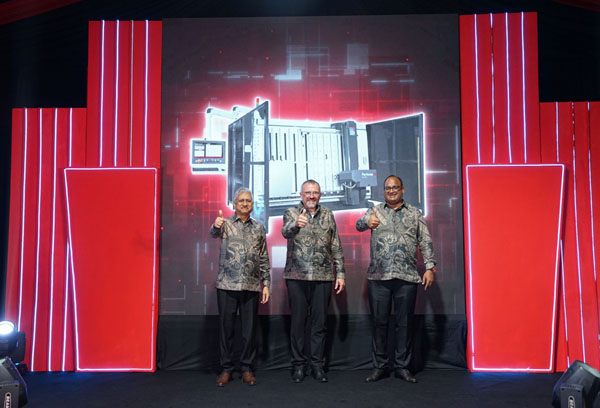
Rittal’s new modification center in Jakarta is more than a company announcement. It is a practical response to how industrial projects are being built, customized, and delivered in Indonesia today. The facility was launched to bring enclosure modification and engineering services closer to local customers, especially in manufacturing, energy, data center, and industrial automation segments. According to reporting on the launch, the center is designed to shorten project timelines, reduce logistics complexity, and keep engineering work inside the country instead of sending it abroad.
The move matters because industrial buyers increasingly want speed, precision, and flexibility at the same time. That combination is difficult to achieve when a project depends on overseas modification workflows. Rittal’s modification center is positioned as a local answer to that bottleneck, with automation and digital engineering at the core of its operating model. The company says the Jakarta site uses Perforex MT machining technology, EPLAN software integration, and training programs intended to strengthen local engineering capability.
What The Modification Center Actually Does
At its core, the modification center is a service facility for enclosure customization. In industrial environments, enclosures house electrical components, control systems, and other critical infrastructure. When those enclosures need drilling, cutouts, adaptations, or other adjustments, the process can become a scheduling risk if it is handled manually or sent to a distant facility. Rittal’s Jakarta center is built to do that work locally and more efficiently.
The company’s stated goal is not only to move faster, but also to standardize quality. Rittal says the center is meant to provide local engineering and modification services for sectors such as manufacturing, energy, data center operations, and industrial automation. That broader scope reflects how enclosure customization has become part of wider infrastructure delivery, not just a back-end technical detail.
For Indonesian customers, the value proposition is straightforward. Instead of waiting for modifications to be handled abroad, the work can now be done in Jakarta. That reduces lead times, limits shipping friction, and gives project teams more control over specification changes. In a market where schedules are often tight and site conditions can shift quickly, that local capability can make a real difference.
Why Manufacturing And Data Centers Are The Main Winners
Rittal’s decision to open the modification center in Jakarta makes sense when viewed through the lens of Indonesia’s industrial priorities. The facility was explicitly introduced for manufacturing and data center demand, two sectors that depend heavily on reliable infrastructure, fast deployment, and precise technical execution. The company and other reports on the launch also point to energy, mining, and critical infrastructure as adjacent opportunities.
In manufacturing, enclosure modification can affect everything from panel readiness to installation timing. A delay in one enclosure can push back an entire line or automation package. Rittal’s local facility is intended to compress that chain of events. One report states that modification time in Indonesia can drop from six to eight hours to around 30 minutes using Perforex technology, while also reducing field installation time and lowering on-site work.
For data center operators, speed is equally important. Data centers are built around uptime, deployment discipline, and scalable infrastructure. Rittal’s own global product positioning emphasizes solutions for IT infrastructure ranging from micro data centers to containerized data centers, which aligns closely with the needs of operators expanding capacity in Indonesia. A localized modification center can help data center builders move faster without compromising precision.
This is where the modification center becomes strategically important. It is not simply a service desk or workshop. It is a production enabler that can help manufacturers and data center teams reduce waiting time, cut logistics overhead, and adapt designs faster when project requirements change. In short, the modification center supports execution, not just sales.
A Better Fit For Indonesia's Digital And Industrial Growth
Rittal’s leadership framed the Jakarta launch as a long-term commitment to Indonesia and to the ASEAN market more broadly. Reports from the launch said the company views Indonesia as a major growth market because of digital transformation, manufacturing investment, and expanding infrastructure needs. In that context, the modification center is both a customer-service upgrade and a regional strategy move.
That strategy also fits the direction of Indonesia’s industrial agenda. The launch was linked to the broader push for digital engineering, automation, Industrial Internet of Things adoption, and the goals associated with Making Indonesia 4.0. While those ambitions are often discussed at policy level, they only become real when companies build actual capabilities on the ground. A modification center is one of those capabilities because it connects software, machining, and project delivery into a single workflow.
There is also a talent-development angle. Rittal says the investment includes training and certification programs intended to strengthen local engineering capability. That matters because industrial competitiveness is not only about machines and software. It is also about whether local teams can operate, adapt, and improve those systems over time. By anchoring more engineering work in Jakarta, the company is helping build a skill base that can serve future projects.
At a market level, Indonesia is already drawing attention from data center investors and infrastructure players. Reuters has reported on large financing for a data center project in Batam, while Antara reported that the country’s data center market is projected to continue growing in the years ahead. Those signals help explain why a modification center focused on industrial and IT infrastructure is well timed. As digital demand grows, the supporting ecosystem has to grow with it.
What The Modification Center Means For Customers
For customers, the biggest benefit is control. A local modification center means shorter turnaround times, fewer cross-border dependencies, and better coordination between engineering teams and end users. It also means that customized enclosure work can be aligned earlier in the project cycle, which can reduce rework and make installation more predictable. That is especially useful in sectors where downtime or project slippage is expensive.
The second benefit is consistency. Rittal says the Jakarta facility is meant to deliver the same standard of quality associated with its international operations. That consistency is important because industrial customers typically value repeatability as much as speed. When an enclosure is modified to a specification, the outcome needs to match the design intent exactly. Automation supports that consistency by reducing variation in the process.
The third benefit is resilience. When modifications are handled locally, companies are less exposed to shipping delays, customs complexity, and international coordination issues. Those risks can seem minor until a project is already in motion. In industries with tight commissioning windows, even a small delay can have knock-on effects on site work, testing, and handover schedules. The modification center is designed to reduce that risk profile.
A Small Facility With A Large Signal
The Jakarta modification center may look like a single operational investment, but it sends a broader signal about where industrial service models are heading in Indonesia. Customers want faster delivery, localized support, and more flexible engineering. Vendors that can provide all three will likely gain an advantage, especially as manufacturing and digital infrastructure continue to expand. Rittal’s Jakarta launch shows that the market is moving in that direction.
It also shows how the line between product supplier and engineering partner is getting thinner. Rittal is not only selling enclosure systems. Through the modification center, it is helping shape how those systems are prepared, deployed, and integrated into customer projects. That is a more embedded role, and for many industrial buyers, it is exactly what they need.
In practical terms, the modification center is a response to a simple business truth: when project complexity rises, localization becomes valuable. Rittal’s Jakarta facility is a bet that Indonesian industry wants less waiting, less friction, and more engineering capacity close to home. Given the pace of manufacturing and data center development, that bet looks well timed.
Read More