


 Friday, 23-10-26


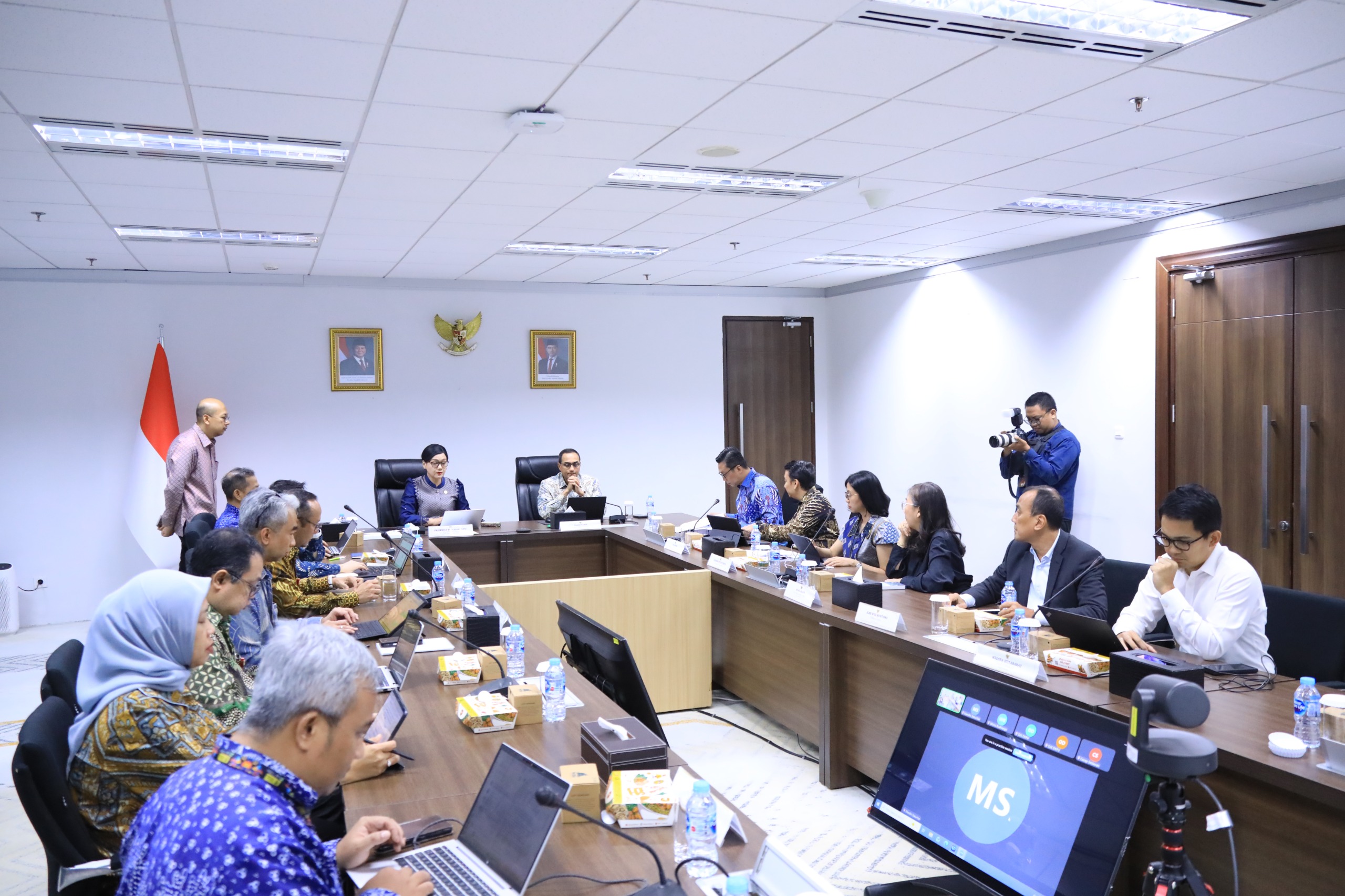
Indonesia’s Financial Services Authority (OJK) is strengthening capital market reforms to improve transparency, liquidity, market integrity and law enforcement, aiming to boost investor confidence and global competitiveness. (21/10)
OJK Strengthens Capital Market Reform and Transparency
OJK Chairman of the Board of Commissioners Friderica Widyasari Dewi said the authority understands investor concerns following MSCI’s announcement of a consultation on a potential change to Indonesia’s market classification. She reaffirmed OJK’s commitment to addressing those concerns through concrete, consistent and sustainable reforms.
“Investor confidence must be built through concrete actions, not merely statements. OJK is committed to building an Indonesian capital market that is fair, transparent, competitive and has global credibility. Our focus is to ensure that reforms deliver tangible and measurable results in improving market quality and investor confidence,” Friderica said.
She highlighted the strength of Indonesia’s capital market, which has a market capitalization of approximately US$589 billion, the second-largest in ASEAN. The number of investors has reached 31.1 million, while listed companies recorded revenue growth of 15.9% and net profit growth of 16.3% over the 12 months through June 2026.
Friderica and Hasan Fawzi, OJK’s Executive Head of Capital Market, Derivatives Finance and Carbon Exchange Supervision, delivered the statements during an online dialogue with domestic and international institutional investors organized by Mandiri Sekuritas on October 20. Indonesia Stock Exchange (IDX) President Director Jefry Hendrik also participated in the discussion.
OJK Implements Eight Priority Capital Market Reforms
Hasan said OJK, the IDX and all self-regulatory organizations (SROs) are implementing eight priority action programs to improve Indonesia’s capital market. The programs cover liquidity, transparency, corporate governance, law enforcement and cooperation with stakeholders.
The measures include gradually increasing the minimum free-float requirement to 15%, strengthening disclosure of ultimate beneficial ownership, expanding investor classifications from nine to 39 categories, disclosing shareholdings above 1%, and publishing a list of companies with high shareholding concentration (HSC).
“Capital market reform does not stop at improving regulations or announcing policies. Our priority is to ensure consistent implementation so that it produces tangible improvements in transparency, liquidity, integrity and the investment appeal of Indonesia’s capital market,” Hasan said.
OJK said it would continue working with the IDX and other SROs to implement the reforms and improve the quality of Indonesia’s capital market.
MSCI Consultation on Indonesia’s Market Classification
MSCI announced on October 15, 2026, that it was consulting on a potential change to Indonesia’s classification from an Emerging Market to a Standalone Market. Hasan emphasized that the announcement was a consultation process, not a final decision.
MSCI has set April 30, 2027, as the deadline for submitting feedback, with a final decision scheduled for June 30, 2027. OJK said it respects MSCI’s independent assessment and will continue constructive communication to ensure that Indonesia’s reform progress receives comprehensive consideration.
Between February and October 2026, OJK held 16 communications and meetings with MSCI.
OJK Reports Rp2.5 Trillion in Fines During 2026
OJK is strengthening supervision and law enforcement to maintain capital market integrity and provide certainty for investors. On October 16, 2026, the authority announced administrative fines totaling approximately Rp2.1 trillion in cases involving trading in DSSA, BREN and CUAN shares.
Hasan said the investigations had begun well before MSCI’s announcement and were part of OJK’s ongoing supervisory and enforcement activities.
“Law enforcement is a fundamental part of efforts to maintain capital market integrity. Our actions are not a temporary response to MSCI developments, but the result of a supervisory process that has been underway in accordance with applicable regulations. OJK will continue to take firm action against violations to create a deterrent effect and maintain investor confidence,” Hasan said.
Throughout 2026, OJK imposed sanctions on more than 971 parties, with total fines of approximately Rp2.5 trillion. It also completed 41 case examinations and continued handling another 122 cases through its enforcement process.
OJK said its future priorities, together with the SROs, include implementing the higher free-float requirement, improving the weighting mechanism for shares with high ownership concentration in the Indonesia Composite Index (IHSG), strengthening shareholding transparency and improving the quality of listed companies.
Friderica also said OJK continued coordinating with the government and relevant authorities to maintain financial market stability and sustain reforms. These matters were also addressed during the October 19, 2026, meeting between Indonesia’s president, OJK and members of the Financial System Stability Committee (KSSK).
“We do not only want to communicate the steps that have been taken, but also listen to investors’ views and recommendations. Their input is important to ensure that reforms genuinely improve market quality and strengthen investor confidence over the long term,” Friderica said.
PHOTO: OJK
This article was created with AI assistance.
We make every effort to ensure the accuracy of our content, some information may be incorrect or outdated. Please let us know of any corrections at [email protected].
Read More