





 Monday, 12-10-26








S&P DJI's Watchlist Puts Indonesia Under Fresh Scrutiny
Indonesia’s capital market is once again under the microscope after S&P Dow Jones Indices placed the country on its 2027 watchlist, citing concerns tied to stock ownership transparency and disclosure-related issues. According to the index provider’s July 7, 2026 country classification announcement, Indonesia remains classified as an emerging market for now, but could face special measures or even frontier market treatment if concerns are not resolved. S&P DJI said it continues to track developments related to stock ownership transparency in Indonesia and the Indonesia Stock Exchange’s guidance on disclosure concerns and liquidity impact.
The warning matters because S&P DJI is not making a symbolic comment. It is a classification signal that can affect how global funds view Indonesian equities, how much capital is allocated to the market, and how investors judge the depth and reliability of market infrastructure. Reuters reported earlier this year that MSCI had already raised similar concerns, triggering reforms from Indonesian authorities and sharp market selloffs in February. That history makes the latest S&P DJI move feel less like a surprise and more like a continuation of a larger transparency test.
What BEI Said In Response
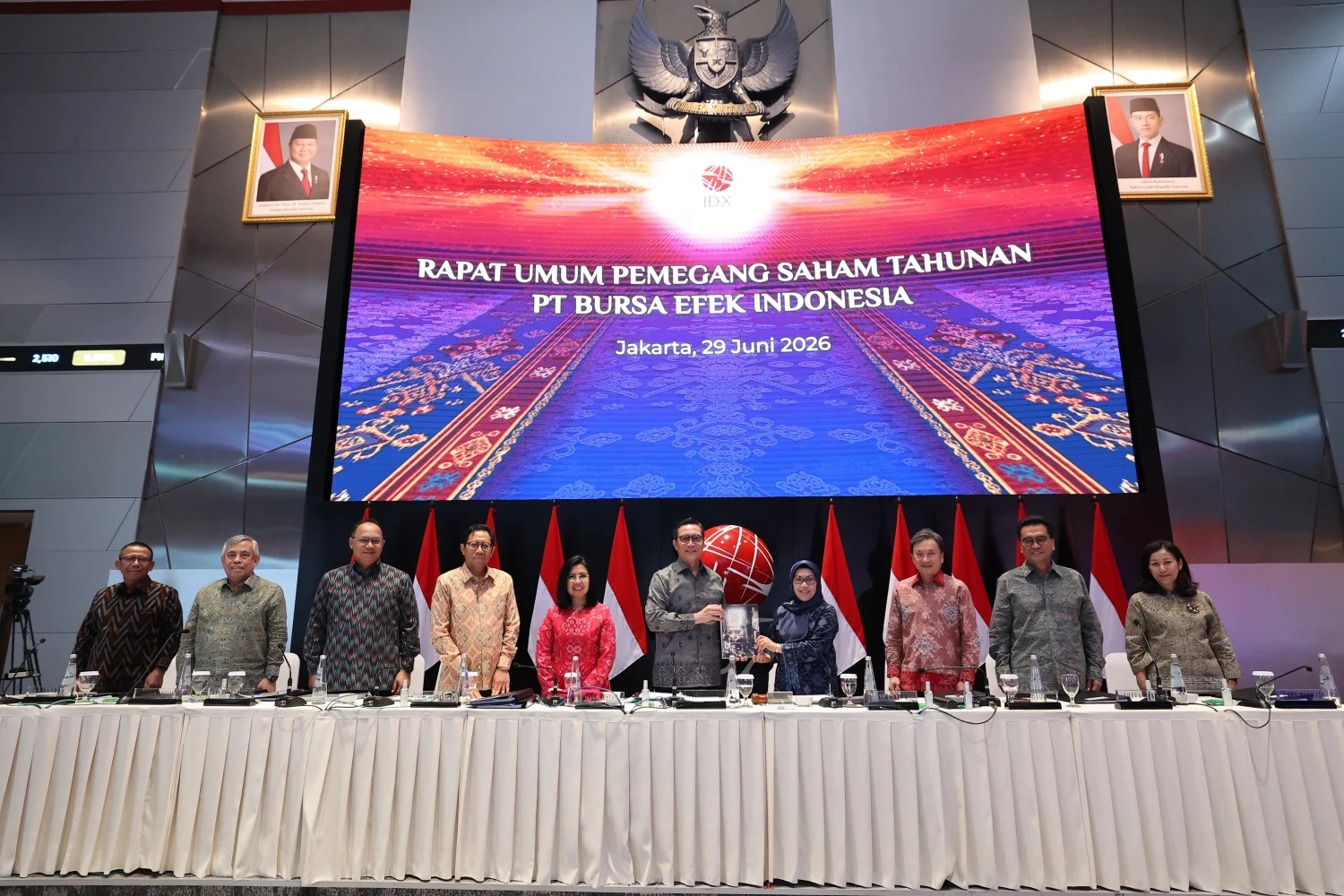
The Indonesia Stock Exchange, or BEI, moved quickly to calm the market. In comments reported by detikFinance, BEI chief Jeffrey Hendrik said the exchange had reviewed S&P DJI’s announcement and would continue to coordinate with the index provider to understand the concerns more deeply. He added that BEI would maintain constructive communication and discussion with S&P DJI and work with OJK and other stakeholders to answer the issues raised.
Jeffrey also said BEI is committed to improving transparency in the capital market so trading remains fair, orderly, and efficient. That phrasing is important, because it shows the exchange is trying to frame the response as a broader market-quality initiative, not just a defensive reaction to one watchlist announcement. In other words, BEI is signaling that stock ownership transparency is now part of market maintenance, not merely a compliance footnote.
Why Stock Ownership Transparency Is The Core Issue
The core issue behind the warning is stock ownership transparency. S&P DJI’s announcement says it is tracking Indonesia’s disclosure-related concerns and potential liquidity impact, while Reuters previously reported that index providers had worried about a lack of transparency around stock ownership and trading. This is not only about whether investors can see who owns a company. It is about whether the market can function with enough clarity for price discovery, liquidity, and confidence to hold up under stress.
That is why stock ownership transparency has become such a sensitive benchmark for Indonesia. If beneficial ownership is opaque, large positions can be harder to assess, free float conditions can become less meaningful, and investors may worry that prices do not fully reflect the actual supply of tradable shares. Reuters noted that Indonesian authorities responded earlier this year by doubling the minimum free float requirement to 15 percent, releasing more detailed shareholder data, and allowing beneficial ownership information to be requested for stakes above 10 percent.
The Market Already Knows The Cost Of Weak Disclosure
The latest warning lands in a market that has already seen how quickly transparency concerns can move prices. Reuters reported in April that around $120 billion in market value was wiped out on the Jakarta exchange after an MSCI warning earlier in the year, with the index down more than 17 percent at that point. That kind of reaction shows that investors do not wait for a formal downgrade before repricing risk. They react as soon as the credibility of market structure is questioned.
The financial impact is why stock ownership transparency is now being discussed alongside liquidity, governance, and market classification rather than as a narrow reporting issue. The more opaque the ownership structure, the more likely investors are to assume hidden concentration, weak price formation, or a higher chance of manipulation. S&P DJI’s own watchlist language explicitly mentions liquidity impact and says that if circumstances worsen, it may apply special treatment to Indonesian securities.
Reforms Have Started, But The Test Is Not Over
Indonesia has already taken steps to address the concerns. Reuters reported that authorities completed key reforms after the MSCI scare, including more detailed shareholder disclosure, a higher free float requirement, and a policy allowing shareholders or index providers to request beneficial owner information for holdings above 10 percent. The Indonesia Stock Exchange also issued rules giving listed firms up to three years to comply with the new free float requirements.
Those measures show that the policy response is real. But the S&P DJI announcement suggests that implementation and market confidence are the next hurdle. The index provider said it will continue monitoring developments and, if unresolved one year after special measures are introduced, Indonesia’s market classification would be assessed at the next annual review. That means the question is not only whether rules exist. It is whether market participants believe the rules are improving stock ownership transparency in a way that is visible, credible, and durable.
Why This Matters For Foreign Investors
Foreign investors generally care about three things in markets like Indonesia: liquidity, predictability, and governance quality. Stock ownership transparency affects all three. When ownership data is clearer, funds can assess concentration risk more accurately, trading conditions are easier to interpret, and governance concerns are less likely to cloud the investment case. That is especially important for passive index investors, because classification changes can affect benchmark weightings and capital flows. Reuters has already shown that reform pressure from index providers can quickly reshape investor sentiment and market performance.
S&P DJI’s country classification methodology also makes clear that classification review is a structured process tied to market developments, not a one-off headline event. In its 2026/2027 watchlist announcement, S&P DJI said it maintains and publishes a watchlist of markets being monitored for potential classification changes, and that it is currently considering actions for markets identified for review in 2027. That gives the latest warning a formal and procedural weight that investors will not ignore.
What BEI Needs To Do Next
For BEI, the next phase is about proving that communication and transparency are not just slogans. The exchange will need to keep working with OJK, maintain clear public messaging, and show that market participants can get reliable ownership data when needed. The challenge is partly regulatory, but it is also operational. If the market wants to retain its emerging market status, stock ownership transparency has to become visible in daily market practice, not just in policy documents.
There is also a reputational dimension. S&P DJI’s wording suggests it is still open to reassessing Indonesia positively if the situation improves. Reuters reported earlier this year that Indonesian authorities were optimistic after rolling out reforms and planned to continue engaging with index providers, including MSCI and FTSE. That means the current warning is serious, but not necessarily final. The market still has room to demonstrate that stock ownership transparency is strengthening in a way that satisfies global benchmarks.
The latest S&P DJI watchlist decision is a reminder that stock ownership transparency is now one of the key variables shaping Indonesia’s market reputation. BEI’s response shows that the exchange understands the stakes and is trying to address them through constructive engagement, better communication, and a stronger transparency agenda. The market has already seen how disclosure concerns can trigger selloffs and reform pressure. The next year will show whether Indonesia can turn those reforms into lasting confidence, or whether the transparency issue continues to weigh on its standing with global index providers.
Read More