





 Wednesday, 14-10-26








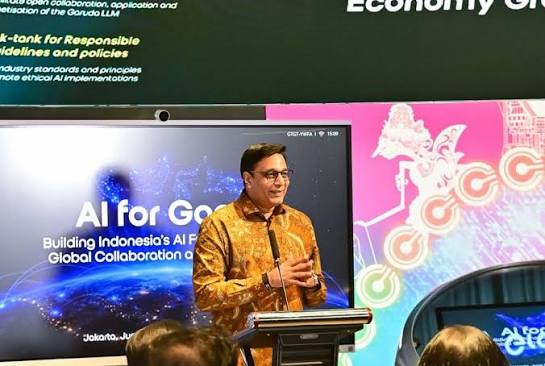
Indosat Ooredoo Hutchison has extended Vikram Sinha’s tenure as President Director and Chief Executive Officer for another five years, with the decision set to be formalized at the company’s upcoming Annual General Meeting of Shareholders. The move signals strong board confidence in his leadership as Indosat pushes deeper into its AI TechCo transition, a strategy centered on long term growth, stronger customer engagement, and a broader digital role in Indonesia’s economy.
The timing matters. Since the 2022 merger, Indosat has been reshaping itself into a stronger and more resilient business, and the board is now choosing continuity rather than disruption. That continuity is especially important because the company’s next growth chapter is tied to AI North Star, a strategy that is no longer just a slogan but a framework guiding how Indosat invests, operates, and positions itself in the market.
Why The Board Backed Continuity
The board’s decision reflects a simple logic: when a transformation is producing visible results, leadership stability becomes a strategic asset. In its official announcement, Indosat said the extension reflects sustained confidence in Vikram Sinha’s ability to continue long term transformation and execute AI North Star. The company also pointed to the progress achieved since the merger as proof that the current direction is working.
Nezar Patria, Indosat’s President Commissioner, said the company has shown that clear vision, disciplined execution, and consistent leadership can create growing value over time. He also said the board remains confident in Vikram Sinha as Indosat enters its next phase, one that is focused on expanding sovereign AI and pursuing the company’s EBITDA ambition. That message is important because it shows this is not a routine renewal. It is a reaffirmation of the entire strategic direction.
From a governance perspective, this is a vote for long horizon execution. Telecom transformations often stall when management changes too quickly or when companies chase trends without a stable operating model. Indosat appears to be taking the opposite approach. It is keeping the same chief executive in place while scaling a more ambitious AI TechCo agenda, which gives the company time to translate strategic intent into operational outcomes.
What AI North Star Means In Practice
Indosat’s AI North Star was presented publicly by Vikram Sinha in 2024 as a three part vision: AI Native Telco, AI Tech Co, and AI Nation Shaper. That framework gives the company a structure for evolving beyond connectivity into a business that uses AI to improve the customer experience, create new digital services, and support Indonesia’s broader technology ambitions.
In the AI Native Telco layer, Indosat is using AI to improve service quality, simplify experiences, and reduce the cost to serve. In practical terms, that means better personalization, fewer friction points, and a more efficient network operation. In the AI Tech Co layer, the company is moving beyond classic telecom economics and developing technology services for enterprises and institutions that need secure, locally relevant, and scalable AI solutions.
That shift is significant because it changes the company’s identity. A traditional telco sells access. An AI TechCo builds an ecosystem around access, data, intelligence, and digital services. Indosat’s recent statements make clear that the company wants to sit in that second category, where connectivity is the base layer rather than the end product. For investors and enterprise customers alike, that is a much bigger ambition.
The Building Blocks Behind The AI TechCo Model
Indosat is not approaching AI as a loose experiment. The company says AI is already embedded across core operations to improve network reliability, productivity, capital efficiency, and customer personalization. That matters because it shows the AI TechCo model is being built into the operating system of the company, not just into marketing language or isolated pilot projects.
One of the clearest examples is Sahabat-AI, which Indosat describes as an open platform designed to make AI more accessible and locally relevant through an understanding of Indonesian language and culture. The company has also highlighted AI powered Anti Spam and Scam capabilities that can detect suspicious activity in SMS and voice traffic with more than 90 percent accuracy, a practical use case that directly affects trust and customer experience.
The AI TechCo strategy is also supported by infrastructure and partnerships. Indosat has pointed to NeoCloud, GPU Cloud services, strategic collaboration with global technology leaders such as NVIDIA, and the development of a distributed AI Grid that uses the company’s national network and data center footprint. In 2024, Vikram Sinha also noted that Indosat had partnered with giants like Nvidia and Google to serve top enterprises and government bodies, especially where security and local data handling matter.
This is where the phrase AI TechCo becomes more than a corporate label. It describes a platform strategy that combines network assets, cloud capability, AI services, and local market knowledge. For a telecom operator, that combination can open new revenue pools in enterprise software, digital infrastructure, cybersecurity, and public sector solutions. It also creates a more defensible position in a market where basic connectivity is increasingly commoditized.
Why This Matters For Indonesia’s Digital Economy
Indosat’s latest move matters well beyond the company itself because the AI TechCo transition is tied to Indonesia’s digital development. The company has said it wants to build a sovereign AI ecosystem that creates long term value for customers, shareholders, and the nation. That framing suggests Indosat sees itself not just as a commercial operator, but as part of the country’s digital infrastructure layer.
That role is especially relevant in a market like Indonesia, where enterprise clients, public institutions, and developers are increasingly asking for local solutions that are secure, scalable, and culturally relevant. Indosat’s distributed AI Grid, local language focus, and AI platform strategy all point to the same conclusion. The company wants to make AI more usable inside Indonesia, not just accessible from abroad.
The talent dimension is equally important. Indosat has said it is working with public and private partners to expand access to AI capabilities, digital skills, and entrepreneurship. That matters because no AI TechCo can succeed without a pipeline of developers, operators, and business users who know how to turn technology into commercial or social value. In other words, the company’s strategy is as much about ecosystem building as it is about product development.
There is also a more subtle market signal here. By committing to AI North Star and retaining Vikram Sinha, Indosat is telling the market that it wants a leadership team capable of translating infrastructure scale into digital intelligence. That could influence how competitors, partners, and enterprise clients view the company over the next few years. In a fast moving market, that kind of clarity is an advantage.
What Comes Next For Indosat
The formal approval at the AGM will matter procedurally, but the strategic story is already clear. Indosat is betting that leadership continuity will help it execute a more complex plan, one that combines telco fundamentals with AI services, cloud capabilities, cybersecurity, and national digital infrastructure. The company’s own language points to a desire to deepen Customer Love, strengthen sovereign AI, and pursue an EBITDA doubling ambition.
The main challenge now is execution. The AI TechCo model will need measurable commercial outcomes, not just vision statements. That means better customer retention, stronger enterprise adoption, improved operational efficiency, and the ability to keep building new digital businesses without losing focus on the core connectivity base. If Indosat can do that, the extension of Vikram Sinha’s tenure will look like a smart strategic bet rather than a simple governance decision.
For now, the signal is clear. Indosat wants stability at the top, momentum in the middle, and scale at the bottom. With Vikram Sinha still leading the company, the AI TechCo transformation has a longer runway, a clearer narrative, and a stronger chance of becoming a lasting business model rather than a temporary industry trend.
Read More