





 Thursday, 15-10-26








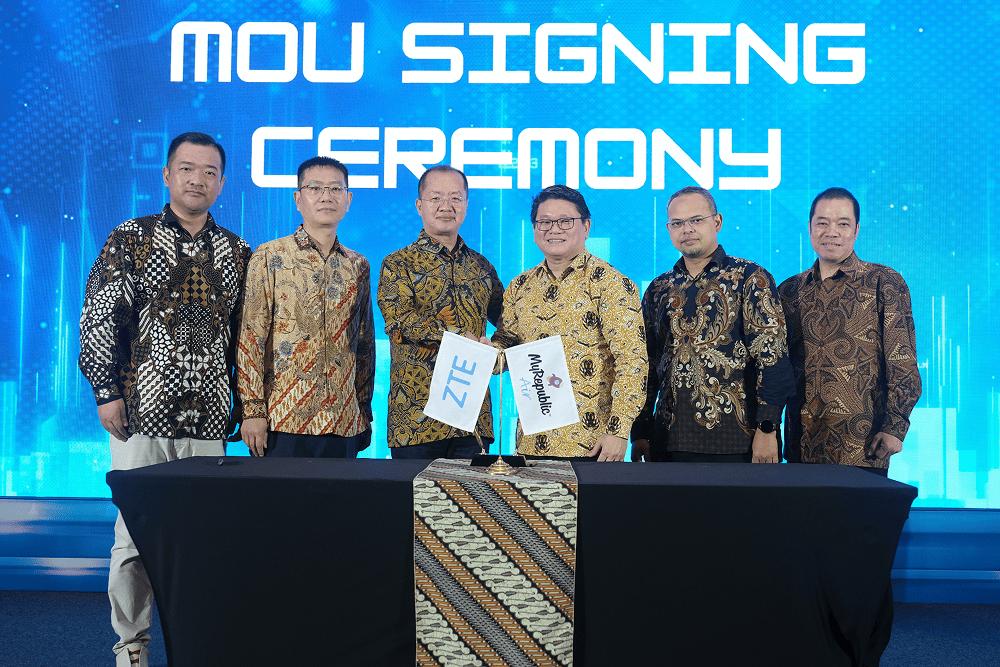
A Strategic Move In Indonesia’s Broadband Race
Indonesia’s broadband market is moving fast, and the latest partnership between ZTE and MoraRepublic shows how serious the race has become. The two companies have signed a memorandum of understanding to expand Fixed Wireless Access and Fiber to the Home services across the country, with a strong focus on AI powered network operations, service quality, and long term scalability. The announcement, first reported by Bisnis and echoed by Antara, Pricebook, Tek.id, and Mobile World Live, positions the deal as more than a simple vendor relationship. It is a broader attempt to strengthen Indonesia’s digital infrastructure at a time when demand for reliable connectivity keeps rising.
For this story, the most useful SEO keyword is FWA and FTTH expansion. It captures the core of what is happening, namely the effort to extend broadband coverage through two complementary access models. FWA can speed up coverage where fiber rollout is slower or more expensive, while FTTH offers a higher capacity fixed line experience for homes and businesses that need stable performance. Together, they form a practical strategy for a country with a large population, wide geography, and uneven network density.
Why Indonesia Needs More Broadband Capacity
The timing makes sense. APJII reported in 2024 that Indonesia had 221,563,479 internet users and a penetration rate of 79.5 percent, a reminder that online access is already part of daily life for most of the country. At the same time, the government has been stressing that affordable internet remains a key factor in unlocking the next phase of digital economic growth. That combination of high usage and persistent infrastructure gaps is exactly why partnerships like this matter.
Indonesia’s digital economy is also expanding in strategic importance. Reuters reported in June 2026 that the country is pushing AI into major national programs while still facing infrastructure limits and a shortage of skilled workers. Those pressures do not apply only to AI. They also apply to broadband, because digital tools only work well when the underlying network is dependable, scalable, and cost efficient. A stronger broadband base helps consumers, but it also helps businesses, schools, healthcare providers, and public services.
What The ZTE And MoraRepublic MoU Actually Covers
The MoU is centered on cooperation in developing and expanding FWA and FTTH services for residential and enterprise customers across Indonesia. Based on the reporting, the partnership also covers broader network evolution, AI driven operations, service assurance, network optimization, and knowledge sharing. The companies are not only looking at network rollout. They are also exploring commercial cooperation, joint innovation programs, and proof of concept activities to support future broadband growth.
That matters because Indonesia’s broadband market is not just about coverage anymore. It is about quality, consistency, and operational intelligence. If a provider can use AI to detect issues earlier, optimize traffic more effectively, and improve service reliability, then the customer experience improves without requiring the same amount of manual intervention. The result is a more sustainable network model, especially for operators trying to scale quickly across urban and emerging areas.
Why FWA And FTTH Expansion Fits The Market
The phrase FWA and FTTH expansion is especially relevant in a market like Indonesia because the country needs flexible deployment options. FTTH is ideal where fiber rollout is economically viable and where customers need high capacity fixed broadband. FWA can fill the gaps faster, particularly in places where terrain, distance, or buildout costs make immediate fiber deployment harder. In simple terms, the two technologies do not compete so much as complement each other.
That is why the partnership between ZTE and MoraRepublic has strategic value. ZTE brings international implementation experience, while MoraRepublic brings local infrastructure and execution capabilities. According to the reports, ZTE Indonesia President Director Liu Sen said the partnership combines ZTE’s global broadband know how with MoraRepublic’s local footprint to improve access and service quality for both residential and enterprise users. That local and global combination is often what makes large network programs succeed.
MoraRepublic’s Position In The Digital Infrastructure Landscape
MoraRepublic is not a brand new player trying to enter the market from scratch. The company is described in the reporting as an integrated digital infrastructure and services provider formed through the merger of Moratelindo and MyRepublic. It already serves millions of customers and has been expanding its broadband footprint nationwide, particularly in urban and fast growing areas. That means the company already has operational momentum and a real customer base to support the next stage of growth.
This is also why the partnership is more than a technology deployment. MoraRepublic’s CFO, Yopie Widjaja, framed the deal as a strategic step toward a more inclusive digital economy and a stronger broadband foundation. The emphasis is not only on network expansion, but on building a flexible digital infrastructure ecosystem that can support innovation, business growth, and broader inclusion. That perspective aligns closely with where Indonesia’s connectivity market is heading.
The Role Of AI In Network Operations
One of the most important parts of the announcement is the AI layer. ZTE and MoraRepublic said they will explore an end to end AI driven network architecture that can support intelligent broadband operations, service assurance, optimization, and future service development. That is a significant shift because broadband networks are increasingly being managed like dynamic software systems rather than static utility assets.
AI can help operators identify congestion patterns, predict equipment issues, improve routing, and reduce downtime. It can also support more efficient planning when operators are deciding where to expand next. In a market as large and varied as Indonesia, those capabilities are not optional extras. They are a competitive necessity. When a provider can keep quality steady while scaling access, it gains both customer trust and operational efficiency. That is exactly why the AI component makes this FWA and FTTH expansion more interesting than a standard infrastructure deal.
What This Means For Residential And Enterprise Users
For households, the most obvious benefit is better access to stable, high speed internet. That matters for streaming, online learning, remote work, e commerce, and everyday communication. For businesses, the benefits are even broader. Reliable broadband supports cloud apps, customer service systems, payment tools, logistics software, and collaboration platforms. In short, the same infrastructure that helps a family get through a school day also helps a company stay productive.
The fact that the MoU targets both residential and enterprise customers matters a lot. It suggests that ZTE and MoraRepublic are not building a narrow consumer broadband play. They are looking at a wider service stack that can support different types of demand across the market. That is important in Indonesia, where digital adoption is broadening across industries and where connectivity quality often determines whether a region can participate fully in the digital economy.
Why This Partnership Could Set A Template For Future Deals
There is a broader pattern here. Telco infrastructure deals are increasingly combining rollout, AI, commercial experimentation, and technical knowledge sharing. The ZTE and MoraRepublic announcement fits that pattern well. It is practical, iterative, and focused on performance rather than hype. The presence of proof of concept work and joint innovation programs suggests that both sides want to test ideas before scaling them, which is usually a smarter approach in telecom than moving too quickly with a one size fits all model.
That approach could become a template for other broadband partnerships in Southeast Asia. Markets with rising internet usage, mixed infrastructure maturity, and pressure to improve affordability need solutions that are flexible and cost aware. FWA and FTTH expansion gives operators that flexibility. It allows them to use the right access technology for the right area, while AI helps improve operating efficiency behind the scenes.
Conclusion
The ZTE and MoraRepublic deal is a useful snapshot of where Indonesia’s broadband market is heading. It blends FWA and FTTH expansion, local execution, global vendor expertise, and AI powered operations into one practical strategy. That combination reflects the realities of Indonesia’s digital market, where demand is rising quickly and network quality still needs to catch up in many places. If the partnership delivers on its plans, it could help strengthen both connectivity and digital inclusion in a way that has real commercial and social value.
Read More