





 Friday, 09-10-26








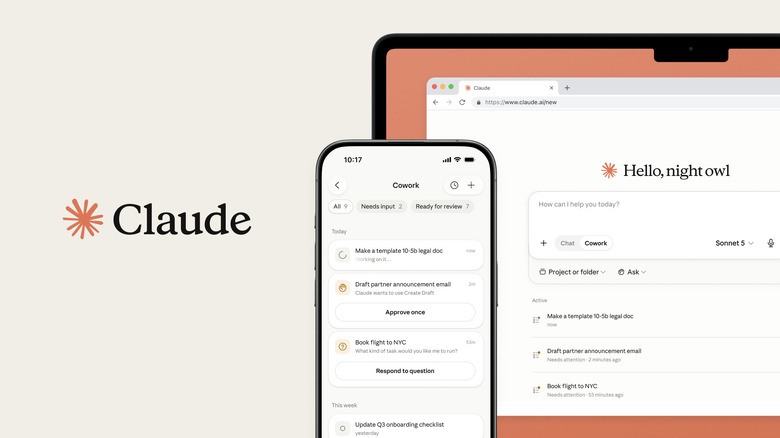
The latest move from Anthropic is not just a product update. It is a clear signal that the coding agent market is widening into a much larger contest over how knowledge work gets done. On July 7, 2026, TechCrunch reported that Claude Cowork, Anthropic’s Claude Code-style agent for general knowledge work, expanded from desktop into web and mobile access for Max subscribers. Anthropic’s own release notes confirm that Cowork is now available on web and mobile in addition to desktop, with remote sessions, synchronized files, and tasks that can continue even when the laptop is closed.
That matters because the category is no longer being defined only by software engineering. A coding agent once mostly meant a tool that helped developers write, debug, and ship code. Now it is becoming an ambient workplace assistant that can move across devices, stay active in the background, and assemble finished work while people are away from their desks. Anthropic says Cowork is designed to handle tasks while users are in meetings, on their phones, or out of the office, and to return polished results for review.
Why Anthropic Is Pushing Cowork Beyond The Desktop
Anthropic’s product positioning is straightforward. Cowork runs on web, desktop, and mobile, and the company says the same Claude follows the user wherever work already happens. It can start on a phone and finish at a desk, or keep running after a laptop is closed. That design makes the tool feel less like a narrow coding agent and more like an execution layer for office work.
The company also emphasizes control. Cowork takes real actions on files and connected tools, but Anthropic says users decide what it can access and approvals are required before anything important happens. That safety framing is important in enterprise software, especially when the product is meant to work unattended. Anthropic also highlights enterprise admin controls, role-based permissions, and usage tracking across organizations.
What makes the move more interesting is that Anthropic is not treating Cowork as a one-off experiment. Its release notes show a clear rollout path from general availability on desktop to a broader launch on web and mobile. The product now also shares one home for chat and Cowork, which suggests Anthropic wants users to think about it as a unified work environment rather than a separate utility.
The Office Work Use Case Is Growing Fast
TechCrunch’s reporting describes Cowork as Anthropic’s attempt to become an “agentic administrative coworker,” and that framing fits the broader industry direction. AI companies are trying to move beyond chat interfaces and into the actual surfaces where work happens. OpenAI has made a similar shift with Codex, which its own materials describe as increasingly useful for reports, spreadsheets, presentations, contracts, research, data analysis, and workflow automation.
That is the real competitive battleground. A coding agent that only helps engineers remains valuable, but a coding agent that can also support operations, finance, sales, HR, and marketing has a much larger addressable market. OpenAI says non-technical teams use Codex to build internal apps, prepare executive materials, create dashboards, and turn creative briefs into outputs that obey brand and design constraints. That is a meaningful expansion of what “agent” means in practice.
Anthropic is pointing in the same direction with Claude Tag, its Slack-based collaboration tool. The company says Claude Tag is meant to be a more proactive evolution of Claude Code, and it notes that the same pattern is now spreading well beyond engineering into product metrics, support tickets, and bug triage. In other words, the coding agent conversation is no longer confined to developers. It is entering the routine workflow of the modern office.
The Data Shows Where Users Actually Spend Their Time
Anthropic released early Cowork usage data that helps explain why the product is moving into broader office workflows. The company sampled 1.2 million anonymized and aggregated Cowork sessions from more than 600,000 organizations over the final two weeks of May. The largest category, at 33.4 percent, was business process operating, which includes pulling scattered updates into one report, building onboarding checklists, and reconciling spreadsheets.
The next largest category was content creation and copywriting at 16.4 percent, covering drafts, slide decks, social posts, proposals, and other communications tasks. Software development accounted for only 8.7 percent of Cowork usage in that sample. That does not mean coding is unimportant. It means the broader coding agent category is already being pulled into everyday business work much faster than many people expected.
That shift lines up with OpenAI’s own research on Codex adoption. OpenAI says knowledge workers primarily use Codex to create reports, spreadsheets, presentations, contracts, and similar work products, and that they are increasingly using it for research, data analysis, and automation. When two major AI labs are independently seeing the same pattern, the message is hard to ignore.
Why This Matters For Buyers And Teams
For companies evaluating AI tools, the practical question is no longer whether a coding agent can write code. The real question is whether it can reduce the amount of repetitive coordination work that eats up the day. Anthropic explicitly says Cowork is aimed at the “tasks that are part of a broad swath of jobs, but are rarely a person’s core responsibility.” That is a useful definition of a product category with enterprise value.
This is why the expansion to web and mobile matters commercially. A desktop-only tool still fits a developer’s workstation. A web and mobile tool fits the rhythm of a manager, analyst, operator, or founder who moves between meetings, inboxes, documents, and chat apps. Anthropic says Cowork sessions are saved remotely and continue in the background, which makes it easier for users to hand off work, check progress on the go, and return later to a completed draft or briefing.
The enterprise angle is also becoming clearer. Anthropic says Cowork is ready for enterprise admins, with feature access controls, spend management, and usage tracking. That matters because the organizations most likely to spend on agentic software are the ones that need governance, not just convenience. In that sense, the coding agent race is turning into a broader enterprise productivity race.
The Competitive Pressure Is Rising
Anthropic and OpenAI are both leaning into a similar thesis: the winner will not just have the best chatbot, but the best system for doing work. TechCrunch’s framing captures that shift well. The competitive prize is the space where work gets done, not the one-off answer in a chat window. Claude Cowork, Claude Tag, and Codex all point toward a future where agents are embedded into the daily operating model of the office.
That pressure is likely to intensify as more teams test these tools in production. Anthropic’s own product language stresses background execution, scheduling, approvals, connected tools, and cross-device continuity. OpenAI, meanwhile, is promoting Codex as a command center for agentic work and building out use cases for finance, business operations, and everyday productivity. The overlap is obvious, and so is the market opportunity.
For end users, the result may be a quieter revolution than the launch headlines suggest. Most people will not think of themselves as using a coding agent. They will think of it as the thing that built the report, cleaned the spreadsheet, drafted the deck, or organized the week’s follow-up work. That is exactly why this category is expanding so quickly. It disappears into the workflow, and that is often when software becomes indispensable.
Conclusion
Claude Cowork’s expansion to web and mobile is more than a distribution update. It is evidence that the coding agent race is moving from developer tooling into mainstream office productivity. Anthropic’s own usage data shows that people are already using these systems more for business operations and content creation than for pure software development, while OpenAI is making the same case with Codex. The next phase of AI competition will likely be defined by how well these agents can carry real work across the entire office, not just across a code editor.
Read More