





 Monday, 12-10-26








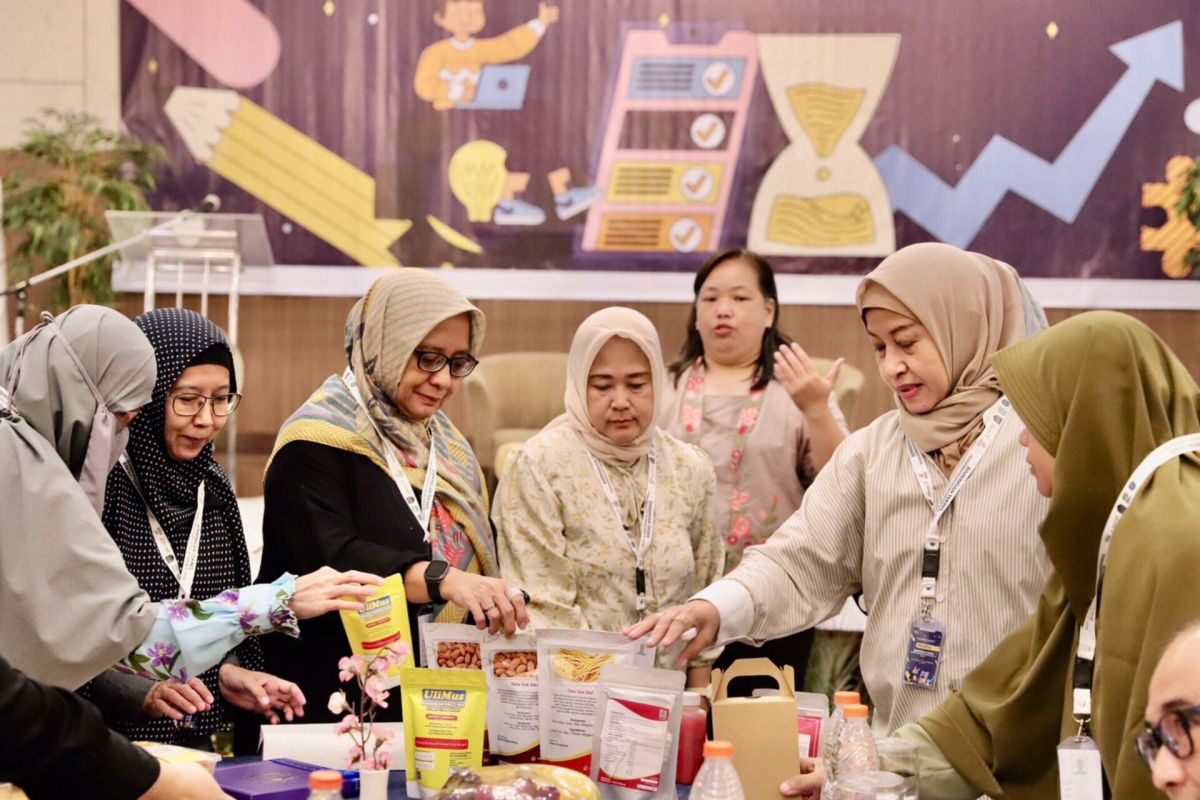
Jakarta’s growth story is increasingly moving beyond offices, ports, and traditional consumer spending. Bank Indonesia has been highlighting the creative economy as one of the sectors that could support stronger and more balanced growth in the capital, especially as Jakarta continues to position itself as a global city with a larger digital, cultural, and entrepreneurial base. Official BI reporting on DKI Jakarta says the province is expected to remain in a strong growth range in 2026, while the provincial government has also been pushing creative economy programs through festivals, festivals for entrepreneurs, and digitalization initiatives.
What makes this moment important is that the creative economy is no longer being treated as a side story. It is being discussed as an economic multiplier that can support jobs, improve local value creation, and diversify Jakarta’s sources of growth. That is a major shift for a city whose economy has long been associated with finance, trade, and services. Recent Jakarta government statements say the sector is increasingly strategic, and Bank Indonesia has been aligning its regional economic outlook with that view.
Why Bank Indonesia Sees Real Potential In Jakarta
Bank Indonesia’s outlook for DKI Jakarta suggests the economy can keep growing strongly in 2026, with the central bank’s regional report placing the province in the 4.9 percent to 5.7 percent range. That matters because a city with an economy of Jakarta’s scale needs new engines of expansion, not just cyclical boosts from consumption or government spending. BI’s own regional reporting indicates that Jakarta’s economy remains resilient, and that gives more room for sectors like the creative economy to contribute meaningfully.
The support for this view is not abstract. At the end of June 2026, the Jakarta provincial government, together with Bank Indonesia and other stakeholders, promoted Jakarta Kreatif Festival 2026 as a way to strengthen creative industries, empower UMKM, and accelerate digital economic transformation. The official provincial statement explicitly described the festival as a catalyst for creative economy strengthening and inclusive growth.
That combination of policy messaging and regional economic projection matters. When a central bank and a regional government start discussing the same sector in the same strategic language, businesses usually follow. For entrepreneurs, it signals that the creative economy is not only culturally relevant, but also increasingly important to Jakarta’s growth model.
How The Creative Economy Fits Jakarta’s Growth Model
Jakarta has a structural advantage that many other cities in Indonesia do not. It has a dense consumer market, strong digital adoption, a large professional workforce, and a high concentration of media, design, publishing, fashion, and content businesses. A recent Jakarta government investment page said the city’s creative economy contributed around 10.5 percent of Jakarta’s GRDP in 2023, highlighting how material the sector has already become. Another Jakarta government release citing BPS data said the sector contributed nearly 11 percent of DKI Jakarta’s GRDP in 2024.
That is a meaningful share for any metropolitan economy. It suggests the creative economy is not just about lifestyle or branding. It is a real production system that includes content, design, fashion, music, film, digital services, and other knowledge-intensive activities. In a city like Jakarta, where land, labor, and congestion can push traditional industry outward, creative sectors offer a more compact and scalable path to growth.
Jakarta’s broader strategic documents reinforce the same direction. The city’s long-term planning materials describe creative economy development, innovation, and technology-based entrepreneurship as important pillars for improving economic quality. That means the push is not a one-off campaign. It is part of a longer effort to make Jakarta more competitive, more innovative, and more resilient.
The Sectors Most Likely To Drive The Next Wave
The biggest gains in Jakarta’s creative economy are likely to come from subsectors that are easy to scale, easy to digitize, and tightly connected to urban demand. These include fashion, food branding, design services, digital content, publishing, film, music, and platform-based services for creators and small businesses. Jakarta already has the market depth and distribution networks to turn those sectors into larger value chains.
This is where festivals and city-led programming become economically relevant rather than ceremonial. Jakarta Kreatif Festival 2026 was framed by the provincial government as a means to strengthen creative economy growth, support UMKM, and accelerate digitalization. That kind of event can connect creators with buyers, investors, and institutions, which is often what smaller players need most.
Jakarta’s event calendar also shows how deeply culture and commerce are intertwined in the city. The capital continues to host concerts, cultural celebrations, and large-scale public events that feed demand for production, logistics, branding, hospitality, and content creation. For the creative economy, those are not peripheral activities. They are part of the ecosystem that generates revenue and keeps talent in the city.
Another important channel is digitalization. Bank Indonesia has repeatedly emphasized digital payments, financial inclusion, and support for digital economic activity in its broader policy mix. That matters because creative businesses depend on low-friction transactions, online discoverability, and easier access to consumers. In a city like Jakarta, where digital adoption is high, that can significantly expand the reach of local creators and small enterprises.
Why Creative Economy Growth Could Be Faster Than Traditional Sectors
The creative economy has one major advantage over many conventional sectors: it can scale without needing the same heavy physical footprint. A designer, filmmaker, app developer, publisher, or music label can grow faster than a traditional industrial business if the right networks, distribution channels, and payment systems are in place. In a crowded city like Jakarta, that can be a decisive edge.
Jakarta also benefits from concentration. The city is already the country’s political, financial, and media center. That means creative firms are closer to advertising agencies, broadcasters, government institutions, corporate buyers, and capital providers. A strong creative economy in Jakarta can therefore generate spillover effects that go beyond one subsector and into the wider services economy.
There is also a soft-power dimension. Jakarta’s creative output shapes how the city is seen domestically and abroad. The city government has described creative economy development as part of Jakarta’s identity as a global city, and official planning documents frame it as a way to strengthen competitiveness and urban branding. That matters because cities increasingly compete not only on infrastructure, but also on image, talent attraction, and lifestyle appeal.
What Policymakers And Businesses Need To Do Next
If Jakarta wants the creative economy to contribute more decisively to growth, the next step is not just promotion. It is ecosystem building. That means better access to finance, stronger digital infrastructure, more affordable workspaces, stronger intellectual property protection, and simpler pathways for creators and small businesses to formalize and scale. Jakarta’s program roadmap already points in that direction through creative economy development, digital financial inclusion, and green economy initiatives.
For businesses, the message is straightforward. Creative sectors in Jakarta are becoming more investable because they are closer to the consumer, more digital, and more adaptable than many traditional models. For investors, that creates opportunities in creator tools, content platforms, education, brand services, event ecosystems, and digital commerce. For policymakers, the task is to make sure that growth is inclusive, not concentrated in only a few districts or circles.
The broader lesson is that Jakarta’s economic future will likely depend on multiple engines working together. Finance and trade remain important, but the creative economy is becoming a more visible contributor to resilience, employment, and value creation. That is why BI’s attention to the sector matters. It signals that creative industries are moving from the margins of policy to the center of Jakarta’s growth debate.
The Bigger Picture For Jakarta
Jakarta does not need to choose between being a financial capital and a creative capital. The two can reinforce each other. A stronger creative economy can support tourism, retail, digital payments, advertising, media, and urban consumption. It can also help Jakarta create jobs that are better aligned with the city’s talent pool and digital habits. BI’s regional growth outlook and the city government’s ongoing creative programs both point in the same direction: creative industries are becoming a real pillar of Jakarta’s next growth phase.
If the current momentum continues, Jakarta’s creative sector may do more than add a few percentage points to GDP. It could help define the city’s economic identity for the next decade. And in a fast-changing urban economy, that kind of shift is often more valuable than a temporary surge in any single sector.
Read More