





 Sunday, 27-09-26








Indonesia’s big bet on nickel downstreaming is arriving at a complicated moment. The global electric vehicle market is still expanding, but the chemistry, geography, and economics of that growth are changing fast. The International Energy Agency says lithium iron phosphate, or LFP, accounted for more than 55 percent of EV batteries deployed globally in 2025, while high-nickel chemistries and LFP together make up the vast majority of today’s market. That means Indonesia’s nickel-rich strategy is moving forward just as some buyers are shifting toward lower-cost, nickel-free alternatives.
That tension is the heart of the story behind the Bisnis report. The article’s framing around a 100-fold value-added dream captures a familiar Indonesian ambition: move beyond raw material exports and capture more of the industrial upside at home. But the path is not straightforward. Global EV demand is still growing, yet the battleground has moved from simple battery volume to chemistry, cost, and supply-chain control. For Indonesia, nickel downstreaming is no longer just a policy slogan. It is a test of industrial timing.
Why The 100-Fold Value Dream Still Matters
The logic behind nickel downstreaming is easy to understand. Raw ore has limited value. Smelting raises that value. Refining it into battery materials, cathodes, cells, and eventually finished EV products can raise it much further. Indonesia’s Ministry of Energy and Mineral Resources has said the country has huge nickel resources and reserves, and that higher-value downstreaming is needed to support battery and EV development. The ministry also said battery demand in Indonesia is projected to rise sharply by 2030, leaving room for major investment in the EV battery chain.
The government’s ambition has already moved from rhetoric to infrastructure. Reuters reported that Indonesia inaugurated a China-built anode materials plant in Kendal in 2024, with an initial investment of $478 million and a planned second phase that would double capacity. Reuters also reported that Antam and China’s CBL are preparing to build nickel processing facilities, including an HPAL plant for EV battery material. These are not isolated projects. They are part of an ecosystem designed to turn nickel into higher-value industrial output.
Still, the value-added gap remains enormous. An Energy Shift Institute analysis found that Indonesia’s current nickel products only add about two to eleven times the value of raw ore, far below the more than 60-fold value addition associated with battery production if the full battery industry took off. That is why the 100-fold dream resonates so strongly in policy debates. It reflects the gap between where Indonesia wants to go and where it still is.
The Global EV Map Is Changing Faster Than Indonesia Can Ignore
The global EV market is not standing still long enough for any one country to assume its old advantages will automatically hold. The IEA says LFP batteries now account for over half of the global EV market, driven mainly by China and other emerging markets. It also notes that LFP battery packs were more than 40 percent cheaper on average than nickel manganese cobalt oxide alternatives in 2025. That cost gap helps explain why automakers, especially in price-sensitive markets, are leaning harder into LFP.
This shift matters for nickel downstreaming because Indonesia’s industrial roadmap has been built around nickel’s role in battery chemistry. If the market keeps favoring cheaper chemistries or diversifies away from nickel-heavy batteries in large segments, then Indonesia cannot rely on downstreaming alone to guarantee high-value demand. The Centre for Research on Energy and Clean Air said 83 percent of Indonesia’s 2025 nickel production was still absorbed by the stainless steel sector, while only 17 percent went into the EV battery supply chain. That is a sharp reminder that the country’s EV story is still incomplete.
There is also a geographic shift underway. The IEA says EV adoption is expanding quickly in emerging markets, but these markets are often more cost-sensitive and therefore more open to LFP. In plain terms, the fastest growing EV regions are not necessarily the ones most eager to pay a premium for nickel-rich chemistry. That is why Indonesia’s strategy needs to be more than a bet on global EV growth. It has to be a bet on the specific segments of the market where nickel still has structural value.
Even global automakers are splitting on chemistry strategy. Reuters reported that General Motors may move away from an earlier LFP plan and lean toward lithium manganese rich batteries for future EVs, while Tesla, Rivian, Ford, and others have embraced LFP for affordable models. This fragmentation shows the EV industry is entering a more competitive phase, where battery chemistry is becoming a strategic choice rather than a universal trend. For Indonesia, that means nickel downstreaming has to navigate not just demand growth, but also chemistry competition.
Indonesia’s Industrial Strategy Is Moving Upstream And Downstream At Once
Indonesia has spent years building an integrated EV supply chain, and the strategy is still visible in the policy architecture. The Center for Strategic and International Studies has noted that Indonesia wants a fully integrated domestic EV supply chain, from mining and processing battery metals to precursor materials, battery cells, battery packs, EVs, and eventually recycling. That is the big-picture industrial logic behind nickel downstreaming. The aim is not just to sell processed ore. It is to control more of the value chain.
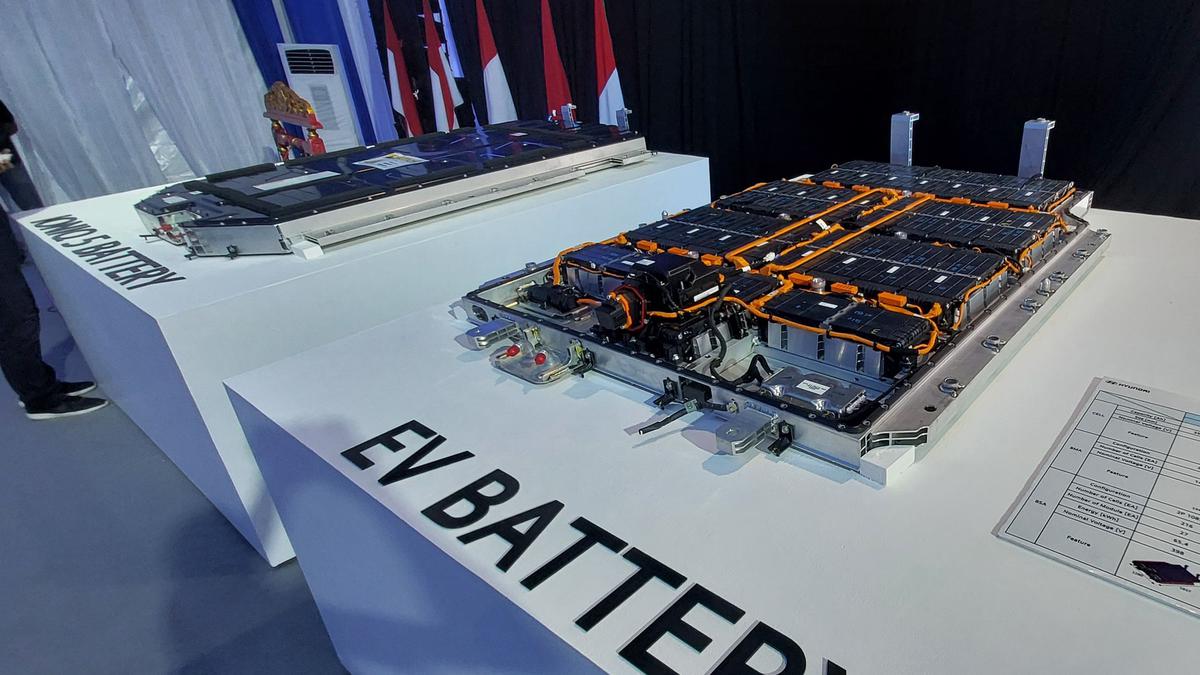
The policy push has also been reinforced by investment. Reuters reported that Hyundai and LG Energy Solution launched Indonesia’s first battery cell plant, while local and foreign partners continue to develop nickel and battery facilities in the country. In early 2026, Reuters also reported a $6 billion battery ecosystem framework involving Antam, Indonesia Battery Corporation, and a Chinese consortium led by Huayou Cobalt. These projects signal that the country is not starting from zero. It is trying to deepen a platform that already exists.
The government is also experimenting with market support. Benchmark Mineral Intelligence reported that Indonesia is considering regulatory tweaks to encourage nickel-based batteries over LFP, aligning policy with the broader downstreaming agenda. That is a strong signal that policymakers understand the global chemistry shift and are trying to influence it rather than merely react to it. The challenge is that incentives can help, but they cannot force the market to buy a chemistry it no longer prefers.
In that sense, nickel downstreaming is becoming a more sophisticated play than many critics once assumed. It is no longer just about banning raw ore exports and waiting for capital to arrive. It is about building an ecosystem with smelters, anodes, HPAL plants, battery cells, local content rules, and export-ready industrial clusters. Reuters’ reporting on Antam and BTR shows that Indonesia is already trying to move across these layers, not just sit in the upstream mining segment.
The Real Risk Is Not Failure, But Partial Success
The hardest truth for Indonesia is that nickel downstreaming can still work and yet still fall short of the dream. The NRGI and LPEM policy paper says ferronickel exports were roughly three times the combined exports of nickel mattes and nickel sulfate in 2023, which means lower value steel-related products still dominate. The same paper estimates that around 90 percent of value-added creation from nickel downstream products does not remain in Indonesia because many firms are foreign owned. That is a crucial warning for anyone assuming downstreaming automatically equals national gain.
The environmental and market structure risks are just as important. CREA warns that Indonesia’s nickel is still heavily tied to stainless steel demand, while the EV story is complicated by nickel-free battery competition and coal-powered industrial facilities. That creates a paradox: the country is marketing “green nickel” while many parts of the chain remain carbon intensive and exposed to external pressure. If premium Western markets tighten their emissions rules, Indonesia could face higher scrutiny just when it wants to scale exports.
This is why the phrase “100-fold value addition” should be treated as an ambition, not a forecast. The gap between ambition and execution is visible in the data. Indonesia has real mineral strength, real industrial momentum, and real investor interest, but it still has limited battery manufacturing capacity relative to the global market. Energy Shift estimated that Indonesia held less than 0.4 percent of global battery manufacturing capacity in 2024, despite the country’s rapid growth in nickel production. That mismatch explains both the opportunity and the frustration.
What Comes Next For Investors And Policymakers
For investors, the key question is not whether Indonesia matters. It clearly does. The question is which part of the nickel downstreaming chain will actually capture the strongest margin over the next five years. Smelting is important, but battery-grade chemicals, cathodes, anodes, and integrated cell production are where the higher value sits. If Indonesia can keep attracting capital into those stages, it can still become a serious player in the EV supply chain.
For policymakers, the challenge is harder. Indonesia needs to keep industrial policy aligned with a market that is fragmenting, not converging. It must support nickel-based industries without locking itself into a chemistry that may lose share in the world’s most price-sensitive markets. At the same time, it must improve local ownership, raise environmental standards, and ensure that more of the value created by nickel downstreaming stays inside the country.
The most realistic reading of the current moment is that Indonesia is still in the race, but the race has changed. The country’s natural-resource advantage is real, yet the winning strategy now depends on industrial depth, technological flexibility, and market timing. If Indonesia can move beyond ore exports, strengthen the battery ecosystem, and adapt to the global shift in EV chemistry, the 100-fold value dream will still have a chance. If not, nickel downstreaming may deliver growth, but not the transformative leap the country wants.
Read More