





 Tuesday, 29-09-26








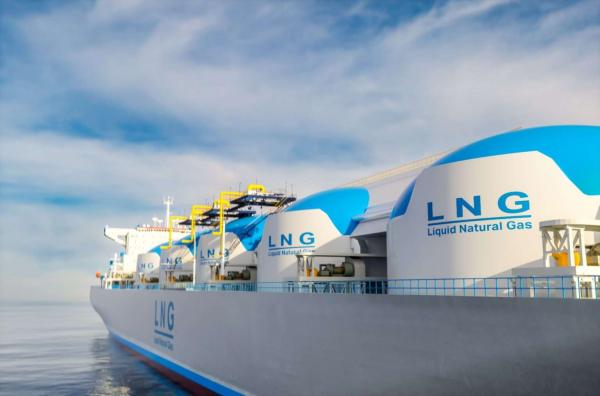
PGN’s latest pricing move has become a major talking point because the company says the LNG gas price increase was carefully reviewed and applies only to a limited portion of supply, not the whole market. According to Kontan’s report on PGN’s explanation, the adjustment affects around 21 percent of LNG-based supply, with the biggest impact in West Java. That detail matters because it suggests the price change is targeted rather than broad based, even if the commercial pressure on industrial users remains real.
The controversy is understandable. In Indonesia, gas pricing is never just a technical issue. It is an industrial competitiveness issue, a cost inflation issue, and, in many cases, a regional investment issue. APINDO Batam has already warned that the projected LNG price rise from US$14.9 to around US$21 to US$25 per MMBTU could hit manufacturers hard, especially those that depend on gas for production. That is why the LNG gas price increase is being watched far beyond the energy sector.
Why The Price Adjustment Matters
PGN is not a small downstream player. The company positions itself as Indonesia’s integrated gas company, with business lines spanning supply, liquefaction, transportation, storage, regasification, and trading. Its LNG arm says LNG is used across power, industry, transport, and remote distribution, which means any pricing change can cascade into multiple sectors. In that context, a LNG gas price increase affects more than one customer class. It touches the broader cost structure of industrial energy use.
This is also why the explanation that the increase only applies to 21 percent of supply is important. If the adjustment were hitting all gas volumes equally, the market reaction would likely be much harsher. Instead, the structure suggests PGN is working with a mixed supply model, where pipeline gas and LNG are combined to serve different customers and regions. PGN and industry sources have repeatedly noted that LNG often fills gaps when domestic pipeline supply is constrained.
The broader market environment makes the issue more sensitive. Reuters reported in January 2026 that global LNG supply is expected to rise sharply through 2026, with analysts forecasting a 10 percent year on year increase and lower Asian spot prices than in 2025. That does not automatically translate into cheaper Indonesian industrial gas, because local contracts, transport, regasification, and supply chain conditions still matter. But it does mean the LNG gas price increase is happening in a market where global price signals are complex and not always favorable to buyers.
Why Only 21% Of Supply Is Being Adjusted
Kontan’s report is the clearest source on this point. It says PGN explained that the adjustment applies to around 21 percent of LNG based supply, with the biggest impact in West Java. That makes the pricing move look more targeted and operationally specific, rather than a uniform tariff shock across the entire network. For readers trying to understand the policy logic, that is the key detail. The LNG gas price increase is not a blanket decision. It is a supply specific adjustment tied to LNG portions of the portfolio.
That distinction matters because LNG is typically more expensive than pipeline gas. Batam Pos has reported that PGN has had to rely on LNG when domestic gas supply from Sumatra weakens, and that gas pricing for industrial customers can reflect a combination of gas sources. In other words, the price seen by the end user is often a blended outcome rather than a single source tariff. Once LNG enters the mix, costs can rise quickly, especially when global benchmarks and logistics costs are elevated.
This is also why the debate around the LNG gas price increase is not only about PGN’s pricing formula. It is about supply security. If pipeline gas is tight, LNG becomes the fallback. If LNG becomes the fallback, pricing often becomes more exposed to global market volatility and transport costs. For industrial buyers, that means the problem is not just “why did the price go up,” but also “why is the system still dependent on a more expensive source for part of the supply?”
What Industry Players Are Worried About
The strongest opposition has come from industrial users, especially in manufacturing hubs where gas is a core input. APINDO Batam warned that the projected rise in LNG costs would significantly hurt firms that use gas in production. The concern is straightforward. If input costs rise faster than selling prices, margins get squeezed. When margins get squeezed, companies delay investment, cut hiring, or pass costs on to consumers. That is why the LNG gas price increase is not being treated as a simple procurement issue. It is being treated as a real competitiveness threat.
There is also a regional angle. Batam has become one of the places where industrial gas sensitivity is most visible. Local reporting earlier in 2026 said industrial gas prices had already risen sharply because of tighter supply and greater reliance on LNG. In that environment, any further increase is likely to trigger anxiety among exporters, factory managers, and labor groups that watch energy costs closely. The same logic applies in other industrial zones that depend on gas for heat, power, or feedstock.
The deeper concern is competitiveness. An energy intensive manufacturer can often absorb a moderate increase, but not repeated increases over short periods. If the LNG gas price increase becomes a recurring feature rather than a one off adjustment, businesses may begin to reevaluate Indonesia against other production locations. That is especially relevant for firms already facing labor, logistics, and financing pressures.
The Business Case PGN Is Trying To Defend
From PGN’s side, the logic is easier to understand if you look at its infrastructure role. PGN LNG Indonesia says it operates across LNG supply, transport, storage, regasification, and distribution, and that LNG supports energy access across the country. Its business model is built around keeping energy flowing even when one source is constrained. That means PGN is not only setting a price. It is managing a supply system. A LNG gas price increase can therefore be framed as part of keeping that system commercially sustainable.
There is also a supply reliability argument. Batam Pos reported that when domestic pipeline gas weakens, PGN must compensate with LNG from other regions. That kind of balancing act is expensive. LNG has to be sourced, transported, regasified, and then distributed. Each step adds cost and complexity. If PGN does not recover enough of those costs, the company risks weakening its own ability to secure supply. In that sense, the pricing move is about protecting continuity as much as it is about margin.
PGN’s sustainability messaging also matters here. The company has repeatedly promoted gas as a transition fuel and a lower carbon alternative to coal in certain applications. Its official LNG materials describe LNG as part of Indonesia’s broader energy system and emphasize its use in cleaner energy distribution. That does not eliminate the pricing dispute, but it explains why PGN may see LNG pricing as part of a longer term energy transition structure rather than a short term commercial shock.
What Could Happen Next
The most likely short term outcome is continued debate, not immediate resolution. Industry groups are likely to keep pressing for price stability, especially in areas where margins are thin. PGN, meanwhile, will probably defend the decision as limited, reviewed, and tied to the realities of LNG procurement. Since the adjustment affects only a portion of supply, the company can argue that it is trying to balance commercial sustainability with customer impact. That is the core tension behind the LNG gas price increase.
The next thing to watch is whether pipeline supply improves. If domestic gas availability strengthens, PGN may be able to reduce dependence on LNG in some corridors, which would ease pricing pressure. If not, LNG will keep playing a larger role in the mix, and that leaves industrial customers exposed to more volatility. Reuters’ global LNG outlook suggests prices could soften internationally in 2026, but that benefit may not fully flow through to Indonesian users if local logistics and procurement costs stay high.
For businesses, the practical response is to plan for energy cost volatility rather than assume stable pricing. That means reviewing fuel substitution options, improving efficiency, and stress testing margins under higher gas cost scenarios. For policymakers, the issue is broader. They need to make sure gas pricing supports both industrial competitiveness and supply reliability. That balancing act is now at the heart of the LNG gas price increase debate.
PGN’s message is clear. The adjustment has been studied, it is limited to a specific share of supply, and it is tied to the structure of LNG based delivery. But for industry, the effect is still serious because gas is not a minor input. It is a core cost driver. That is why the LNG gas price increase is drawing strong attention, especially from manufacturers in high exposure regions. The final outcome will depend on whether PGN can maintain supply stability without pushing too much cost into the industrial economy.
Read More