





 Monday, 28-09-26








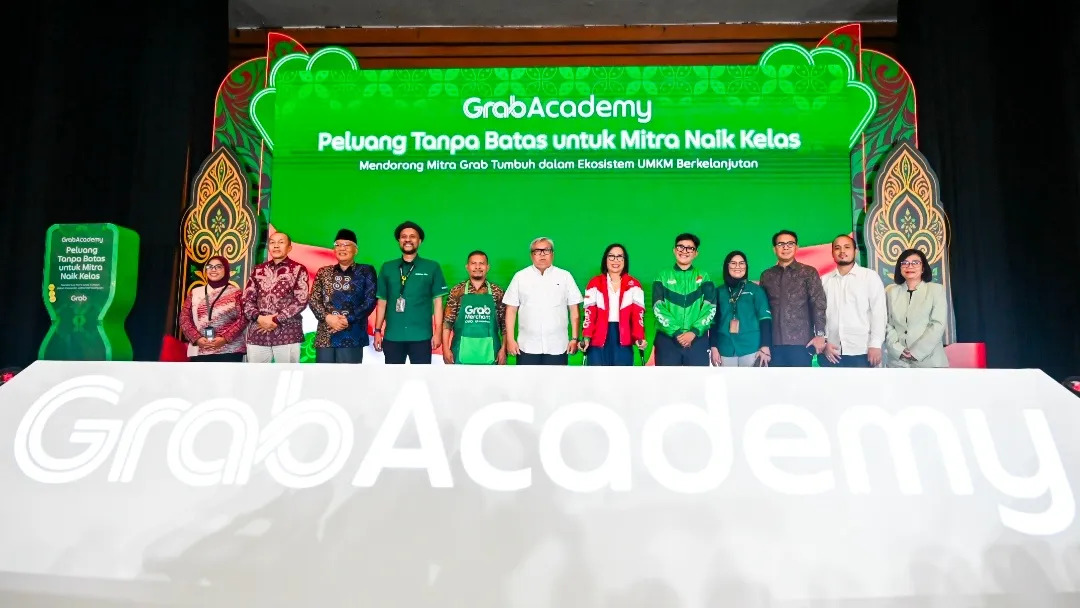
Grab Indonesia is putting greater emphasis on skills development as it expands its support for driver and merchant partners through GrabAcademy. The initiative forms part of the company's broader Rp100 billion commitment under the Grab untuk Indonesia program, which was introduced in early 2026 to provide support for partners through protection, appreciation, and education.
The launch gives GrabAcademy a more prominent role in Grab's effort to help partners adapt to Indonesia's rapidly changing digital economy. Rather than focusing only on day-to-day platform operations, the program is designed to provide knowledge and practical skills that can help partners improve productivity, manage their businesses, and take advantage of new opportunities.
The development also reflects a broader shift in how digital platforms approach their partner ecosystems. As more Indonesians rely on platform-based work and digital commerce, companies are increasingly expected to support not only access to income, but also skills, financial resilience, and longer-term economic mobility.
GrabAcademy Becomes Part Of Grab’s Rp100 Billion Commitment
Grab launched Grab untuk Indonesia in January 2026 with a total commitment of Rp100 billion for its partner community. The program was structured around three areas: protection through social security support, appreciation through the 2026 Hari Raya Bonus, and education through GrabAcademy.
The education component is intended to help driver and merchant partners improve their capabilities and participate more effectively in the digital economy. Grab Indonesia CEO Neneng Goenadi has described the initiative as part of the company's commitment to ensuring that its own growth is accompanied by opportunities for partners to grow as well.
This makes GrabAcademy more than a conventional training portal. It sits within a broader partner-support strategy that links social protection with education and economic opportunity.
The approach is particularly relevant in Indonesia, where digital platforms have become an important source of income for drivers, merchants, delivery workers, and small businesses. For many partners, basic platform knowledge may no longer be enough. They also need digital literacy, operational knowledge, customer service capabilities, and an understanding of how to use technology to improve their earning potential.
What GrabAcademy Offers To Driver Partners
GrabAcademy has been part of Grab's partner ecosystem for several years. The company describes it as an online training portal accessible through the driver-partner application, allowing partners to access courses and learning materials remotely.
For Indonesian driver partners, the platform includes training on areas directly related to their daily work. Grab's current training materials cover topics such as road safety, night driving, managing fatigue, avoiding misunderstandings with passengers, account security, appropriate fare collection, service quality, and crime prevention. Individual learning modules are designed to be short and accessible, with some topics taking only several minutes to complete.
The structure is important because platform workers often face practical constraints when it comes to traditional training. A driver cannot easily step away from work for a full-day classroom session without giving up potential income.
By delivering training digitally, GrabAcademy allows learning to take place around a partner's working schedule. This flexibility is one of the key advantages of platform-based training because it reduces the time and logistical costs associated with conventional education.
Grab has also continued to encourage partners to complete learning modules through recurring campaigns. In April, May, and June 2026, Grab Indonesia ran initiatives rewarding partners who completed designated GrabAcademy modules. The programs show that Grab is not treating the platform as a one-off resource, but as a recurring part of its partner engagement strategy.
The Program Goes Beyond Driver Training
One of the more important developments around GrabAcademy is that the platform's role extends beyond driver education.
Grab's 2024 ESG reporting describes training for merchant partners covering business efficiency, growth, artificial intelligence, industry expertise, and digital literacy. Grab also stated that it provides upskilling opportunities to help driver partners become more financially independent, digitally capable, and prepared for earning opportunities beyond the platform.
This broader approach matters because Grab's ecosystem includes thousands of businesses that depend on digital tools to reach customers. For small merchants, understanding how to manage digital orders, improve operations, build customer relationships, and use technology effectively can have a direct impact on business performance.
Training can also help smaller businesses compete with larger operators. A merchant that understands digital marketing, operational efficiency, customer service, and data-driven decision-making can potentially use the same technology available to larger businesses while keeping its operations relatively lean.
The role of GrabAcademy, therefore, is gradually moving toward a broader model of digital capability building rather than simply providing instructions on how to use the Grab platform.
Why Digital Skills Matter For Indonesia’s Platform Economy
Indonesia's digital economy has expanded quickly, but access to technology does not automatically translate into economic opportunity.
A driver may have a smartphone, a digital wallet, and access to a ride-hailing platform, yet still lack the knowledge needed to maximize productivity. Likewise, a small restaurant may be available on a food delivery platform but struggle with menu management, digital promotions, customer retention, inventory planning, or operational efficiency.
This is where skills development becomes important.
Digital literacy helps platform participants move from being technology users to more capable technology-enabled business operators. For drivers, that can mean better understanding of safety, account management, and available earning tools. For merchants, it can mean stronger operational processes and better use of digital channels.
The same principle applies to emerging technologies. Grab's ESG report highlights training related to artificial intelligence and digital literacy for merchant partners.
As AI becomes more widely used in marketing, customer service, logistics, and business management, the skills gap could become more significant. Small businesses and individual workers that do not develop basic digital capabilities may find it increasingly difficult to keep pace with changing customer expectations.
A program such as GrabAcademy can play a role in reducing that gap by making training easier to access.
Grab’s Three-Part Partner Support Strategy
The decision to place GrabAcademy alongside social protection and financial appreciation is also significant.
The first part of Grab untuk Indonesia focuses on protection. Grab partnered with BPJS Ketenagakerjaan to facilitate payments for work accident and death insurance contributions for hundreds of thousands of high-performing driver partners. The arrangement is intended to provide an additional layer of protection while maintaining the flexibility associated with the partnership model.
The second component is appreciation through the 2026 Hari Raya Bonus for qualifying driver partners. Grab positioned the payment as additional recognition for partner performance rather than a regular wage or employment benefit.
The third component is education through GrabAcademy.
Together, the three elements create a more comprehensive framework. Protection addresses financial and social risks. Appreciation recognizes partner contributions. Education aims to improve future capabilities.
That combination is increasingly relevant as debates around the platform economy move beyond the question of access to income. The quality and sustainability of platform-based livelihoods also depend on whether workers and small businesses can build skills and adapt to changes in the market.
GrabAcademy Can Help Merchants Move Beyond Basic Platform Use
For merchant partners, the potential impact of GrabAcademy could be particularly significant.
Many Indonesian small businesses have adopted digital platforms primarily as sales channels. Being listed on a delivery platform can expand customer reach, but generating sustainable growth requires more than simply accepting orders.
Merchant education can help businesses understand how to manage digital operations, improve efficiency, develop stronger customer relationships, and identify new growth opportunities. Grab's ESG reporting specifically identifies areas such as operational efficiency, AI-enabled growth, and digital literacy as part of its merchant training efforts.
This is particularly relevant for food and beverage businesses, which often operate with limited staff and tight margins. Small improvements in preparation time, order management, customer service, and digital promotion can have meaningful financial effects.
Grab has also used partnerships and offline initiatives as part of its merchant development efforts outside Indonesia. Its regional GrabAcademy platform has collaborated with organizations such as Enterprise Singapore and the Singapore Institute of Technology to support small and medium-sized food and beverage businesses through training, mentorship, and operational improvement programs.
Although programs differ by market, these activities illustrate how Grab views training as a strategic part of its wider ecosystem.
Digital Training Can Improve Platform Productivity
There is also a business case for Grab to invest in partner education.
More capable drivers and merchants can contribute to a better customer experience. Drivers who understand safety practices, service standards, account security, and platform processes may be better equipped to provide reliable service.
For merchants, stronger operational skills can improve order fulfillment and customer satisfaction. A more efficient merchant ecosystem can ultimately benefit the platform itself by supporting customer retention and transaction growth.
This creates a potentially reinforcing cycle. Grab invests in partner skills, partners become more capable, and better partner performance can improve the quality of the overall marketplace.
That does not mean training automatically produces higher incomes. Individual results depend on demand, location, working hours, competition, business conditions, and many other factors. However, skills can give partners a stronger foundation for responding to those variables.
The fact that Grab continues to run recurring completion campaigns for GrabAcademy suggests that the company is also focusing on engagement and participation rather than simply making training materials available.
The Bigger Question Is Long-Term Economic Mobility
The most important measure of GrabAcademy may ultimately be whether it helps partners achieve greater economic resilience over time.
Grab has previously stated that some driver partners aspire to develop skills that can open opportunities beyond the platform. Its ESG reporting says the company provides upskilling programs designed to improve financial independence, digital literacy, and broader earning prospects.
That is a meaningful distinction.
A training program focused only on helping workers perform their current role can improve short-term productivity. A broader skills program can potentially help participants build capabilities that remain useful even when their work circumstances change.
For drivers, transferable skills could include digital literacy, customer service, financial management, communication, and basic business knowledge. For merchants, capabilities related to marketing, data, operations, technology, and financial planning can remain valuable beyond a single platform.
This concept of economic mobility gives GrabAcademy a wider relevance in Indonesia's digital economy.
Grab’s Investment Comes At A Critical Time
Indonesia's platform economy is becoming more mature. The early phase was largely about rapid adoption, geographic expansion, and bringing consumers and businesses online. The next phase is increasingly about sustainability, productivity, and the quality of participation.
For Grab, partner support is therefore becoming part of a larger strategic conversation.
The company's Rp100 billion commitment gives the initiative considerable scale, but the long-term value will depend on execution. Training needs to be relevant, accessible, easy to complete, and aligned with the actual challenges partners face.
It also needs to evolve with the market.
As artificial intelligence, digital payments, e-commerce, online advertising, and automation reshape the business environment, the capabilities needed by drivers and merchants will continue to change. Training content that is useful today may require significant updates within a few years.
That creates an ongoing role for GrabAcademy rather than a one-time program launch.
What Comes Next For GrabAcademy
GrabAcademy is likely to remain an important channel for Grab's partner development strategy as the company expands its focus on digital inclusion and economic empowerment.
Its existing structure already provides a foundation. Drivers can access online training through the Grab ecosystem, while merchants can receive education covering operational and business-related topics. Grab has also demonstrated that it can use partnerships, incentives, and recurring learning campaigns to drive engagement.
The next challenge is making that learning translate into measurable outcomes.
For drivers, success could be reflected in stronger safety practices, improved service quality, better digital literacy, or broader earning capabilities. For merchants, the indicators could include improved efficiency, stronger customer retention, greater use of digital tools, and sustainable business growth.
Those outcomes will matter more than the number of training modules completed.
Ultimately, Grab's Rp100 billion commitment shows how partner support is becoming a more integrated part of the company's strategy in Indonesia. GrabAcademy sits at the center of the education component, giving drivers and merchants access to practical learning while connecting Grab's commercial ecosystem with a wider goal of digital economic participation.
The initiative is also a reminder that Indonesia's digital economy will not be built only through apps, infrastructure, and technology. People need the skills to use those tools effectively.
Read More