





 Sunday, 04-10-26








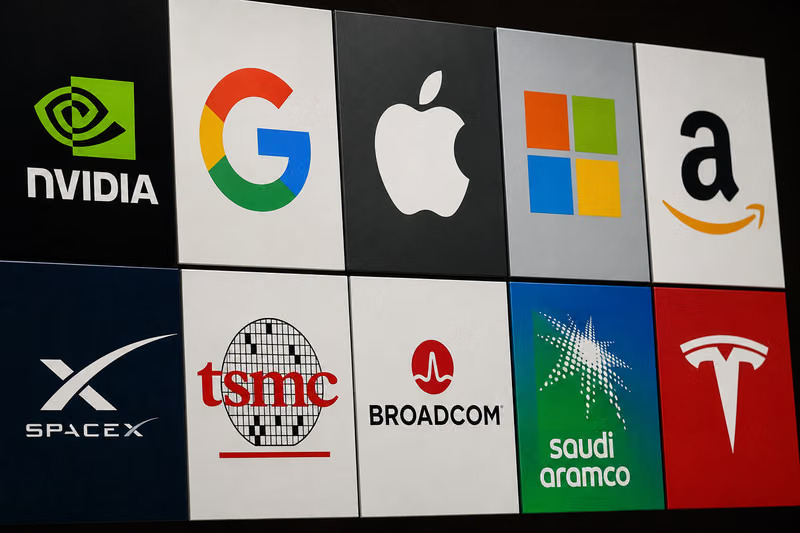
The AI boom is entering a new phase. For the first wave of generative AI, companies rushed to buy as many Nvidia GPUs as possible. Now, the story is shifting. OpenAI, Google, Meta, Microsoft, Amazon, and even SpaceX are all part of a broader move toward custom AI chips, a strategy built around tighter control, better economics, and hardware that is tuned for specific workloads rather than every workload. TechCrunch’s June 26, 2026 Equity episode framed that shift as a growing challenge to Nvidia’s long-running dominance, while OpenAI’s new Jalapeño processor and similar efforts from other giants show that the trend is no longer theoretical.
Why Companies Are Designing Their Own Silicon
The logic behind custom AI chips is straightforward. General purpose GPUs are powerful, but they are not always the most efficient way to run a specific AI workload, especially at scale. When a company knows exactly what kind of models it serves, what latency it needs, how often it performs inference, and how data moves through its systems, it can design silicon that removes waste. OpenAI said Jalapeño was built from the ground up for LLM inference, optimized to reduce data movement and improve the balance between compute, memory, and networking. Google says its TPUs are custom-designed accelerators purpose-built for AI workloads, while AWS describes Trainium as a purpose-built chip focused on the best economics for high performance training and inference.
That economics argument matters more than ever. AI infrastructure is expensive, and cost pressure tends to rise as products move from experimentation to mass deployment. OpenAI said Jalapeño is part of a long-term full-stack strategy to make compute more abundant and more efficient, and that the chip should deliver performance per watt substantially better than current state-of-the-art. AWS makes the same case in different words, saying lower cost for training and serving unlocks faster iteration and broader reach. This is why the phrase custom AI chips is becoming a recurring theme across the sector. It is not just about raw performance. It is about controlling the cost curve of AI itself.
OpenAI, Google, Meta, Microsoft, And AWS Are All Sending The Same Signal
OpenAI’s Jalapeño announcement is the clearest recent example of the shift. The company and Broadcom unveiled the chip as OpenAI’s first Intelligence Processor, and OpenAI said early testing shows performance per watt that outperforms current state-of-the-art hardware. The company also said the accelerator is part of a multigeneration platform that will be deployed at gigawatt scale with data center partners beginning in 2026. That is a meaningful statement because it shows custom silicon is no longer a niche experiment. It is becoming a core infrastructure plan.
Google has been on this path for much longer. Its TPU platform is presented as a decade-long effort to build custom-designed accelerators for agents, code generation, large language models, vision, speech, search, photos, and maps. Meta has taken a similar route with MTIA, which it describes as its family of custom-made chips designed for Meta’s AI workloads. The company says the latest version is built around its own software stack and aligns with open hardware standards so it can be deployed more smoothly inside its data centers. Microsoft’s Maia 100 follows the same pattern, with the company saying it was designed for cloud-based AI workloads and co-designed from the ground up across hardware, software, networking, power, and cooling. AWS, meanwhile, has pushed Trainium and Inferentia as custom AI chips that improve price-performance for training and inference.
The common thread is not brand rivalry. It is systems design. These companies are no longer thinking only about model architecture. They are thinking about memory bandwidth, networking efficiency, rack-level cooling, software compatibility, and how many dollars it takes to serve each request. Microsoft explicitly says AI workloads demand infrastructure that is very different from ordinary cloud compute, and Meta says MTIA is built to fit its existing software ecosystem rather than force developers into a new one. That combination of hardware specialization and software integration is what makes custom AI chips strategically powerful.
What Custom AI Chips Mean For Nvidia
Nvidia is still the center of the AI hardware conversation, but it is no longer the only option that matters. Reuters reported in February 2026 that Alphabet’s Google had emerged as a top rival in the AI chip market with TPUs, and that Meta and other customers were also being courted through supply deals and chip partnerships. Reuters also noted Nvidia’s own efforts to defend its position, including a reported license deal with Groq and a large chip sale agreement with Meta. The picture that emerges is not a sudden collapse in Nvidia demand. It is a market that is getting more crowded, more specialized, and more strategic.
That is important because Nvidia’s advantage has always been broader than the chip itself. Its software ecosystem, networking stack, and production scale made it the default choice when companies wanted to move fast. But custom AI chips challenge that default. If a cloud provider can lower costs, improve inference efficiency, or better align hardware with its own traffic patterns, it may be willing to accept the time and engineering effort required to move away from a one size fits all model. Reuters has also reported that the AI chip market remains huge enough for many winners, not just one, which suggests this is likely to become a layered ecosystem rather than a simple replacement story.
Why The Shift Is Happening Now
Timing matters. The first phase of the AI boom was about urgency. Companies needed capacity, and Nvidia had the best product ready at the right moment. The current phase is about efficiency. As AI services mature, the economics of inference become more visible. OpenAI’s Jalapeño is explicitly an inference chip. Google says TPUs are built to power search, maps, and other high scale products. AWS says Trainium and Inferentia help reduce the cost of both training and serving. Those are not random product details. They are signals that the market is moving from “buy compute” to “design compute.”
Supply chain risk is another major reason. Building custom AI chips is not only about performance. It is also about reducing dependence on a single supplier. TechCrunch described the trend as a hedge against single supplier risk, and OpenAI’s own announcement emphasizes a multi generation platform with partners rather than a one off chip launch. SpaceX, while not presenting itself in the same way as a chip designer, is also talking about AI satellite factories, orbital computing, and the need to launch large volumes of computer chips as it scales. That shows the demand for silicon is spreading beyond traditional cloud and software firms into new infrastructure categories.
The technical reason behind the shift is just as important. AI workloads are increasingly specialized. Some systems care most about inference latency. Others care about throughput. Others care about memory capacity, network efficiency, or power consumption per token. General purpose accelerators can do many things well, but they are not always the best at one thing. Custom AI chips let companies tune the balance. That is why OpenAI talks about data movement, why Microsoft talks about rack-level power and cooling, why Meta talks about workloads and compatibility, and why AWS keeps emphasizing token economics and cost efficiency.
The Limits Of Custom Silicon
Still, custom AI chips are not a magic escape hatch. Designing chips is slow, expensive, and operationally complex. The software ecosystem has to be mature enough for engineers to move models without breaking performance. That is why Meta stresses support for PyTorch, vLLM, Triton, and OCP, and AWS points to its Neuron stack for developers working with Trainium and Inferentia. Even OpenAI’s launch frames Jalapeño as a platform built with Broadcom and Celestica, which shows how much outside expertise is still required. In other words, the move to custom AI chips is a strategic expansion, not an easy substitution.
This is also why the near term future is likely to be hybrid. Nvidia GPUs will remain important for many training workloads, research environments, and flexible deployment needs. Custom silicon will take more of the inference workload, more of the price sensitive workloads, and more of the vertically integrated systems where companies can justify the engineering cost. That split makes sense for the market. It also keeps Nvidia central, even as the competitive pressure rises. Reuters’ coverage suggests exactly that kind of environment, where large buyers diversify but do not fully abandon the GPU ecosystem.
What To Watch Next
The next 12 to 24 months will likely determine whether custom AI chips remain a hedge or become the standard architecture for top tier AI providers. Watch for more co-developed chips, more public cost comparisons, and more announcements tied to inference at scale. Also watch how quickly companies can move from tape-out to deployment. OpenAI says Jalapeño moved from design to tape-out in nine months, which is unusually fast and suggests the industry is learning how to compress development cycles. If that pace holds, custom silicon could become a repeatable playbook instead of a rare corporate bet.
The bigger story is that AI infrastructure is becoming a full stack competition. Models matter, software matters, but the silicon under everything matters too. That is why custom AI chips are now a boardroom topic, not just an engineering detail. The companies that control their own hardware will have more room to optimize margins, latency, power usage, and supply resilience. The ones that rely too heavily on a single supplier may find that the market has already moved on.
Read More