





 Saturday, 24-10-26








Telecom operators have spent decades building networks to carry more voice, more video, and more mobile data. Nokia now argues that this logic is no longer enough. In its AI-RAN materials, the company says radio access networks are shifting toward AI-native architectures, where infrastructure is not just a cost center for moving traffic but also a platform for running AI workloads and creating new revenue streams. Nokia explicitly says AI-RAN can help operators monetize the AI supercycle by hosting generative AI, agentic AI, and physical AI workloads at the RAN edge.
That is the core paradigm shift behind the latest discussion around Nokia’s telco strategy. Instead of treating traffic as a burden that must be absorbed, Nokia is framing the network as a place where intelligence can be processed, differentiated, and monetized. The company also says token throughput, ultra-low latency, guaranteed reliability, and massive uplink capacity are becoming central to the value proposition. In other words, the network is moving from a pipe for data to an engine for AI tokens and AI services.
This matters because mobile traffic is changing. Nokia’s April 2026 blog on Physical AI says recent AI applications are already pushing higher uplink traffic, overall traffic growth, and greater sensitivity to latency, especially for conversational voice and chat. The same piece says Physical AI may require a fundamentally different approach to how traffic is handled in the radio access network. That is a strong signal that the old playbook of simply adding capacity may not be enough.
Why Nokia Sees A Structural Break In Telco Economics
For years, telecom economics were built around scaling capacity, improving spectral efficiency, and managing rising traffic with incremental upgrades. Nokia’s current AI-RAN thesis says that model is being stretched by AI workloads, especially workloads that are bursty, uplink-heavy, and latency-sensitive. The company’s AI-RAN page says AI workloads benefit from enhanced RAN capabilities, while the RAN itself is improved through AI. Nokia also says this deeper integration is part of the broader AI supercycle.
The implication is important. If networks only deliver more bandwidth, operators remain stuck in a low-margin utility role. But if they can host AI workloads at the edge and sell performance guarantees, they can participate in a more valuable part of the chain. Nokia says AI-RAN enables three major opportunities: monetizing AI workloads at the edge, meeting the performance demands of AI-native applications, and future-proofing the network for 6G. That is a much richer business model than selling connectivity alone.
Nokia’s language around “token throughput” is especially revealing. In its AI-RAN materials, the company says monetization comes from connecting intelligence with ultra-low latency, reliability, and massive uplink capacity. In its Physical AI blog, Nokia also says semantic or token-based communication can reduce traffic that needs strict latency guarantees. That means the network may increasingly be designed around meaningful AI inputs and outputs, not just raw bytes flowing end to end.
That is not a claim that all mobile traffic will become AI token traffic overnight. Nokia is careful here. Its Physical AI blog says most AI-driven traffic will likely follow the same general pattern as previous traffic growth, but Physical AI could be an exception because it combines large data volumes with strict latency constraints. The company argues that low-latency Physical AI traffic at scale will require more deliberate and differentiated handling.
How AI-RAN Works In Practice
At a technical level, AI-RAN blends artificial intelligence with the radio access network, the part of the telecom stack that connects devices to the mobile network. Nokia describes AI-RAN as a fusion of AI and RAN, and says it is building AI-native 5G-Advanced and 6G networks. The company also says it is a founding member with a leading role in the AI-RAN Alliance.
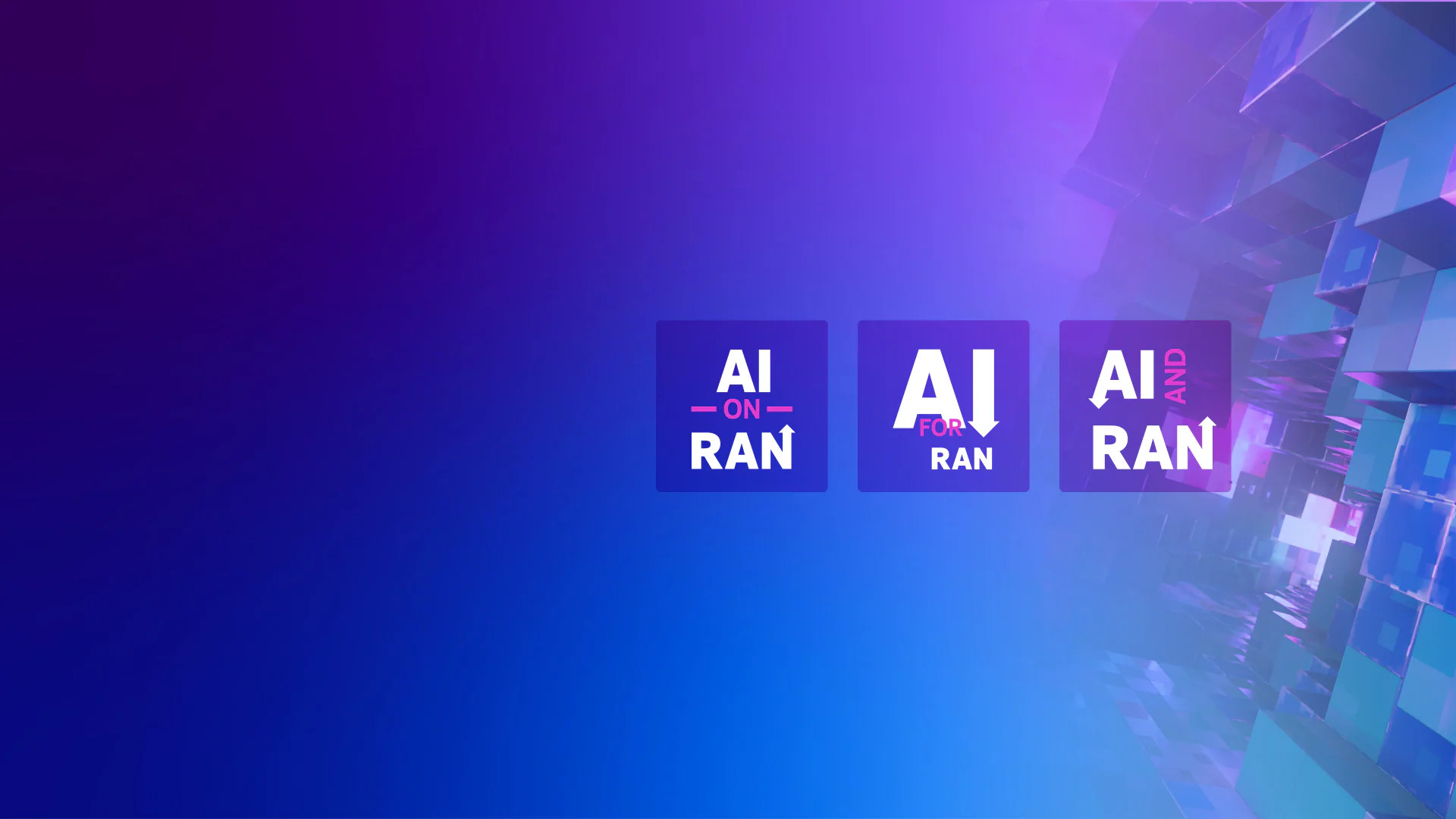
This is more than a marketing label. Nokia’s AI-RAN page says the architecture creates three layers of opportunity: AI for RAN, AI on RAN, and AI and RAN. AI for RAN uses AI to optimize radio performance and efficiency. AI on RAN hosts real-time AI applications at the edge. AI and RAN share cloud-native accelerated infrastructure to maximize efficiency. That layered approach is what turns AI-RAN from a technical concept into a commercial strategy.
Nokia and NVIDIA have been pushing this direction aggressively. In March 2026, Nokia said it had made progress with AI-RAN partnerships and had completed functional tests of AI and RAN workloads on NVIDIA’s GPU-accelerated AI-RAN platform. The company said the work is meant to support real-world deployments and unlock new monetization opportunities through advanced AI services. Nokia also said it had achieved Southeast Asia’s first AI RAN-powered Layer 3 5G call with Indosat.
That detail matters because it shows AI-RAN is moving from slide decks to operational testing. Nokia’s press materials say the tests included a shared accelerated computing platform that can run radio and AI workloads together. The company also says this architecture supports a path toward AI-native networks and 6G. If telecom networks are going to become platforms for intelligence rather than only carriers of traffic, this is the kind of infrastructure shift that will make it possible.
What The Shift Means For Operators, Investors, And Enterprise Customers
For operators, AI-RAN could change the economics of expansion. Instead of treating every traffic increase as a cost challenge, they may be able to bundle connectivity with edge intelligence, compute hosting, and service-level guarantees. Nokia’s materials explicitly say operators can host generative AI, agentic AI, and physical AI workloads at the edge, and even offer AI compute to external customers. That is a very different revenue model from the traditional one.
For investors, the relevance is strategic. Nokia’s broader AI-related business has already benefited from the AI infrastructure cycle. Reuters reported in April 2026 that Nokia’s AI and cloud services sales rose 49% in the first quarter, with growth supported by demand from hyperscalers building AI data centers. Reuters also noted that Nokia raised its outlook for network infrastructure growth. That suggests the market is beginning to reward infrastructure players that can sit between connectivity and AI demand.
For enterprise customers, the appeal is practical. Manufacturing, logistics, healthcare, public safety, and other latency-sensitive sectors need networks that are not only fast but predictable. Nokia’s AI-RAN framework is built around ultra-low latency, massive uplink, and automated efficiency, which are exactly the properties that enterprise AI workloads often require. Nokia says these capabilities can support mission-critical services and future AI-native applications.
The most interesting part of the story is that the industry’s vocabulary is changing with the economics. “Bandwidth,” “capacity,” and “coverage” are still essential, but they are no longer enough to describe the value of the network. Terms like “token throughput,” “AI-native applications,” “semantic communication,” and “edge monetization” are becoming part of the telecom lexicon because the workload itself is changing. Nokia’s recent materials make that transition explicit.
The Bigger Picture For Telco Infrastructure
The deeper lesson here is that telecom infrastructure is being repositioned inside the AI economy. Nokia’s view is that the network is no longer just a transport layer for someone else’s product. It can become an active compute layer where AI inference, automation, and network intelligence create value. That is why the company keeps linking AI-RAN to AI-native 6G, advanced 5G, and new monetization models.
This does not mean the transformation will be easy. AI-RAN requires new architectures, new economics, and new customer demand. But Nokia’s argument is coherent: if AI is becoming the dominant workload of the digital economy, then telecom networks need to be built for AI, not merely for data. That is the heart of the paradigm shift from data burden to AI token economics.
In that sense, Nokia is not simply talking about faster networks. It is talking about a new operating model for telecommunications. The infrastructure layer is being asked to carry more than traffic. It is being asked to carry intelligence, monetize it, and make it reliable at scale. AI-RAN is the shorthand for that ambition.
Read More