





 Monday, 14-09-26








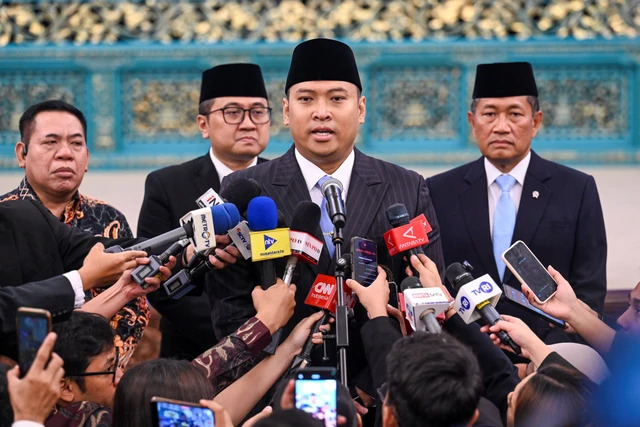
In a decisive move to restore public trust and strengthen institutional integrity, the newly appointed Head of Indonesia's National Nutrition Agency (BGN), Sudaryono, has pledged strict, clean management of the national feeding initiative. Speaking shortly after his official inauguration by President Prabowo Subianto at the State Palace in Jakarta, Sudaryono reaffirmed that the government remains unwavering in its commitment to execute the Free Nutritious Meals program across the archipelago. The pledge arrives during a critical moment of organizational transition and heightened public scrutiny surrounding governance, budget allocation, and operational transparency.
The sweeping welfare project stands as one of the most ambitious social interventions in modern Indonesian history. Designed to provide balanced daily food intake to millions of students, expectant mothers, and infants nationwide, the program represents a central pillar of the current administration's long-term social policy. However, implementing an initiative of such magnitude has presented complex logistics, structural adjustments, and administrative challenges. Addresssing the media, Sudaryono made it clear that while operational procedures will undergo rigorous refinement, the broader mission to eliminate childhood malnutrition and support economic development will move forward without interruption.
Leadership Transition at the National Nutrition Agency
The appointment of Sudaryono marks a crucial transition for the National Nutrition Agency. He assumes leadership following the resignation of Nanik Sudaryati Deyang, who stepped down after forty five days in office due to health considerations. Nanik had taken charge of the agency during a period of administrative restructuring, following earlier leadership changes connected to legal investigations into procurement irregularities.
Sudaryono brings a background in agricultural development and public administration to the role. Prior to his appointment as agency chief, he served as Deputy Agriculture Minister and held the position of Chairman at the Indonesian Farmers Harmony Association. Government officials emphasized that his extensive experience in managing agricultural supply chains and food production networks makes him uniquely qualified to oversee the technical fulfillment of the feeding scheme. State Secretary Minister Prasetyo Hadi noted that Sudaryono was actively involved in conceptualizing the program's initial framework, ensuring continuity in policy design and operational strategy.
In her farewell statement, outgoing chief Nanik defended the vision behind the initiative, emphasizing that the focus on child nutrition was established purely as a public welfare effort rather than a short term political strategy. The transition in leadership underscores the government's intention to maintain steady momentum while addressing systemic administrative vulnerabilities.
Zero Tolerance for Corruption and Conflict of Interest
Addressing long standing public concerns regarding procurement and contract allocation, Sudaryono explicitly distanced himself and his inner circle from any personal commercial involvement in the agency's supply network. A central component of the program relies on localized food preparation centers, officially designated as Nutrition Fulfillment Service Units, or SPPGs. These public kitchens receive state funding to prepare and distribute meals directly to local schools and community centers.
Sudaryono stressed that neither he nor any members of his family hold ownership stakes in any SPPG units or commercial catering operations associated with the agency. He stated firmly that there will be zero tolerance for corrupt practices, kickbacks, or preferential treatment within the agency's procurement network. To enforce this standard, the new chief urged citizens and media representatives to immediately report any individuals attempting to misuse his name or authority for financial gain.
By establishing clear boundaries between regulatory oversight and commercial fulfillment, the agency aims to insulate the Free Nutritious Meals program from conflicts of interest. Institutional reforms are currently being implemented to ensure that every public kitchen operates through transparent bidding procedures, standardized hygiene protocols, and strict financial accounting.
Why the Government Refuses to Suspend the Flagship Policy
Despite ongoing structural adjustments, the Indonesian government has repeatedly rejected calls from critics and student groups to suspend the initiative. Demonstrators in Jakarta and other regional capitals had previously requested a temporary halt to allow for comprehensive financial audits and policy evaluations. Critics pointed to the heavy commitment required from the national budget and urged the government to prioritize alternative spending areas.
In response, administration representatives clarified that suspending the Free Nutritious Meals program is not a viable option. Head of the Government Communication Bureau, Muhammad Qodari, explained that the policy represents a core mandate delivered directly by voters during the 2024 presidential election. As a central promise of President Prabowo Subianto's campaign platform, the feeding initiative reflects a democratic agreement with the public that must be honored.
Government officials argue that while administrative defects must be corrected promptly, halting the program would deprive millions of elementary, middle, and high school students of vital daily nutrition. Instead of pausing operations, the administration has chosen to carry out real time evaluations, refining distribution logistics and financial management while keeping the kitchen networks active.
Governance Reforms and Public Accountability Measures
To address operational hurdles, the National Nutrition Agency has initiated a comprehensive internal review aimed at improving governance and maximizing cost efficiency. Agency officials reported that the overarching focus has shifted from expanding sheer beneficiary numbers to ensuring high quality implementation and absolute food safety.
This shift follows isolated incidents of foodborne illness in regional test centers, including a recent case in Blora where local authorities launched an immediate investigation into meal storage and preparation conditions. In response, President Prabowo instructed the agency to tighten health standards, enforce strict cold chain storage for perishable items like milk, and institute mandatory quality testing before meals leave central kitchens.
Furthermore, financial planning for the initiative is undergoing calibration. While initial budget projections reached significant figures to accommodate nationwide scaling, ongoing evaluations aim to streamline expenditures and eliminate overlapping service coverage. BGN leadership confirmed that budget efficiency measures are being introduced to ensure that every rupiah spent yields measurable health outcomes for children without creating fiscal waste.
Economic and Social Impacts Across Rural Communities
Beyond its immediate health and educational objectives, the Free Nutritious Meals program is engineered to stimulate local economies, particularly in rural and agricultural regions. By sourcing raw ingredients directly from nearby farmers, poultry keepers, and fisheries, the initiative creates a steady demand stream for domestic agricultural produce.
The establishment of local nutrition service units has generated employment opportunities for kitchen staff, logistics drivers, and quality control inspectors across hundreds of subdistricts. This decentralized supply model ensures that state funding circulates within local communities rather than concentrating exclusively in major urban centers. Agricultural associations have welcomed the structural demand, noting that predictable procurement schedules enable local farmers to invest with greater confidence in crop yields and livestock production.
School administrators have also reported positive early observations regarding student attendance and classroom engagement. Proper daily nutrition directly correlates with improved cognitive focus and reduced absenteeism, positioning the program as both a social safety net and an investment in human capital development.
Challenges, Oversight, and the Road Ahead
As the National Nutrition Agency embarks on this new chapter under Sudaryono's leadership, maintaining rigorous oversight remains the top priority. Independent oversight bodies, including state auditors and anti corruption agencies, have issued recommendations to streamline monitoring mechanisms and secure supply chains.
The path forward requires balancing rapid operational scaling with uncompromised quality control. Managing tens of thousands of local preparation units across an archipelagic nation presents unmatched logistical demands. However, with restructured management, direct community reporting channels, and reinforced anti corruption safeguards, the administration aims to demonstrate that large scale welfare programs can be administered cleanly and effectively.
Ultimately, the successful execution of the Free Nutritious Meals program will depend on sustained institutional discipline and continuous public engagement. By holding administrative leaders accountable and keeping public health at the forefront, Indonesia seeks to turn its ambitious nutritional vision into a durable, transparent, and transformative national success.
Read More