





 Monday, 14-09-26








A Practical Push To Lift Corn Output
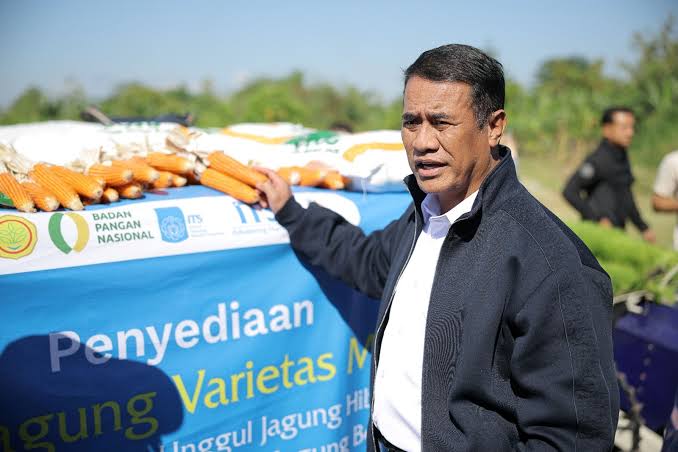
Indonesia is making a direct bet on productivity. Rather than expanding farmland, the Agriculture Ministry is backing high-yield corn seed to raise corn output more efficiently, beginning with the MTE-09 hybrid variety developed by Institut Teknologi Sepuluh Nopember, or ITS. Agriculture Minister Andi Amran Sulaiman said the ministry has purchased the seed for cultivation across 13,000 hectares in Surabaya, with a total value of Rp10 billion, and the seed will be distributed free of charge to farmers there. The minister said the variety was selected because its productivity is above the national average.
The goal is straightforward: increase corn output without relying only on land expansion. That matters in a country where agricultural policy is increasingly shaped by food security, import substitution, and the need to make domestic farms more productive. In the ANTARA report, Amran said MTE-09 can produce around 10 metric tons of shelled corn per hectare, compared with the 2024 national average yield of 5.94 metric tons per hectare recorded by Statistics Indonesia. That gap is exactly why the new seed is being watched closely.
Why The MTE-09 Seed Is Drawing Attention
The MTE-09 hybrid corn seed is more than a new agricultural product. It is a case study in how research institutions can feed directly into national production goals. According to ANTARA, the ministry bought the seed for a large-scale planting program so that ITS researchers can oversee the crop from planting to harvest and help push the average yield toward 10 metric tons per hectare. That kind of field supervision is important because seed performance on paper is never the same as performance under real farm conditions.
This is also where the keyword corn output becomes more than a headline phrase. Corn output rises when a stronger variety is paired with proper agronomic management, suitable land, and close monitoring. Indonesia already has a large corn sector, and the new seed program is designed to lift the return from each hectare rather than simply adding more hectares to the system. BPS reported that Indonesia’s 2023 maize harvested area reached 2.48 million hectares and production reached 19.99 million tons of dry shelled corn with 28 percent moisture content.
That national baseline matters because it shows the scale of the opportunity. A modest gain in yield per hectare can translate into a sizeable increase in overall corn output when applied across thousands of hectares. If the MTE-09 trial performs as intended, the benefits could extend beyond Surabaya to other corn-growing regions.
What The Government Is Doing Differently
The ministry’s move is notable because it combines procurement, research collaboration, and direct farmer support in one program. Amran also said the government ordered amphibious electric tractors and coconut tree-climbing devices developed by ITS, which signals a broader policy preference for domestic innovation produced by Indonesian universities. The corn seed purchase is therefore part of a larger strategy, not an isolated transaction.
The ministry has also framed the program as part of a “triple helix” approach, meaning stronger cooperation among government, industry, and universities. In practical terms, that model tries to shorten the gap between lab work and field adoption. For corn output, this is a useful direction because productivity problems often come from weak coordination rather than a lack of ideas. Farmers may have access to a good variety, but without support in planting schedules, soil management, and crop monitoring, the yield gains can disappear quickly.
This approach also reflects a wider policy shift seen in Indonesia’s agriculture sector. Recent government efforts have emphasized food commodities that can strengthen self-sufficiency, including corn, rice, and coconuts. In that context, a high-yield seed program is not just about one crop. It is about building a more resilient production system that can sustain domestic demand and reduce pressure on imports.
Why Hybrid Seed Can Raise Productivity
The case for hybrid seed is supported by broader agricultural research as well. Studies from Indonesian agricultural repositories show that productivity is positively related to the use of hybrid seed and fertilizer, while composite seed shows weaker results. Another study notes that higher yielding and adaptive varieties can improve maize productivity when matched to local agroecosystems. In other words, the basic logic behind the corn output strategy is consistent with research: better seed can improve yield potential, especially when supported by good management.
That does not mean every hybrid seed automatically delivers the same result everywhere. Yield depends on soil conditions, rainfall, input quality, pest pressure, and farmer practices. But the performance gap highlighted by the ministry is large enough to matter. MTE-09 is described as capable of reaching around 10 metric tons per hectare, which would be far above the 2024 national average of 5.94 metric tons per hectare reported by BPS. Even a partial move toward that target would improve corn output meaningfully.
There is also an economic side to this. When productivity rises, farmers can potentially spread fixed costs over more harvest volume, which improves the return per hectare. Research from Indonesia’s agricultural literature has shown that hybrid maize can be economically beneficial, with production gains translating into stronger revenue outcomes for farmers in tested regions. That is one reason government support for seed access can be so influential. It reduces the barrier to adoption and makes the yield opportunity more realistic for farmers.
The Bigger Corn Output Picture In Indonesia
Indonesia’s corn sector already plays a major role in the national food system. BPS data show that the country harvested 2.48 million hectares of maize in 2023 and produced 19.99 million tons of dry shelled corn at 28 percent moisture content. That production base gives policymakers room to experiment with productivity improvements, because the gains can scale quickly across large planted areas.
The ministry’s current strategy fits that landscape well. If corn output can be raised from 5.94 metric tons per hectare closer to 10 metric tons per hectare in selected locations, Indonesia could strengthen feed supply, reduce volatility in local markets, and build more confidence in domestic production. The report also suggests that the seed will be planted in Surabaya so ITS researchers can supervise the crop closely. That matters because a carefully monitored pilot is more likely to generate reliable lessons than a one-off seed distribution campaign.
There is a reason policymakers keep returning to corn. Corn is one of the country’s strategic commodities, and productivity improvements can spill over into the feed industry and other parts of the food chain. Research cited in Indonesian agricultural sources has linked hybrid seed adoption to improved maize availability for processing industries, which is another way of saying that higher corn output can support downstream sectors as well.
What Farmers Can Expect From The Program
For farmers, the most immediate benefit is access. The ministry said the MTE-09 seeds will be distributed free of charge in the Surabaya area. That lowers the upfront cost of trying a new variety, which is often one of the biggest obstacles to adoption. If the crop performs well under local conditions, farmers could gain a more reliable harvest and potentially higher returns per hectare.
Another possible benefit is technical support. Because ITS researchers will oversee the planting cycle, farmers are not just receiving a seed package. They are also getting a supervised trial environment that can identify what works and what needs adjustment. In agricultural policy, that kind of feedback loop is valuable because it helps move the conversation from theory to practice. It also improves the chances that a new variety can contribute to sustained corn output growth rather than a short-lived pilot result.
The broader message is that Indonesia is trying to modernize corn production by connecting science, public policy, and farmer access. That is a sensible direction, especially if the country wants to strengthen food security while avoiding unnecessary land expansion. The success of the program will depend on execution, but the framework itself is clear. Better seed, closer supervision, and larger scale adoption are the levers the government is now trying to pull.
The Road Ahead For Corn Output Growth
The coming planting cycle will show whether MTE-09 can deliver the kind of corn output improvement the ministry is expecting. The initial target is ambitious, but it is also grounded in a simple idea that agriculture often rewards: productivity gains are more sustainable than land expansion alone. If the trial succeeds, the seed could become a stronger model for how Indonesian research institutions support national food programs.
For now, the key takeaway is that Indonesia is treating corn output as a strategic policy issue. The government is not only buying seeds. It is also creating a field-level partnership between ministries, universities, and farmers. That combination could prove important in the years ahead, especially as Indonesia looks for practical ways to raise production, improve farm incomes, and keep strategic commodities stable.
Read More