





 Saturday, 24-10-26








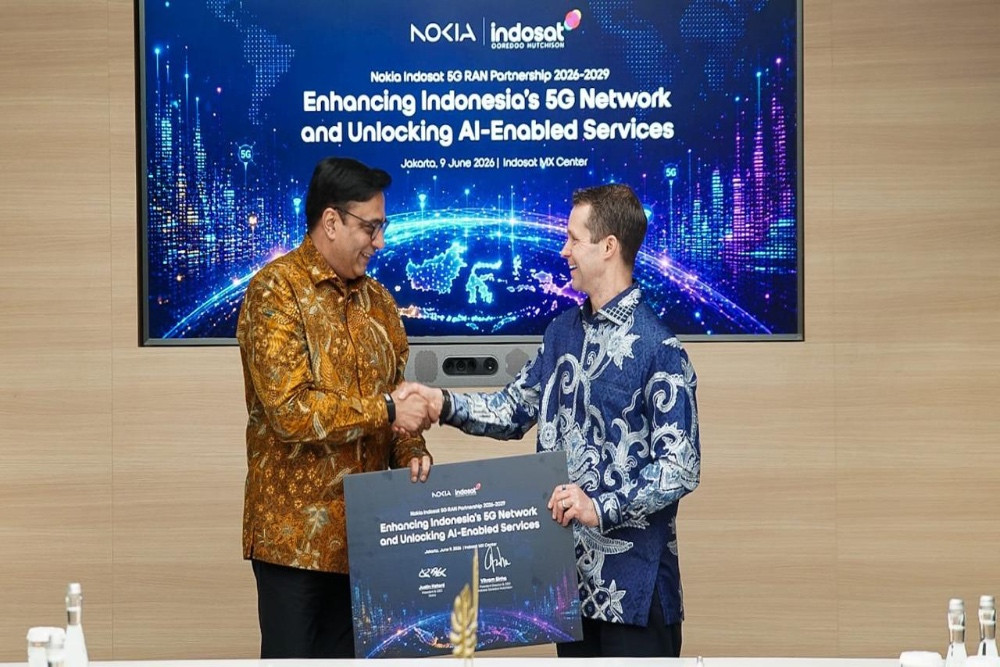
Indosat Ooredoo Hutchison is moving beyond a conventional network upgrade. On June 9, 2026, Nokia and Indosat announced a nationwide modernization partnership that will expand low-band 5G across the full network, extend mid-band 5G to about 80% of the footprint over the next three and a half years, and prepare the operator for AI-RAN field trials in Indonesia by the end of 2026. The collaboration also builds on earlier work in which Nokia and Indosat, together with NVIDIA, completed Southeast Asia’s first AI RAN-powered Layer 3 5G call at Mobile World Congress 2026.
The Jayapura angle makes the story more important. Indosat has already opened an AI Experience Center in Jayapura, and the Indonesian government has framed Papua as a strategic region for more inclusive digital development. In public remarks around that launch, Komdigi said AI should support practical needs in Papua across sectors such as agriculture, education, health, tourism, and local culture. That background helps explain why the latest AI-RAN push is not just about better signal quality. It is about building the network base for real services in places that have often been left behind.
Why Jayapura Is A Strategic Starting Point
Jayapura is a powerful symbol for Indonesia’s digital inclusion agenda. It sits at the eastern edge of the country, where geography, infrastructure gaps, and service quality have historically made digital access harder to scale. By tying AI-RAN ambitions to Jayapura, Indosat is signaling that its next phase of growth is not limited to Java’s largest commercial corridors. It is trying to prove that advanced network architecture can also support eastern Indonesia, where a reliable connection can make the difference between basic access and usable, productive connectivity.
This matters because Papua is already part of Indosat’s AI story. The AI Experience Center in Jayapura was launched in 2025 as part of a broader effort to spread AI access and skills more evenly across the country. Komdigi highlighted education and health as core use cases during that launch, while also stressing that AI should help generate local talent and new innovation from Papua. In other words, Jayapura is not a decorative launch site. It is a live test bed for whether advanced telecom infrastructure can translate into social and economic value.
That is why the phrase AI-RAN matters. It is not simply a branding term. It points to a network design in which connectivity and artificial intelligence work together inside the radio access layer. Nokia has described the approach as a way to make networks more intelligent, efficient, and ready for new AI-enabled services. For an archipelagic market like Indonesia, that can be a meaningful shift, because the value of 5G is not just speed. It is consistency, responsiveness, and the ability to support future digital services across a wide geography.
What AI-RAN Adds To Indosat's 5G Roadmap
The technical appeal of AI-RAN is clear from the way Nokia and Indosat have framed the partnership. Nokia said it will deploy advanced RAN technologies, including its latest radio families, basebands, centralized RAN, and automation tools, to support low-band and mid-band 5G. The companies also said the work is meant to improve network capacity, performance, and coverage while preparing the infrastructure for AI-enabled services. That combination is what makes this more than a standard 5G rollout. It is a modernization play with an AI layer built into the future architecture.
For a telco, that kind of upgrade has several business benefits. Better coverage can reduce complaints and improve retention. Better capacity can support heavier traffic in dense areas. Better automation can lower operational friction. And AI-ready infrastructure can give the operator a stronger platform for enterprise services, immersive entertainment, gaming, and other data-heavy use cases that Nokia explicitly highlighted in its own reporting on the Indosat deal. In practical terms, the network becomes a product platform, not only a utility.
The timing is also important. Nokia said field trials of AI-RAN in Indonesia are targeted for the end of 2026, which means the current agreement is laying the groundwork for a staged rollout rather than an instant transformation. That is a realistic approach for a country with Indonesia’s scale and geography. It suggests that Indosat is trying to turn AI-RAN into a multi-year operating capability, not a one-off experiment.
The Three Priority Sectors Most Likely To Benefit
The Bisnis report says Indosat wants to bring AI-RAN to Jayapura and target three main sectors. Based on the public record around the Jayapura AI Experience Center and Komdigi’s comments, the clearest candidates are education, health, and agriculture. That is an inference, but it fits the direction of Indosat’s existing Papua strategy and the government’s own framing of where AI can create direct social value.
Education is the most obvious starting point. Papua’s AI Experience Center was presented as a way to expand access to learning, improve quality, and help create local digital talent. If AI-RAN improves reliability and latency, schools, training centers, and digital learning platforms can work more effectively. That matters in places where connectivity constraints often determine whether digital education is a real tool or just a promise.
Health is the second strong use case. Komdigi has repeatedly linked AI access in Papua to health services, and media coverage of the Jayapura AI Experience Center described the facility as a way to help health workers in areas with limited access. In a region where distance can slow diagnosis, referrals, and coordination, a stronger AI-enabled network can help support telehealth, data sharing, and more responsive service delivery. The impact would not come from AI alone. It would come from AI plus a network stable enough to carry the workload.
Agriculture completes the picture. Komdigi explicitly included agriculture among the sectors that can benefit from AI in Papua, alongside education, health, tourism, and cultural preservation. For local farmers and agribusiness operators, better connectivity can support weather data, market access, digital advisory tools, and supply chain coordination. If Indosat is serious about a three-sector rollout in Jayapura, agriculture is a credible third pillar because it connects digital infrastructure to livelihoods, not just to screens.
What This Means For Indosat And Indonesia's Digital Economy
Strategically, the AI-RAN move fits a broader industry shift. Telecom operators are under pressure to monetize 5G, reduce network inefficiencies, and prepare for AI-native services. Indosat’s partnership with Nokia suggests it wants to be seen not as a passive carrier of traffic, but as an active enabler of AI infrastructure. That positioning is valuable in a market where future growth will depend on who can turn coverage into actual digital usage.
For Indonesia, the bigger point is regional balance. The country has talked for years about narrowing the digital divide between western and eastern regions. The Jayapura AI-RAN narrative gives that ambition a concrete technical form. If the network upgrade works as intended, it could improve the quality of access in Papua while also testing whether AI-driven telecom infrastructure can support public services and local economic activity outside the main urban centers.
Investors will likely watch two things closely. First, whether Indosat can execute the rollout without operational slippage. Second, whether the company can convert network modernization into higher-value services. That is the real commercial test. A stronger network is important, but a stronger business case is what ultimately justifies the investment. The current AI-RAN plan suggests Indosat believes both outcomes are possible.
Conclusion
Indosat’s AI-RAN agenda is more than a telecom upgrade. It is a bet that advanced network architecture can help unlock real digital inclusion in places like Jayapura, while preparing the company for a more AI-driven future. The combination of 5G rollout, AI-RAN readiness, and Papua-focused use cases shows a strategy that is as much about social reach as it is about technical scale. If Indosat executes well, Jayapura could become a reference point for how Indonesia bridges network ambition and local impact.
Read More