





 Sunday, 13-09-26








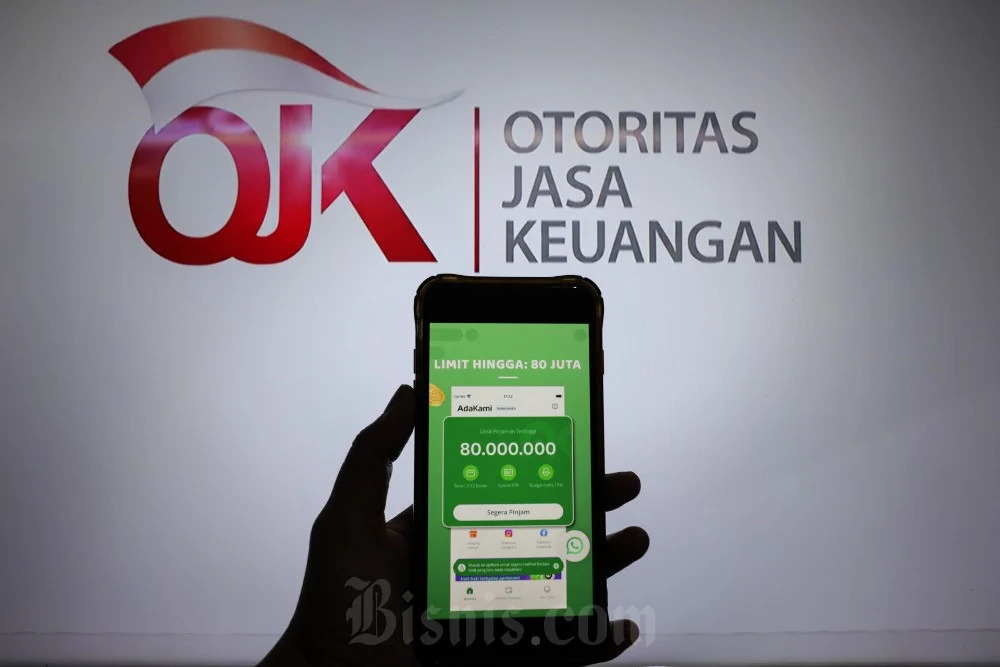
Indonesia’s fintech lending funding structure is showing a clear imbalance, and the latest OJK data makes that impossible to ignore. According to reporting by Antara and other Indonesian outlets, bank lenders still dominate the industry with Rp66.25 trillion in funding, equal to 75.59 percent of total lending support in April 2026. The same coverage says individual lenders contributed only Rp3.33 trillion, which underscores how concentrated the market remains. At the same time, OJK placed eight Pindar platforms under special supervision, while the sector still booked Rp0.96 trillion in profit and grew 71.43 percent year on year.
That combination of numbers tells a more complicated story than a simple success or crisis narrative. On one hand, the industry is still expanding and generating profit. On the other, fintech lending funding is still highly dependent on banks, which means the sector’s resilience is closely tied to bank risk appetite, liquidity conditions, and regulatory discipline. OJK’s own fintech statistics portal shows that the agency continues to publish LPBBTI and fintech data as part of its monitoring framework, reinforcing the fact that this market is now a core part of Indonesia’s financial oversight agenda.
Banks Still Anchor The Financing Chain
The most striking feature of Indonesia’s fintech lending funding landscape is how central the banking sector remains. With Rp66.25 trillion coming from bank lenders, banks are not just one source of capital among many. They are the backbone of the industry. That is significant because online lending is often marketed as a fast, alternative channel for borrowers that sits outside traditional banking. In practice, however, the money flowing into these platforms still comes largely from institutions that look very much like the old financial system.
This matters for how the market functions. When a single lender class dominates, the industry may grow quickly, but it also becomes more exposed to changes in one funding channel. If banks tighten credit standards or become more cautious on exposure to digital lenders, the overall funding pipeline can slow. If they expand aggressively, the sector can scale faster. That makes fintech lending funding less independent than many consumers assume, and it also means platform stability is partly determined by banking-sector behavior. This is an inference based on the funding concentration reported by OJK and the media coverage of the April 2026 data.
The concentration also shows that Indonesia’s digital credit market is still in a hybrid phase. It is digital on the front end, but still deeply reliant on conventional capital providers behind the scenes. That is not necessarily bad. In fact, it may help keep the industry funded and scalable. But it does mean the market has not yet fully diversified its lender base. For a sector that is supposed to widen access to finance, that is an important structural constraint.
What OJK’s Special Supervision Signals
The fact that eight Pindar platforms have been placed under special supervision is a strong warning signal. According to Tempo and other outlets, OJK said these platforms were mainly dealing with capital and non-performing loan problems. That is not a minor administrative issue. It points to stress in the underwriting and risk management process, which is exactly where fintech lending businesses either prove their strength or begin to crack.
For the broader fintech lending funding market, special supervision has two implications. First, it shows that OJK is tightening its oversight and is willing to move quickly when platform health deteriorates. Second, it tells investors and lenders that growth numbers alone are not enough. A profitable industry can still contain fragile platforms, especially when capital quality and borrower repayment performance weaken. That balance between growth and caution is now central to the story of digital lending in Indonesia.
The pressure is not happening in isolation either. OJK has continued to strengthen its monitoring of fintech activity, and its statistics portal now organizes updates around LPBBTI, the formal term for licensed online lending services. That matters because regulatory language shapes market discipline. In the Indonesian context, the shift from casual “pinjol” language to a more formal LPBBTI or Pindar framework is part of a broader effort to distinguish licensed operators from illegal ones and to make the market easier to supervise.
Why Funding Concentration Matters For Borrowers And Investors
A market with strong bank participation can be healthy, but it can also create hidden vulnerabilities. For borrowers, concentrated fintech lending funding may affect platform pricing, access, and product availability. For investors and lenders, it can shape returns, because the same capital source often influences how aggressively platforms can originate loans and how much risk they can tolerate. If the bank channel remains dominant, then the industry may be efficient, but not fully diversified. That is an important distinction for anyone evaluating the long-term maturity of the market. This is an inference from the OJK data and the reporting on current lender composition.
There is also a consumer protection angle. OJK’s broader mandate includes regulation and supervision of financial services, and its fintech data publication shows that the regulator is treating this segment as a formal part of the financial system rather than as a fringe digital product. That is healthy, because the market has become too large to ignore. When an industry grows into the tens of trillions of rupiah, with banks supplying most of the capital, it becomes systemic enough to warrant close, sustained oversight.
At the same time, the fact that the sector still posted Rp0.96 trillion in profit and 71.43 percent annual growth shows that the story is not purely defensive. The industry is still expanding, and that gives lenders and platforms room to improve governance without killing momentum. In other words, the challenge is not whether fintech lending funding can survive. The challenge is whether it can mature without becoming overdependent on a narrow set of capital providers.
The Road Ahead For Indonesia’s Digital Lending Market
The next stage for Indonesia’s online lending industry will likely be defined by diversification. If banks continue to provide three quarters of total funding, the market may remain stable in the short run, but it may also stay structurally concentrated. More varied funding sources, stronger risk scoring, and cleaner separation between healthy platforms and stressed ones will be key if the sector wants to become more resilient. That conclusion follows from the funding mix, the special supervision of eight platforms, and OJK’s continuing monitoring of the sector.
For policymakers, the message is straightforward. A fast-growing digital lending ecosystem is useful only if it remains credible under pressure. For platforms, the message is just as clear. Growth is not enough. Better governance, stronger capital discipline, and a more diverse lender base will be what turns fintech lending funding from a bank-led market into a genuinely broad financial channel. Until that happens, the industry will keep looking innovative on the surface, while still depending heavily on the old core of the financial system beneath it.
Read More